Princeton is breaking its 133-year-old no-invigilator exam system over AI cheating fears
Princeton University is ending its long-standing unproctored exam tradition as concerns over AI-powered cheating and academic dishonesty continue to grow.
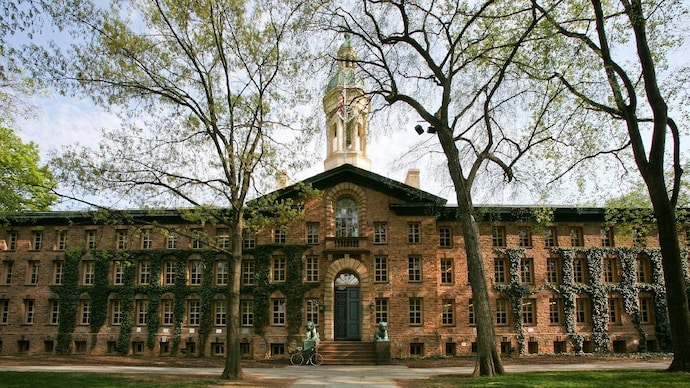
Princeton University’s famous Honor Code survived two world wars, decades of academic change, and even the rise of the internet and search engines. But now, after more than 130 years, the university’s long-standing tradition is being reshaped by artificial intelligence. According to a report by The Wall Street Journal, Princeton faculty voted this week to require proctoring during all in-person exams starting this summer, effectively ending the university’s historic practice of unproctored examinations.
The Honor Code had been in place since 1893. Under the system, students were allowed to take exams without professors or invigilators in the room. Students also signed a pledge promising not to cheat, while violations were handled by a student-run honor committee.
The philosophy behind the system was simple: if students were treated as honorable, they would learn to behave honorably. Supporters believed that treating students as inherently dishonest could encourage dishonesty instead.
For generations, the system became one of Princeton’s most recognised traditions. But university officials now say the rise of AI tools has fundamentally changed the situation.
AI cheating concerns pushed the university toward change
According to The Atlantic, Princeton has seen a noticeable rise in academic dishonesty since generative AI tools became widely available in late 2022.
The university’s Committee on Discipline found 82 students responsible for academic violations during the 2024–25 academic year, compared with 50 students in 2021–22. Officials also acknowledged that the real number may be much higher because many cases go undetected.
A survey conducted by the university newspaper among graduating seniors revealed growing concerns around cheating culture on campus. Out of 501 student responses, 30 per cent admitted they had cheated, 28 per cent said they had used ChatGPT on assignments where it was not allowed, and 45 per cent said they knew a classmate had cheated but chose not to report it.
Princeton says AI made cheating easier and detection harder
According to the Wall Street Journal report, Dean of the College Michael Gordin told students in a letter that “a significant number of undergraduate students and faculty” had requested changes to the Honor Code system because of growing perceptions that cheating had become widespread.
Gordin reportedly said AI tools have made it much easier for students to cheat while simultaneously making it harder for faculty members to detect misconduct. He also noted that students are increasingly hesitant to report classmates because they fear backlash on social media.
Princeton will still keep the Honor Code pledge
Under the new policy, instructors will now remain present during exams and must report any violations directly to the honor committee.
Despite the shift, Princeton is not abandoning the Honor Code entirely. Students will still be required to sign the traditional pledge before exams: “I pledge my honor that I have not violated the Honor Code during this examination.”
The difference now is that trust alone will no longer be the university’s only safeguard.
Princeton University’s famous Honor Code survived two world wars, decades of academic change, and even the rise of the internet and search engines. But now, after more than 130 years, the university’s long-standing tradition is being reshaped by artificial intelligence. According to a report by The Wall Street Journal, Princeton faculty voted this week to require proctoring during all in-person exams starting this summer, effectively ending the university’s historic practice of unproctored examinations.
The Honor Code had been in place since 1893. Under the system, students were allowed to take exams without professors or invigilators in the room. Students also signed a pledge promising not to cheat, while violations were handled by a student-run honor committee.
The philosophy behind the system was simple: if students were treated as honorable, they would learn to behave honorably. Supporters believed that treating students as inherently dishonest could encourage dishonesty instead.
For generations, the system became one of Princeton’s most recognised traditions. But university officials now say the rise of AI tools has fundamentally changed the situation.
AI cheating concerns pushed the university toward change
According to The Atlantic, Princeton has seen a noticeable rise in academic dishonesty since generative AI tools became widely available in late 2022.
The university’s Committee on Discipline found 82 students responsible for academic violations during the 2024–25 academic year, compared with 50 students in 2021–22. Officials also acknowledged that the real number may be much higher because many cases go undetected.
A survey conducted by the university newspaper among graduating seniors revealed growing concerns around cheating culture on campus. Out of 501 student responses, 30 per cent admitted they had cheated, 28 per cent said they had used ChatGPT on assignments where it was not allowed, and 45 per cent said they knew a classmate had cheated but chose not to report it.
Princeton says AI made cheating easier and detection harder
According to the Wall Street Journal report, Dean of the College Michael Gordin told students in a letter that “a significant number of undergraduate students and faculty” had requested changes to the Honor Code system because of growing perceptions that cheating had become widespread.
Gordin reportedly said AI tools have made it much easier for students to cheat while simultaneously making it harder for faculty members to detect misconduct. He also noted that students are increasingly hesitant to report classmates because they fear backlash on social media.
Princeton will still keep the Honor Code pledge
Under the new policy, instructors will now remain present during exams and must report any violations directly to the honor committee.
Despite the shift, Princeton is not abandoning the Honor Code entirely. Students will still be required to sign the traditional pledge before exams: “I pledge my honor that I have not violated the Honor Code during this examination.”
The difference now is that trust alone will no longer be the university’s only safeguard.

