Mythos coming, alarmed Indian banks, govt departments, tech giants like TCS and Infosys run security audits
India's biggest banks, government departments and IT firms are quietly reviewing critical software systems amid rising fears around Anthropic's powerful upcoming AI model, Mythos. Companies like Infosys and TCS are now racing to identify cyber vulnerabilities before the technology becomes widely accessible.
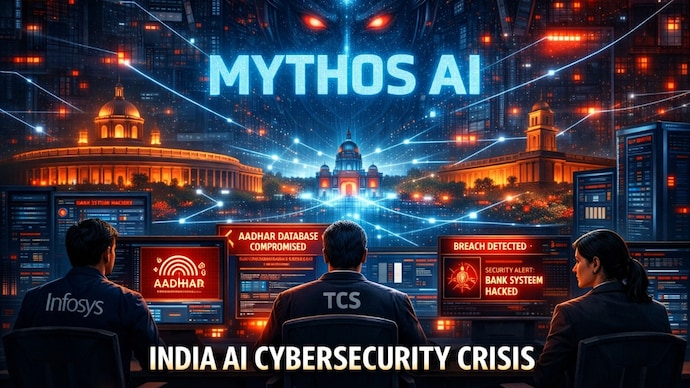
India’s biggest banks, government departments and IT companies have quietly started stress-testing critical software systems amid growing fears around Anthropic's upcoming AI model called Mythos. The concern is not just about what the next-generation AI can do, but also about what it could potentially expose. From banking software and Aadhaar-linked systems to passport and tax platforms, several key digital services are now being reviewed for hidden cybersecurity weaknesses before Mythos becomes more widely accessible. Officials familiar with the matter told Bloomberg that India has begun testing some of its most sensitive public-facing applications to understand how vulnerable they may be to advanced AI-driven cyberattacks.
The move comes at a time when governments and companies around the world are increasingly worried that highly capable AI systems could uncover security gaps faster than humans can fix them. Indian IT giants Infosys and Tata Consultancy Services are said to be among the companies carrying out these internal checks in secure environments. Officials said Infosys is especially focused on strengthening security around Finacle, its widely used banking software platform that powers financial services for institutions across multiple countries.
At the same time, India’s cybersecurity agency CERT-In is reportedly testing important digital infrastructure systems, including the Aadhaar ecosystem and government login platforms. Since Mythos itself is not yet available to these organisations, the companies are currently using Anthropic’s Claude Opus 4.7 model to identify and patch vulnerabilities that could later be exploited by more powerful AI systems.
Why Indian government is worried about Mythos
The global anxiety around Mythos has been building steadily over the past few months. Anthropic reportedly developed the AI model to help identify cybersecurity flaws, but experts and governments fear the same technology could also be misused to launch sophisticated cyberattacks or rapidly exploit weaknesses in critical infrastructure.
Access to Mythos has so far remained highly restricted. Only a handful of companies, including Apple and JPMorgan Chase, are believed to be testing the technology under Anthropic’s Project Glasswing initiative. Many countries and corporations are now seeking controlled access to the model so they can assess their own cybersecurity preparedness before the AI becomes more widely deployed.
For India, the urgency is even greater because of the country’s massive digital infrastructure push over the past decade. Under Prime Minister Narendra Modi, India has expanded digital identity systems, public-facing citizen services and banking technology at an unprecedented scale. Many of these systems are deeply interconnected and handle sensitive data for millions of users every day.
Several of India’s biggest IT firms also manage critical public platforms. Infosys runs India’s service-tax system, while TCS handles the country’s passport infrastructure. That has increased concerns that even a small vulnerability in such systems could have large-scale consequences if exploited through advanced AI tools.
RBI meetings, government alert and India-US talks
Officials said India’s central bank has already held multiple meetings with banks to brief them about the possible risks associated with Mythos. Last month, Finance Minister Nirmala Sitharaman had also warned banks to tighten cybersecurity vigilance, strengthen IT systems and ensure customer data remains protected against emerging AI-linked threats.
Interestingly, companies also see a business opportunity in this growing concern. Infosys CEO Salil Parekh recently told analysts that Mythos was “exposing more vulnerabilities than one thought possible previously.” He added that the company was looking at the situation “both ways,” suggesting the rise of advanced AI security testing could also create demand for new cybersecurity services.
India is now reportedly trying to secure official access to Mythos through discussions with the US government. Officials said New Delhi wants access within a secure setup located preferably inside India, where experts can safely test sensitive systems and data. The talks are being led through diplomatic channels involving India’s Ministry of External Affairs and US authorities.
In a recent interview, US Ambassador to India Sergio Gor said Washington was reviewing some of India’s requests for access to advanced technologies, though he declined to share details. "They have requested access to various things, and as a trusted partner, those are some things that we are definitely looking at," he said.
India’s biggest banks, government departments and IT companies have quietly started stress-testing critical software systems amid growing fears around Anthropic's upcoming AI model called Mythos. The concern is not just about what the next-generation AI can do, but also about what it could potentially expose. From banking software and Aadhaar-linked systems to passport and tax platforms, several key digital services are now being reviewed for hidden cybersecurity weaknesses before Mythos becomes more widely accessible. Officials familiar with the matter told Bloomberg that India has begun testing some of its most sensitive public-facing applications to understand how vulnerable they may be to advanced AI-driven cyberattacks.
The move comes at a time when governments and companies around the world are increasingly worried that highly capable AI systems could uncover security gaps faster than humans can fix them. Indian IT giants Infosys and Tata Consultancy Services are said to be among the companies carrying out these internal checks in secure environments. Officials said Infosys is especially focused on strengthening security around Finacle, its widely used banking software platform that powers financial services for institutions across multiple countries.
At the same time, India’s cybersecurity agency CERT-In is reportedly testing important digital infrastructure systems, including the Aadhaar ecosystem and government login platforms. Since Mythos itself is not yet available to these organisations, the companies are currently using Anthropic’s Claude Opus 4.7 model to identify and patch vulnerabilities that could later be exploited by more powerful AI systems.
Why Indian government is worried about Mythos
The global anxiety around Mythos has been building steadily over the past few months. Anthropic reportedly developed the AI model to help identify cybersecurity flaws, but experts and governments fear the same technology could also be misused to launch sophisticated cyberattacks or rapidly exploit weaknesses in critical infrastructure.
Access to Mythos has so far remained highly restricted. Only a handful of companies, including Apple and JPMorgan Chase, are believed to be testing the technology under Anthropic’s Project Glasswing initiative. Many countries and corporations are now seeking controlled access to the model so they can assess their own cybersecurity preparedness before the AI becomes more widely deployed.
For India, the urgency is even greater because of the country’s massive digital infrastructure push over the past decade. Under Prime Minister Narendra Modi, India has expanded digital identity systems, public-facing citizen services and banking technology at an unprecedented scale. Many of these systems are deeply interconnected and handle sensitive data for millions of users every day.
Several of India’s biggest IT firms also manage critical public platforms. Infosys runs India’s service-tax system, while TCS handles the country’s passport infrastructure. That has increased concerns that even a small vulnerability in such systems could have large-scale consequences if exploited through advanced AI tools.
RBI meetings, government alert and India-US talks
Officials said India’s central bank has already held multiple meetings with banks to brief them about the possible risks associated with Mythos. Last month, Finance Minister Nirmala Sitharaman had also warned banks to tighten cybersecurity vigilance, strengthen IT systems and ensure customer data remains protected against emerging AI-linked threats.
Interestingly, companies also see a business opportunity in this growing concern. Infosys CEO Salil Parekh recently told analysts that Mythos was “exposing more vulnerabilities than one thought possible previously.” He added that the company was looking at the situation “both ways,” suggesting the rise of advanced AI security testing could also create demand for new cybersecurity services.
India is now reportedly trying to secure official access to Mythos through discussions with the US government. Officials said New Delhi wants access within a secure setup located preferably inside India, where experts can safely test sensitive systems and data. The talks are being led through diplomatic channels involving India’s Ministry of External Affairs and US authorities.
In a recent interview, US Ambassador to India Sergio Gor said Washington was reviewing some of India’s requests for access to advanced technologies, though he declined to share details. "They have requested access to various things, and as a trusted partner, those are some things that we are definitely looking at," he said.

