Rope-less free fall activity in Rishikesh sparks concern over tourist safety
A viral video of a rope-less jump in Rishikesh has sparked questions over how the activity is being run. The reaction has renewed concern over safety checks, approvals and accountability in India's adventure tourism sector.
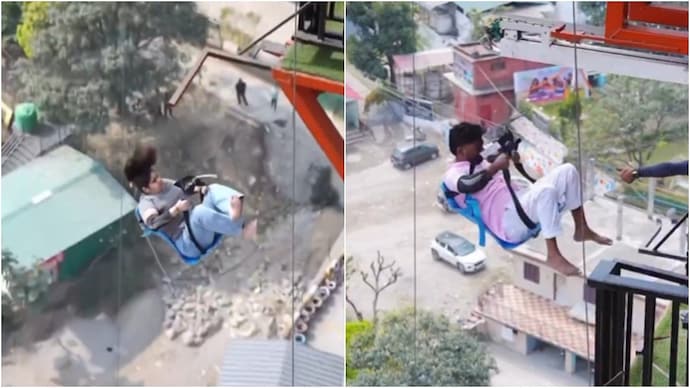
A viral video from Rishikesh has started a conversation about safety in India's booming adventure tourism industry after viewers were left stunned by an extreme activity that appears to involve participants being dropped from a significant height with no visible ropes or harnesses attached.
The clip shows people attempting a SCAD (Suspended Catch Air Device) jump, an adventure sport in which participants free-fall before landing in a specially designed safety net. Unlike bungee jumping, where jumpers remain connected to a cord throughout the experience, SCAD jumping relies entirely on the net below to absorb the impact of the fall.
As the video spread across social media, many users reacted with concern rather than excitement. Several questioned whether the activity was being conducted under adequate safety protocols, pointing out that even a minor misalignment during the fall could potentially lead to serious injuries.
See the viral clip here:
Others wondered what emergency measures would be available if something went wrong. Questions were raised about the presence of trained rescue personnel, medical preparedness, equipment inspections and whether the operators conducting the activity had received the necessary certifications and approvals.
One social media user summed up the concerns by writing, "No adventure ride is safe in India. No regulation, periodic check and no accountability and in case of mishap owners are just free with court case lingering for decades."
The viral debate has also reignited broader concerns surrounding adventure tourism in India. Over the past few years, several incidents involving ziplining, trekking, paragliding and other high-risk recreational activities have prompted calls for stricter oversight and uniform safety standards across the sector.
While adventure sports are designed to offer an adrenaline rush, many online users argued that thrill should never come at the expense of safety. Some called for authorities to publicly clarify the safety framework governing such activities, while others urged tourists to thoroughly research operators and safety records before participating.
A viral video from Rishikesh has started a conversation about safety in India's booming adventure tourism industry after viewers were left stunned by an extreme activity that appears to involve participants being dropped from a significant height with no visible ropes or harnesses attached.
The clip shows people attempting a SCAD (Suspended Catch Air Device) jump, an adventure sport in which participants free-fall before landing in a specially designed safety net. Unlike bungee jumping, where jumpers remain connected to a cord throughout the experience, SCAD jumping relies entirely on the net below to absorb the impact of the fall.
As the video spread across social media, many users reacted with concern rather than excitement. Several questioned whether the activity was being conducted under adequate safety protocols, pointing out that even a minor misalignment during the fall could potentially lead to serious injuries.
See the viral clip here:
Others wondered what emergency measures would be available if something went wrong. Questions were raised about the presence of trained rescue personnel, medical preparedness, equipment inspections and whether the operators conducting the activity had received the necessary certifications and approvals.
One social media user summed up the concerns by writing, "No adventure ride is safe in India. No regulation, periodic check and no accountability and in case of mishap owners are just free with court case lingering for decades."
The viral debate has also reignited broader concerns surrounding adventure tourism in India. Over the past few years, several incidents involving ziplining, trekking, paragliding and other high-risk recreational activities have prompted calls for stricter oversight and uniform safety standards across the sector.
While adventure sports are designed to offer an adrenaline rush, many online users argued that thrill should never come at the expense of safety. Some called for authorities to publicly clarify the safety framework governing such activities, while others urged tourists to thoroughly research operators and safety records before participating.

