Strait of Hormuz is not social media: Iran roasts Trump for blocking its ports
Iran shared a post on X, mocking Donald Trump for blocking its ports in the Strait of Hormuz amid the ongoing conflict.
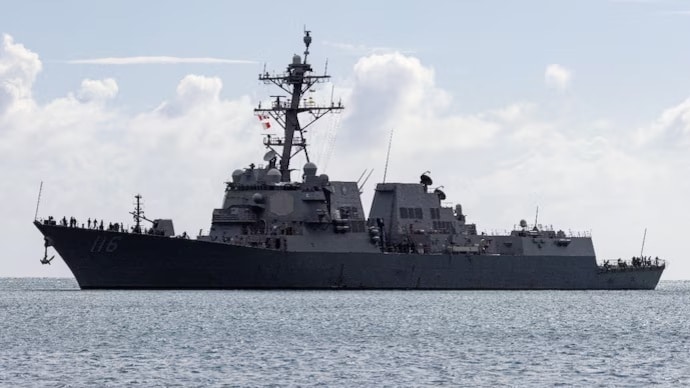
Iran mocked Donald Trump after the US moved to block its ports in the Strait of Hormuz, saying the waterway isn’t social media where you can block someone who blocks you. The jab came hours after Washington began restricting access to Iranian ports on Monday to ramp up pressure for a ceasefire.
“The Strait of Hormuz isn’t social media. If someone blocks you, you can’t just block them back, ”Iran posted from its Hyderabad embassy handle on X. The post quickly went viral.
The sharp, sarcastic post from Iran’s Consulate General in Hyderabad has cut through the noise of escalating geopolitical tensions, offering a viral moment of humour amid a serious maritime standoff.
See the post:
The comment was a direct jab at Trump’s statement on April 12, where he suggested that the US would respond to Iran’s actions by “blockading any and all ships trying to enter or leave the Strait of Hormuz.”
X users were impressed with the savage reply of the Iran Consulate and gave their meme-game a thumbs up.
Trump's statement came shortly after the collapse of high-stakes peace talks between Iran and the US in Islamabad, which had stretched over 21 hours but ultimately failed to produce a breakthrough.
The following day, a clarification from the US Central Command (CENTCOM) indicated that the proposed blockade would specifically target maritime traffic linked to Iranian ports, rather than a blanket restriction across the entire strait. However, even a limited blockade carries significant implications, given the strategic importance of the waterway.
The Strait of Hormuz is widely regarded as the world’s most critical oil choke point. Roughly a fifth of global petroleum liquids pass through this narrow stretch connecting the Persian Gulf to the Arabian Sea. Any disruption here has immediate ripple effects on global energy markets, trade routes, and regional stability.
What makes the current situation particularly tense is the overlap of two classical military strategies. Iran has historically leveraged its geographic advantage through “choke point warfare”, the ability to threaten or restrict passage through narrow waterways.
In response, the US appears to be invoking the doctrine of a naval blockade, defined in its 2022 Commander’s Handbook on the Law of Naval Operations as an operation aimed at preventing vessels of any state from entering or exiting designated areas under an adversary’s control.
Iran mocked Donald Trump after the US moved to block its ports in the Strait of Hormuz, saying the waterway isn’t social media where you can block someone who blocks you. The jab came hours after Washington began restricting access to Iranian ports on Monday to ramp up pressure for a ceasefire.
“The Strait of Hormuz isn’t social media. If someone blocks you, you can’t just block them back, ”Iran posted from its Hyderabad embassy handle on X. The post quickly went viral.
The sharp, sarcastic post from Iran’s Consulate General in Hyderabad has cut through the noise of escalating geopolitical tensions, offering a viral moment of humour amid a serious maritime standoff.
See the post:
The comment was a direct jab at Trump’s statement on April 12, where he suggested that the US would respond to Iran’s actions by “blockading any and all ships trying to enter or leave the Strait of Hormuz.”
X users were impressed with the savage reply of the Iran Consulate and gave their meme-game a thumbs up.
Trump's statement came shortly after the collapse of high-stakes peace talks between Iran and the US in Islamabad, which had stretched over 21 hours but ultimately failed to produce a breakthrough.
The following day, a clarification from the US Central Command (CENTCOM) indicated that the proposed blockade would specifically target maritime traffic linked to Iranian ports, rather than a blanket restriction across the entire strait. However, even a limited blockade carries significant implications, given the strategic importance of the waterway.
The Strait of Hormuz is widely regarded as the world’s most critical oil choke point. Roughly a fifth of global petroleum liquids pass through this narrow stretch connecting the Persian Gulf to the Arabian Sea. Any disruption here has immediate ripple effects on global energy markets, trade routes, and regional stability.
What makes the current situation particularly tense is the overlap of two classical military strategies. Iran has historically leveraged its geographic advantage through “choke point warfare”, the ability to threaten or restrict passage through narrow waterways.
In response, the US appears to be invoking the doctrine of a naval blockade, defined in its 2022 Commander’s Handbook on the Law of Naval Operations as an operation aimed at preventing vessels of any state from entering or exiting designated areas under an adversary’s control.

