Zomato rejects 'Rs 370 biryani bhejdu' notification claim amid Pranit More row
Zomato said a viral screenshot claiming to show a consent-related app notification was fake. The clarification has fed into the wider debate around the Pranit More show's Rs 370 biryani controversy and consent.
As the viral Rs 370 biryani controversy continues to dominate social media conversations, food delivery platform Zomato has stepped in to distance itself from a widely circulated screenshot that appeared to show a consent-related notification being sent through its app.
In a post shared on LinkedIn, Zomato categorically denied any connection to the screenshot, which had been making the rounds online in the wake of the controversy.
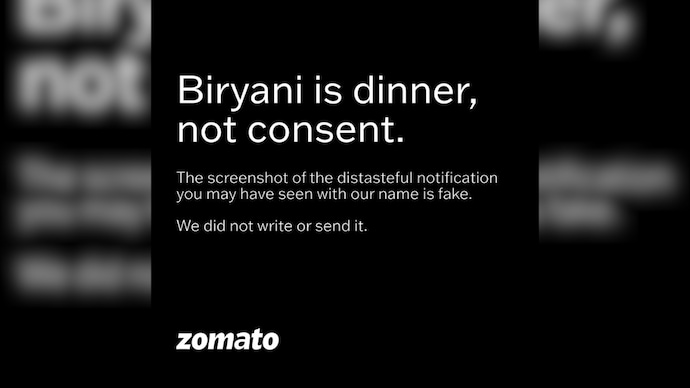
"An important clarification," the company wrote alongside a black graphic that read: "Biryani is dinner, not consent."
The statement further added: "The screenshot of the distasteful notification you may have seen with our name is fake. We did not write or send it."
Take a look at the post here:
The clarification comes as a screenshot of Zomato's notification for its users went viral, with the message reading: "Biryani bhejdu? Rs 370 ki hai bas"
This screenshot came at a time when brands, influencers, celebrities and even public institutions found themselves drawn into the debate surrounding the now-infamous "Rs 370 biryani" remark that sparked outrage across social media.
Take a look at the screenshot here:
The controversy traces its origins to a crowd-work segment from comedian Pranit More's stand-up show. In the viral clip, an audience member narrated a dating experience involving a plate of chicken biryani worth Rs 370 and implied that spending money on a meal entitled him to something in return from the woman he was on a date with.
This inspired a flood of memes, parody posts and brand-related screenshots, including the one Zomato has now labelled as fake. By publicly addressing the image, the company sought to make it clear that the notification was not created, approved or distributed by Zomato.
This comment was widely criticised online for promoting a transactional view of consent and relationships.
The backlash quickly snowballed beyond the comedy clip itself. The audience member at the centre of the controversy lost his job after the video went viral, while More also faced criticism for his handling of the interaction and later issued a public apology.
Over the past few days, the discussion has expanded into a broader conversation about dating culture, consent, entitlement and the responsibilities of content creators. Influencers, actors and internet personalities have weighed in, with many arguing that paying for a meal does not create any obligation or expectation of intimacy.
The phrase "Biryani is dinner, not consent" has itself become a recurring theme in online discussions surrounding the incident, with many users using it to emphasise the central issue at the heart of the debate: that consent cannot be bought, earned or implied through spending money on a date.
As the viral Rs 370 biryani controversy continues to dominate social media conversations, food delivery platform Zomato has stepped in to distance itself from a widely circulated screenshot that appeared to show a consent-related notification being sent through its app.
In a post shared on LinkedIn, Zomato categorically denied any connection to the screenshot, which had been making the rounds online in the wake of the controversy.
"An important clarification," the company wrote alongside a black graphic that read: "Biryani is dinner, not consent."
The statement further added: "The screenshot of the distasteful notification you may have seen with our name is fake. We did not write or send it."
Take a look at the post here:
The clarification comes as a screenshot of Zomato's notification for its users went viral, with the message reading: "Biryani bhejdu? Rs 370 ki hai bas"
This screenshot came at a time when brands, influencers, celebrities and even public institutions found themselves drawn into the debate surrounding the now-infamous "Rs 370 biryani" remark that sparked outrage across social media.
Take a look at the screenshot here:
The controversy traces its origins to a crowd-work segment from comedian Pranit More's stand-up show. In the viral clip, an audience member narrated a dating experience involving a plate of chicken biryani worth Rs 370 and implied that spending money on a meal entitled him to something in return from the woman he was on a date with.
This inspired a flood of memes, parody posts and brand-related screenshots, including the one Zomato has now labelled as fake. By publicly addressing the image, the company sought to make it clear that the notification was not created, approved or distributed by Zomato.
This comment was widely criticised online for promoting a transactional view of consent and relationships.
The backlash quickly snowballed beyond the comedy clip itself. The audience member at the centre of the controversy lost his job after the video went viral, while More also faced criticism for his handling of the interaction and later issued a public apology.
Over the past few days, the discussion has expanded into a broader conversation about dating culture, consent, entitlement and the responsibilities of content creators. Influencers, actors and internet personalities have weighed in, with many arguing that paying for a meal does not create any obligation or expectation of intimacy.
The phrase "Biryani is dinner, not consent" has itself become a recurring theme in online discussions surrounding the incident, with many users using it to emphasise the central issue at the heart of the debate: that consent cannot be bought, earned or implied through spending money on a date.

