Tehran won't give up legitimate right to nukes: Iranian envoy as US talks drag on
Iran's Ambassador to India Mohammad Fathali said Tehran will not surrender its 'legitimate right' to peaceful nuclear energy, insisting the nuclear issue is currently off the agenda in ongoing talks.
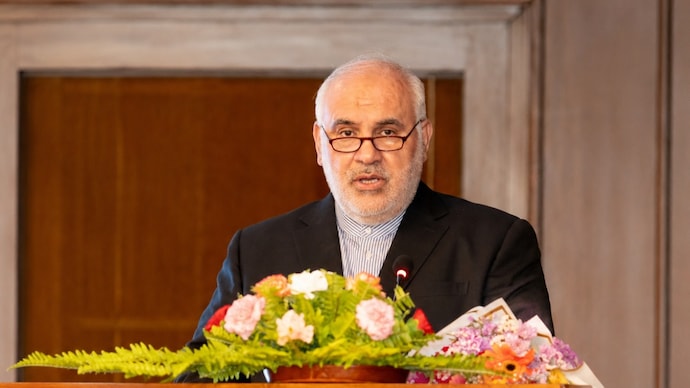
Iran will not give up "the legal and legitimate right" to the peaceful use of nuclear energy, and the nuclear issue is currently not on the agenda of the ongoing negotiations, Iran’s Ambassador to India said, reflecting on the peace efforts between Iran and the US.
"Regarding the issue of uranium enrichment, the position of the Islamic Republic of Iran is completely clear. We have stated many times that we will not give up the legal and legitimate rights of the Iranian people, including the right to the peaceful use of nuclear energy, which is mentioned in the Nuclear Proliferation Treaty (NPT)," Ambassador Mohammad Fathali said.
"For this reason, the nuclear issue is currently not on the agenda for negotiations, and talks on this matter will take place at a later stage within a specific framework," the envoy told news agency ANI.
Iran's latest proposal to the US for a peace deal reportedly includes ending the blockade of the Strait of Hormuz, with operational control remaining with Tehran, the immediate withdrawal of US forces from the Persian Gulf, and detailed deliberations on the nuclear issue at a later stage.
The nuclear issue has remained a major bone of contention between the US and Iran since the beginning of the talks. In his latest remarks, US President Donald Trump said, "Iran must agree that they will never have a Nuclear Weapon or Bomb."
The US has also demanded the handover of around 400 kilograms of nearly 60 per cent enriched uranium currently under Iran’s custody.
Ambassador Fathali also rejected Trump’s claims that Iran has been strategically and economically weakened due to sanctions and regional pressure.
"Those who claim that Iran has been strategically and economically weakened saw the true power of the Iranian nation and our armed forces during the 40-day war. The Islamic Republic of Iran showed that despite heavy pressure, it still possesses significant defensive, popular, and strategic capabilities and can defend its security and national interests," he said.
However, he acknowledged that sanctions have negatively affected Iran’s economy, adding that Tehran has never denied this reality.
With discussions between the US and Iran dragging on without a breakthrough, and both countries resuming attacks, the ambassador nevertheless expressed hope that diplomacy could still prevent a wider regional conflict.
"The Islamic Republic of Iran believes that what we see in the region today is the result of policies based on pressure, threats, and military action. These policies have not helped regional stability; instead, they have increased the risk of a wider crisis," he added.
"However, by relying on its people, internal capabilities, and strong principles, Iran has been able to stand firm against the pressures and threats of two nuclear powers. We have bitter experiences with past ceasefires and broken promises, which is why we look at these developments realistically," he added.
The Islamic Republic of Iran believes that any real framework for regional peace and stability must be built on realities on the ground and the interests of the nations in the region. Agreements that lack a genuine political and geopolitical foundation, and are instead driven by short-term considerations and foreign pressure, will neither be durable nor sustainable, he said.
On India’s role in promoting global peace and stability, Fathali said New Delhi has a crucial role to play.
"As a major global power and an influential member of the BRICS group, India plays an important role in strengthening multilateralism, supporting dialogue, and helping to reduce international tensions," Fathali observed.
He added that stability and security in the Persian Gulf would benefit all countries in the region and their economic partners, including India. The diplomat also said that both Iran and India possess significant comparative advantages that could create broad opportunities for expanding cooperation and engagement.
Iran will not give up "the legal and legitimate right" to the peaceful use of nuclear energy, and the nuclear issue is currently not on the agenda of the ongoing negotiations, Iran’s Ambassador to India said, reflecting on the peace efforts between Iran and the US.
"Regarding the issue of uranium enrichment, the position of the Islamic Republic of Iran is completely clear. We have stated many times that we will not give up the legal and legitimate rights of the Iranian people, including the right to the peaceful use of nuclear energy, which is mentioned in the Nuclear Proliferation Treaty (NPT)," Ambassador Mohammad Fathali said.
"For this reason, the nuclear issue is currently not on the agenda for negotiations, and talks on this matter will take place at a later stage within a specific framework," the envoy told news agency ANI.
Iran's latest proposal to the US for a peace deal reportedly includes ending the blockade of the Strait of Hormuz, with operational control remaining with Tehran, the immediate withdrawal of US forces from the Persian Gulf, and detailed deliberations on the nuclear issue at a later stage.
The nuclear issue has remained a major bone of contention between the US and Iran since the beginning of the talks. In his latest remarks, US President Donald Trump said, "Iran must agree that they will never have a Nuclear Weapon or Bomb."
The US has also demanded the handover of around 400 kilograms of nearly 60 per cent enriched uranium currently under Iran’s custody.
Ambassador Fathali also rejected Trump’s claims that Iran has been strategically and economically weakened due to sanctions and regional pressure.
"Those who claim that Iran has been strategically and economically weakened saw the true power of the Iranian nation and our armed forces during the 40-day war. The Islamic Republic of Iran showed that despite heavy pressure, it still possesses significant defensive, popular, and strategic capabilities and can defend its security and national interests," he said.
However, he acknowledged that sanctions have negatively affected Iran’s economy, adding that Tehran has never denied this reality.
With discussions between the US and Iran dragging on without a breakthrough, and both countries resuming attacks, the ambassador nevertheless expressed hope that diplomacy could still prevent a wider regional conflict.
"The Islamic Republic of Iran believes that what we see in the region today is the result of policies based on pressure, threats, and military action. These policies have not helped regional stability; instead, they have increased the risk of a wider crisis," he added.
"However, by relying on its people, internal capabilities, and strong principles, Iran has been able to stand firm against the pressures and threats of two nuclear powers. We have bitter experiences with past ceasefires and broken promises, which is why we look at these developments realistically," he added.
The Islamic Republic of Iran believes that any real framework for regional peace and stability must be built on realities on the ground and the interests of the nations in the region. Agreements that lack a genuine political and geopolitical foundation, and are instead driven by short-term considerations and foreign pressure, will neither be durable nor sustainable, he said.
On India’s role in promoting global peace and stability, Fathali said New Delhi has a crucial role to play.
"As a major global power and an influential member of the BRICS group, India plays an important role in strengthening multilateralism, supporting dialogue, and helping to reduce international tensions," Fathali observed.
He added that stability and security in the Persian Gulf would benefit all countries in the region and their economic partners, including India. The diplomat also said that both Iran and India possess significant comparative advantages that could create broad opportunities for expanding cooperation and engagement.

