Iran war depleted US Tomahawk, Patriot missile arsenal, may need years to rebuild
A CSIS analysis said the US may need years to rebuild key missile stockpiles after the Iran war. The report has raised questions about readiness if another conflict erupts, particularly over Taiwan.
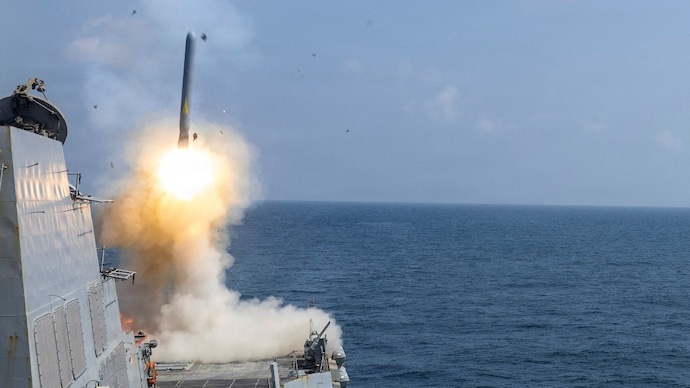
America's military might may look unstoppable, but behind the scenes, the Pentagon is now racing against time to refill some of its most critical weapons stockpiles after months of war with Iran. A new analysis by the Center for Strategic and International Studies (CSIS), cited by the news agency Associated Press, says the United States could need at least three years to rebuild major missile systems heavily used during the conflict. Some inventories may take even longer to fully recover.
The report raises fresh questions about whether the US would be prepared for another major war -- especially a possible confrontation with China over Taiwan. According to the analysis, the US heavily relied on Tomahawk cruise missiles, Patriot interceptors and THAAD missile defence systems during the Iran conflict. These weapons were used to strike targets, intercept missiles and defend against drone attacks across the region.
"The United States has enough munitions for any plausible scenario in the Iran war," the report said. But it warned that depleted inventories have created "a window of vulnerability" if another conflict breaks out in the western Pacific.
PENTAGON WARNS OF A TIME PROBLEM
The study says the biggest issue is no longer money. It is production speed. Even though the Trump administration has proposed a record $1.5 trillion defence budget for 2027, military factories still cannot quickly replace the sophisticated weapons already used in battle.
"It takes time to expand production capacity and to build these complex systems," the report noted.
CSIS warned the vulnerability could last several years before stockpiles return to previous levels. It may take even longer before inventories reach the levels military planners actually want.
The report surfaces as tensions between Washington and Beijing continue to rise.
China has repeatedly stated it wants its military prepared to take Taiwan by force if necessary by 2027. Chinese President Xi Jinping recently warned that poor handling of relations with Taiwan could push China and the US into direct conflict. His stance was evident during Trump's China visit.
TRUMP ADMINISTRATION DEFENDS US READINESS
Despite the warnings, President Donald Trump and Defence Secretary Pete Hegseth insist the US remains fully capable of handling any future conflict.
The administration says billions of dollars are already flowing into the defence industry to expand production lines and open new factories.
Speaking during a Cabinet meeting, Hegseth praised Trump's push to strengthen American defence manufacturing. He said private contractors were building new plants and speeding up weapons production "so that we're getting weapons faster than ever".
Chief Pentagon spokesman Sean Parnell also defended the military's readiness.
"We have executed multiple successful operations across combatant commands while ensuring the US military possesses a deep arsenal of capabilities," Parnell said in a statement.
Still, several defence analysts remain unconvinced.
Virginia Burger, a former Marine officer and defence analyst at the watchdog group Project On Government Oversight, said Pentagon officials likely knew the risks before the war expanded.
"If we go to this fight, even in the most conservative estimates, we are drawing down our stockpiles to a critical level," Burger told the AP.
YEARS NEEDED TO REBUILD MISSILE STOCKS
The numbers in the report paint a worrying picture, for US.
According to CSIS estimates, the US fired more than 1,000 Tomahawk missiles during the Iran conflict. At the current production pace, rebuilding those inventories may take until late 2030.
The problem is partly linked to slow production from earlier decades. Fewer than 200 Tomahawk missiles are built each year because previous military planners assumed future wars would be short. Raytheon, which manufactures the missiles, now plans to dramatically increase production and eventually build more than 1,000 annually.
The situation is similar for air defence systems. Replacing nearly 290 THAAD interceptors used during the conflict could take until the end of 2029, according to the report. Restocking more than 1,000 Patriot interceptors may also stretch into mid-2029.
Lockheed Martin, which produces both systems, said it is investing billions of dollars to increase manufacturing capacity across the United States.
ROOTS OF THE PROBLEM GO BACK DECADES
Mark Cancian, a retired Marine colonel and co-author of the report, said the current shortage can be traced back to the years after the Cold War.
Following the collapse of the Soviet Union in 1991, the US military believed future wars would be short and regional. As a result, defence contractors built smaller production networks and maintained limited stockpiles.
Russia's invasion of Ukraine changed that thinking.
The war showed how quickly advanced weapons can disappear during long conflicts. At the same time, American strategists began focusing more heavily on possible military tensions with China.
Cancian said rebuilding the system will not happen overnight because the defence industry depends on complicated supply chains and specialised parts. He also noted that President Joe Biden's administration had already started increasing weapons production before Trump returned to office.
The report says the situation is serious but not hopeless. CSIS argued that the US military still holds major advantages because of its combat experience in recent conflicts involving Iran, Venezuela and Yemen's Houthi rebels.
China, meanwhile, has not fought a major war in decades.
America's military might may look unstoppable, but behind the scenes, the Pentagon is now racing against time to refill some of its most critical weapons stockpiles after months of war with Iran. A new analysis by the Center for Strategic and International Studies (CSIS), cited by the news agency Associated Press, says the United States could need at least three years to rebuild major missile systems heavily used during the conflict. Some inventories may take even longer to fully recover.
The report raises fresh questions about whether the US would be prepared for another major war -- especially a possible confrontation with China over Taiwan. According to the analysis, the US heavily relied on Tomahawk cruise missiles, Patriot interceptors and THAAD missile defence systems during the Iran conflict. These weapons were used to strike targets, intercept missiles and defend against drone attacks across the region.
"The United States has enough munitions for any plausible scenario in the Iran war," the report said. But it warned that depleted inventories have created "a window of vulnerability" if another conflict breaks out in the western Pacific.
PENTAGON WARNS OF A TIME PROBLEM
The study says the biggest issue is no longer money. It is production speed. Even though the Trump administration has proposed a record $1.5 trillion defence budget for 2027, military factories still cannot quickly replace the sophisticated weapons already used in battle.
"It takes time to expand production capacity and to build these complex systems," the report noted.
CSIS warned the vulnerability could last several years before stockpiles return to previous levels. It may take even longer before inventories reach the levels military planners actually want.
The report surfaces as tensions between Washington and Beijing continue to rise.
China has repeatedly stated it wants its military prepared to take Taiwan by force if necessary by 2027. Chinese President Xi Jinping recently warned that poor handling of relations with Taiwan could push China and the US into direct conflict. His stance was evident during Trump's China visit.
TRUMP ADMINISTRATION DEFENDS US READINESS
Despite the warnings, President Donald Trump and Defence Secretary Pete Hegseth insist the US remains fully capable of handling any future conflict.
The administration says billions of dollars are already flowing into the defence industry to expand production lines and open new factories.
Speaking during a Cabinet meeting, Hegseth praised Trump's push to strengthen American defence manufacturing. He said private contractors were building new plants and speeding up weapons production "so that we're getting weapons faster than ever".
Chief Pentagon spokesman Sean Parnell also defended the military's readiness.
"We have executed multiple successful operations across combatant commands while ensuring the US military possesses a deep arsenal of capabilities," Parnell said in a statement.
Still, several defence analysts remain unconvinced.
Virginia Burger, a former Marine officer and defence analyst at the watchdog group Project On Government Oversight, said Pentagon officials likely knew the risks before the war expanded.
"If we go to this fight, even in the most conservative estimates, we are drawing down our stockpiles to a critical level," Burger told the AP.
YEARS NEEDED TO REBUILD MISSILE STOCKS
The numbers in the report paint a worrying picture, for US.
According to CSIS estimates, the US fired more than 1,000 Tomahawk missiles during the Iran conflict. At the current production pace, rebuilding those inventories may take until late 2030.
The problem is partly linked to slow production from earlier decades. Fewer than 200 Tomahawk missiles are built each year because previous military planners assumed future wars would be short. Raytheon, which manufactures the missiles, now plans to dramatically increase production and eventually build more than 1,000 annually.
The situation is similar for air defence systems. Replacing nearly 290 THAAD interceptors used during the conflict could take until the end of 2029, according to the report. Restocking more than 1,000 Patriot interceptors may also stretch into mid-2029.
Lockheed Martin, which produces both systems, said it is investing billions of dollars to increase manufacturing capacity across the United States.
ROOTS OF THE PROBLEM GO BACK DECADES
Mark Cancian, a retired Marine colonel and co-author of the report, said the current shortage can be traced back to the years after the Cold War.
Following the collapse of the Soviet Union in 1991, the US military believed future wars would be short and regional. As a result, defence contractors built smaller production networks and maintained limited stockpiles.
Russia's invasion of Ukraine changed that thinking.
The war showed how quickly advanced weapons can disappear during long conflicts. At the same time, American strategists began focusing more heavily on possible military tensions with China.
Cancian said rebuilding the system will not happen overnight because the defence industry depends on complicated supply chains and specialised parts. He also noted that President Joe Biden's administration had already started increasing weapons production before Trump returned to office.
The report says the situation is serious but not hopeless. CSIS argued that the US military still holds major advantages because of its combat experience in recent conflicts involving Iran, Venezuela and Yemen's Houthi rebels.
China, meanwhile, has not fought a major war in decades.

