Bearing scars of Israel-Iran war, Jerusalem treads line between hope and fatigue
Jerusalem is living with the visible and emotional scars of the Israel-Iran conflict. The city's guarded calm reflects both lingering hope for de-escalation and deep public fatigue.
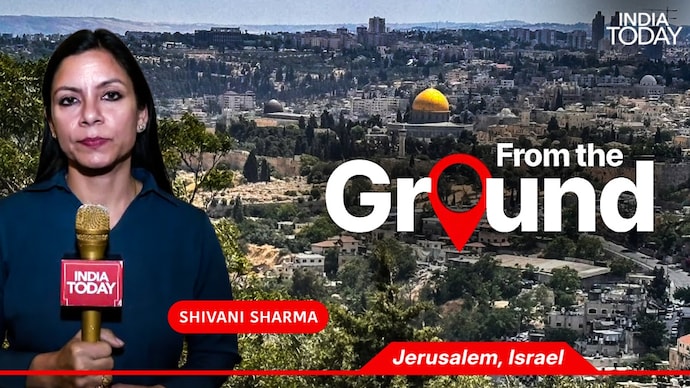
As I return to Israel after a year, the atmosphere feels vastly different. I covered the 12-day Iran-Israel war in June 2025, which saw aggressive attacks by Iranian long-range ballistic missiles on Israel until a ceasefire was reached. Then, in the latter half of February, hostilities resumed under Operations Epic Fury and Rising Lion. After 40 days of intense fighting, a fragile pause remains, but uncertainty and anxiety continue to grip Israel. While the United States claims negotiations for a peace deal with Iran are progressing well, Israel says it reserves the freedom to act against any threat. As a journalist, being on the ground in a region witnessing such intense geopolitical and security developments is essential to understanding the reality beyond the headlines.
I began my reporting in the historic city of Jerusalem, where history, religion and security intersect unlike anywhere else in the world. The city’s uniform limestone architecture gives it the appearance of the 'City of Gold', as it is often called. I entered through Jaffa Gate into Jerusalem’s Old City, where centuries of history now stand alongside the uncertainty of a region still gripped by conflict since the October 2023 Hamas attacks. The massive stone walls, narrow alleyways and constant security presence tell the story of a city that remains at the heart of the wider West Asia crisis.
As the United States speaks of renewed peace negotiations with Iran, and US President Donald Trump claims Washington is working towards a deal with Tehran, the mood on the ground in Israel remains cautious rather than optimistic. Across Jerusalem, there is an uneasy calm -- controlled, but tense.
Walking through the ancient pathways near the Old City, I noticed far fewer tourists than Jerusalem is usually known for. Security checks are tighter, armed personnel remain deployed at key locations, and many local residents say uncertainty has now become part of everyday life.
Near the entrance to the market, an elderly shopkeeper arranging souvenirs outside his nearly empty store told me, “Before the war, this lane was full every evening. Now, some days we wait hours just to see a few tourists.” Another local caf owner said the war has deeply hurt businesses dependent on pilgrims and international visitors. “People are afraid flights will stop or attacks will happen again. Tourism is our life here,” he said.
From the shadows of the old walls, the contrast between Jerusalem’s spiritual significance and the realities of modern conflict becomes impossible to ignore. Israel continues to maintain that it reserves the right to respond to threats emerging from Lebanon, particularly from Hezbollah positions near its northern border, even as diplomatic efforts continue in parallel.
I later moved to the Mount of Olives, overlooking one of the world’s most religiously and politically sensitive landscapes. From there, the entire city unfolds before you -- the golden dome of the Al-Aqsa Mosque complex, ancient churches, Jewish burial grounds and historic neighbourhoods standing side by side in a city sacred to Jews, Muslims and Christians alike.
But beneath the spiritual significance lies visible anxiety. Residents speak softly about missile alerts, regional tensions and fears that the conflict could widen further. Even with international calls for de-escalation, the atmosphere remains guarded. Tourist movement has slowed dramatically, and locals say the economic and emotional toll of nearly two years of conflict is becoming increasingly visible.
One young resident I spoke to near the Mount of Olives said, “Jerusalem has always survived conflict, but people are tired. Everyone wants stability, whether they are Jewish, Muslim or Christian.”
Inside the Church of the Holy Sepulchre -- revered by Christians as the site where Jesus Christ was crucified and buried -- signs of the wider regional conflict are also visible. Church officials pointed to areas damaged by missile shrapnel during an Iranian attack, despite Tehran publicly stating that religious sites in Jerusalem would not be targeted.
Yet prayers continue uninterrupted.
Pilgrims quietly lit candles while clergy members carried on with services, even as scars of the conflict remained visible on parts of the structure. A visiting worshipper from Europe told me, “Seeing damage here is emotional. This place belongs spiritually to millions across the world. But people still come because faith is stronger than fear.”
The symbolic dimensions of the Israel-Iran confrontation are becoming increasingly apparent, especially in a city where religion and geopolitics are deeply intertwined.
In Jerusalem’s once-crowded market lanes, the impact of the war is even more visible. Areas that would normally be packed with pilgrims, tourists and shoppers now appear unusually subdued. Several souvenir shops remain shut, restaurants close earlier than before, and many businesses are struggling to survive.
Tour guide David Baruch, speaking to me in the market area, said repeated security tensions and uncertainty have devastated livelihoods dependent on tourism. “Jerusalem survives on visitors. When people stop coming, everything slows down -- hotels, restaurants, guides, transport, all of it,” he explained.
The silence in parts of the market sharply contrasts with Jerusalem’s image as one of the busiest religious tourism centres in the world.
I ended the day at the Western Wall, Judaism’s holiest prayer site, where faith and patriotism continue to stand together amid conflict. Worshippers gathered to pray for peace, security and soldiers deployed across multiple fronts.
Among them were schoolgirls visiting the site, many carrying Israeli flags. “We don’t want war, but we trust our soldiers,” one of them told me. Another added, “People here are used to uncertainty, but we still believe life will become normal again.”
The handwritten prayers tucked into the ancient stones, the chants of worshippers and the armed security personnel standing guard together reflected the reality of modern Israel -- a country balancing deep spiritual history with constant security challenges.
As diplomatic conversations continue far away in global capitals, here in Jerusalem the conflict is not an abstract geopolitical issue. It is visible in deserted markets, anxious conversations, guarded streets and the resilience of people trying to continue daily life in one of the world’s most contested and sacred cities.
As I return to Israel after a year, the atmosphere feels vastly different. I covered the 12-day Iran-Israel war in June 2025, which saw aggressive attacks by Iranian long-range ballistic missiles on Israel until a ceasefire was reached. Then, in the latter half of February, hostilities resumed under Operations Epic Fury and Rising Lion. After 40 days of intense fighting, a fragile pause remains, but uncertainty and anxiety continue to grip Israel. While the United States claims negotiations for a peace deal with Iran are progressing well, Israel says it reserves the freedom to act against any threat. As a journalist, being on the ground in a region witnessing such intense geopolitical and security developments is essential to understanding the reality beyond the headlines.
I began my reporting in the historic city of Jerusalem, where history, religion and security intersect unlike anywhere else in the world. The city’s uniform limestone architecture gives it the appearance of the 'City of Gold', as it is often called. I entered through Jaffa Gate into Jerusalem’s Old City, where centuries of history now stand alongside the uncertainty of a region still gripped by conflict since the October 2023 Hamas attacks. The massive stone walls, narrow alleyways and constant security presence tell the story of a city that remains at the heart of the wider West Asia crisis.
As the United States speaks of renewed peace negotiations with Iran, and US President Donald Trump claims Washington is working towards a deal with Tehran, the mood on the ground in Israel remains cautious rather than optimistic. Across Jerusalem, there is an uneasy calm -- controlled, but tense.
Walking through the ancient pathways near the Old City, I noticed far fewer tourists than Jerusalem is usually known for. Security checks are tighter, armed personnel remain deployed at key locations, and many local residents say uncertainty has now become part of everyday life.
Near the entrance to the market, an elderly shopkeeper arranging souvenirs outside his nearly empty store told me, “Before the war, this lane was full every evening. Now, some days we wait hours just to see a few tourists.” Another local caf owner said the war has deeply hurt businesses dependent on pilgrims and international visitors. “People are afraid flights will stop or attacks will happen again. Tourism is our life here,” he said.
From the shadows of the old walls, the contrast between Jerusalem’s spiritual significance and the realities of modern conflict becomes impossible to ignore. Israel continues to maintain that it reserves the right to respond to threats emerging from Lebanon, particularly from Hezbollah positions near its northern border, even as diplomatic efforts continue in parallel.
I later moved to the Mount of Olives, overlooking one of the world’s most religiously and politically sensitive landscapes. From there, the entire city unfolds before you -- the golden dome of the Al-Aqsa Mosque complex, ancient churches, Jewish burial grounds and historic neighbourhoods standing side by side in a city sacred to Jews, Muslims and Christians alike.
But beneath the spiritual significance lies visible anxiety. Residents speak softly about missile alerts, regional tensions and fears that the conflict could widen further. Even with international calls for de-escalation, the atmosphere remains guarded. Tourist movement has slowed dramatically, and locals say the economic and emotional toll of nearly two years of conflict is becoming increasingly visible.
One young resident I spoke to near the Mount of Olives said, “Jerusalem has always survived conflict, but people are tired. Everyone wants stability, whether they are Jewish, Muslim or Christian.”
Inside the Church of the Holy Sepulchre -- revered by Christians as the site where Jesus Christ was crucified and buried -- signs of the wider regional conflict are also visible. Church officials pointed to areas damaged by missile shrapnel during an Iranian attack, despite Tehran publicly stating that religious sites in Jerusalem would not be targeted.
Yet prayers continue uninterrupted.
Pilgrims quietly lit candles while clergy members carried on with services, even as scars of the conflict remained visible on parts of the structure. A visiting worshipper from Europe told me, “Seeing damage here is emotional. This place belongs spiritually to millions across the world. But people still come because faith is stronger than fear.”
The symbolic dimensions of the Israel-Iran confrontation are becoming increasingly apparent, especially in a city where religion and geopolitics are deeply intertwined.
In Jerusalem’s once-crowded market lanes, the impact of the war is even more visible. Areas that would normally be packed with pilgrims, tourists and shoppers now appear unusually subdued. Several souvenir shops remain shut, restaurants close earlier than before, and many businesses are struggling to survive.
Tour guide David Baruch, speaking to me in the market area, said repeated security tensions and uncertainty have devastated livelihoods dependent on tourism. “Jerusalem survives on visitors. When people stop coming, everything slows down -- hotels, restaurants, guides, transport, all of it,” he explained.
The silence in parts of the market sharply contrasts with Jerusalem’s image as one of the busiest religious tourism centres in the world.
I ended the day at the Western Wall, Judaism’s holiest prayer site, where faith and patriotism continue to stand together amid conflict. Worshippers gathered to pray for peace, security and soldiers deployed across multiple fronts.
Among them were schoolgirls visiting the site, many carrying Israeli flags. “We don’t want war, but we trust our soldiers,” one of them told me. Another added, “People here are used to uncertainty, but we still believe life will become normal again.”
The handwritten prayers tucked into the ancient stones, the chants of worshippers and the armed security personnel standing guard together reflected the reality of modern Israel -- a country balancing deep spiritual history with constant security challenges.
As diplomatic conversations continue far away in global capitals, here in Jerusalem the conflict is not an abstract geopolitical issue. It is visible in deserted markets, anxious conversations, guarded streets and the resilience of people trying to continue daily life in one of the world’s most contested and sacred cities.

