Panicked Pakistan shields key air base struck by India during Op Sindoor
Recent satellite images show new construction at Pakistan's vital Nur Khan air base. Experts said it points to bigger military concerns after India's Operation Sindoor last year, which targeted 11 military sites.
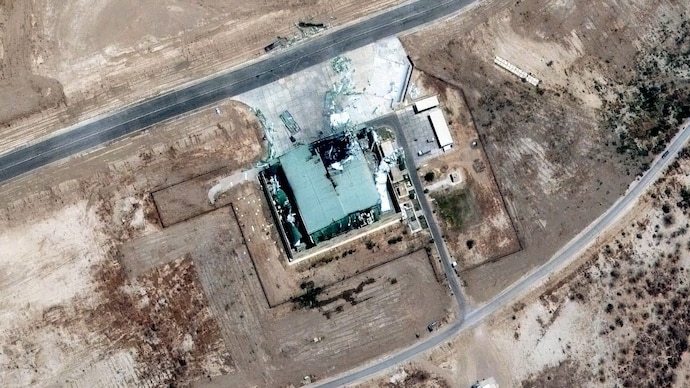
Pounded by India during last year's Operation Sindoor, the vital Nur Khan air base in Pakistan is being turned into a fortress by army chief Asim Munir in case of any future conflict. Latest satellite images show fresh construction activity at Nur Khan, one of Pakistan's most strategically critical air bases located near the army headquarters. The fact that repair work is still going on, nearly a year since Operation Sindoor, reveals the extensive damage it suffered during the hostilities.
The satellite images, posted by geo-intelligence expert Damien Symon, show new hardened hangars being constructed across the air base in Rawalpindi. Symon underlined that this was not just any routine construction. While such hangars offer environmental protection to the PAF fleet, experts underlined that the real aim was to limit ISR (intelligence, surveillance, reconnaissance) collection over the site by adversaries (read India).
Such a move is likely to make it more difficult for India to monitor activities at the air base. For Pakistan, it's a case of being once bitten, twice shy.
WHY IS PAKISTAN FORTIFYING NUR KHAN AIR BASE?
Operation Sindoor, launched in response to the deadly Pahalgam attack, laid bare Pakistan's vulnerability as India struck 11 of its key military bases with impunity.
The strike at Nur Khan, just 25 km from Pakistan's capital, Islamabad, broke Pakistan's back as it eventually reached out to India for a ceasefire after three days of hostilities. After all, it is not just any other military site.
Nur Khan handles both military operations and serves as a high-security entry point for diplomatic delegations. It is also a key logistical hub for Pakistan's armed forces. Significantly, it lies near Pakistan's Strategic Plans Division (SPD), which oversees the country's nuclear arsenal.
Operation Sindoor showed India's ability to track and target enemy assets using advanced surveillance systems deep inside Pakistan. For Pakistan, the lessons were clear. Such an ability by India makes its aircraft parked in the open more vulnerable. In future conflicts, they can be easily spotted and targeted.
Defence expert Sandeep Unnithan told indiatoday.tech that the Iran conflict had laid bare the consequences of drone warfare. "No one's going to park anything in the open in the age of swarm drones," he said.
This is why Pakistan is in a rush to construct hardened hangars to hide its aircraft from such surveillance systems. And no better place to start than the Nur Khan air base, which suffered significant damage in Indian drone strikes.
It was acknowledged by Pakistan's Deputy Prime Minister Ishaq Dar, who also admitted injuries to some personnel. "In 36 hours, at least 80 drones were sent," Dar told Pakistani media.
The Indian strikes not only led to a massive crater on the runway but also damaged the operations room, hangars, fuel trucks, and an IL-78 air tanker.
The military site was recently in the spotlight after US Vice President JD Vance landed at the Nur Khan air base last week to take part in peace talks with Iran. The move was seen as an attempt by Pakistan to send a message to India as Islamabad placed itself at the centre of world diplomacy.
Pounded by India during last year's Operation Sindoor, the vital Nur Khan air base in Pakistan is being turned into a fortress by army chief Asim Munir in case of any future conflict. Latest satellite images show fresh construction activity at Nur Khan, one of Pakistan's most strategically critical air bases located near the army headquarters. The fact that repair work is still going on, nearly a year since Operation Sindoor, reveals the extensive damage it suffered during the hostilities.
The satellite images, posted by geo-intelligence expert Damien Symon, show new hardened hangars being constructed across the air base in Rawalpindi. Symon underlined that this was not just any routine construction. While such hangars offer environmental protection to the PAF fleet, experts underlined that the real aim was to limit ISR (intelligence, surveillance, reconnaissance) collection over the site by adversaries (read India).
Such a move is likely to make it more difficult for India to monitor activities at the air base. For Pakistan, it's a case of being once bitten, twice shy.
WHY IS PAKISTAN FORTIFYING NUR KHAN AIR BASE?
Operation Sindoor, launched in response to the deadly Pahalgam attack, laid bare Pakistan's vulnerability as India struck 11 of its key military bases with impunity.
The strike at Nur Khan, just 25 km from Pakistan's capital, Islamabad, broke Pakistan's back as it eventually reached out to India for a ceasefire after three days of hostilities. After all, it is not just any other military site.
Nur Khan handles both military operations and serves as a high-security entry point for diplomatic delegations. It is also a key logistical hub for Pakistan's armed forces. Significantly, it lies near Pakistan's Strategic Plans Division (SPD), which oversees the country's nuclear arsenal.
Operation Sindoor showed India's ability to track and target enemy assets using advanced surveillance systems deep inside Pakistan. For Pakistan, the lessons were clear. Such an ability by India makes its aircraft parked in the open more vulnerable. In future conflicts, they can be easily spotted and targeted.
Defence expert Sandeep Unnithan told indiatoday.tech that the Iran conflict had laid bare the consequences of drone warfare. "No one's going to park anything in the open in the age of swarm drones," he said.
This is why Pakistan is in a rush to construct hardened hangars to hide its aircraft from such surveillance systems. And no better place to start than the Nur Khan air base, which suffered significant damage in Indian drone strikes.
It was acknowledged by Pakistan's Deputy Prime Minister Ishaq Dar, who also admitted injuries to some personnel. "In 36 hours, at least 80 drones were sent," Dar told Pakistani media.
The Indian strikes not only led to a massive crater on the runway but also damaged the operations room, hangars, fuel trucks, and an IL-78 air tanker.
The military site was recently in the spotlight after US Vice President JD Vance landed at the Nur Khan air base last week to take part in peace talks with Iran. The move was seen as an attempt by Pakistan to send a message to India as Islamabad placed itself at the centre of world diplomacy.

