Fuel rationing on the table as crisis-hit Pakistan faces energy shock
After announcing austerity measures and steep fuel price hikes, Pakistan is mulling fuel rationing if the US-Iran war drags on.
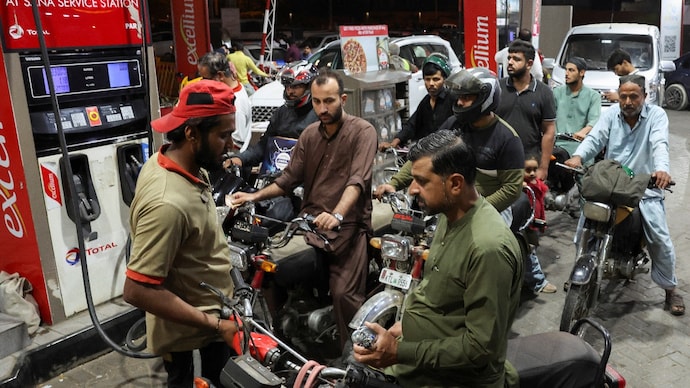
Pakistan is weighing fuel rationing as a deepening energy crunch, triggered by disruptions linked to the US-Iran war, pushes the already fragile economy closer to the edge.
Finance Minister Muhammad Aurangzeb hinted that fuel rationing remains a fallback option if the conflict drags on, even as the government publicly leans on price hikes and subsidies to curb demand.
"Price transmission combined with targeted subsidies is a much better way to go than going into rationing," Aurangzeb said. "But again... it all depends how long this goes and how far this goes," he told reporters, noting that rationing is "on the table".
The warning comes as global oil prices surge amid uncertainty around the Strait of Hormuz, a vital artery for energy supplies. Pakistan, which imports over 80 per cent of its oil, has been acutely exposed to the shock as a result of years of policy drift and over-reliance on external markets.
Within days of supply disruptions, the Shehbaz Sharif government rolled out sweeping austerity measures. Schools were shut for two weeks, fuel quotas for official vehicles slashed, and a four-day work week imposed for government employees. Half the government workforce was asked to work from home on rotation, and the private sector was advised to follow suit.
The steps also included capping weddings at 200 guests and restricting menus to a single main dish.
Still, the measures have done little to shield citizens from the economic fallout. Petrol and diesel prices have been hiked by as much as 54 per cent, piling pressure on households already grappling with high inflation.
Petroleum Minister Pervez Malik had defended the fuel price hikes as “necessary and unavoidable”.
Meanwhile, daily power cuts of up to two hours have been introduced to contain electricity costs, fuelling public anger as outages disrupt businesses and routine life.
Despite Aurangzeb’s insistence that rationing could trigger “law and order situations” seen elsewhere, the steady escalation of restrictions suggests Pakistan may be running out of options.
Pakistan is weighing fuel rationing as a deepening energy crunch, triggered by disruptions linked to the US-Iran war, pushes the already fragile economy closer to the edge.
Finance Minister Muhammad Aurangzeb hinted that fuel rationing remains a fallback option if the conflict drags on, even as the government publicly leans on price hikes and subsidies to curb demand.
"Price transmission combined with targeted subsidies is a much better way to go than going into rationing," Aurangzeb said. "But again... it all depends how long this goes and how far this goes," he told reporters, noting that rationing is "on the table".
The warning comes as global oil prices surge amid uncertainty around the Strait of Hormuz, a vital artery for energy supplies. Pakistan, which imports over 80 per cent of its oil, has been acutely exposed to the shock as a result of years of policy drift and over-reliance on external markets.
Within days of supply disruptions, the Shehbaz Sharif government rolled out sweeping austerity measures. Schools were shut for two weeks, fuel quotas for official vehicles slashed, and a four-day work week imposed for government employees. Half the government workforce was asked to work from home on rotation, and the private sector was advised to follow suit.
The steps also included capping weddings at 200 guests and restricting menus to a single main dish.
Still, the measures have done little to shield citizens from the economic fallout. Petrol and diesel prices have been hiked by as much as 54 per cent, piling pressure on households already grappling with high inflation.
Petroleum Minister Pervez Malik had defended the fuel price hikes as “necessary and unavoidable”.
Meanwhile, daily power cuts of up to two hours have been introduced to contain electricity costs, fuelling public anger as outages disrupt businesses and routine life.
Despite Aurangzeb’s insistence that rationing could trigger “law and order situations” seen elsewhere, the steady escalation of restrictions suggests Pakistan may be running out of options.

