Don't want your help anymore: Trump slams NATO after Iran moves to open Hormuz
Speaking at a Turning Point USA event in Arizona, the US President said that NATO had reached out to Washington only after the situation in the Strait of Hormuz had begun to stabilise.
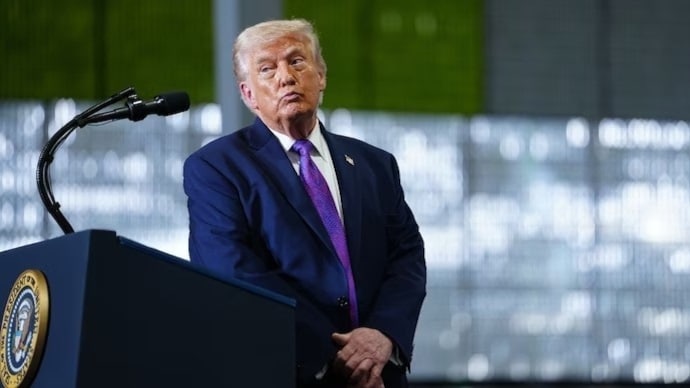
US President Donald Trump on Friday sharply criticised NATO allies while commenting on the recent crisis surrounding the Strait of Hormuz, arguing that the alliance had been ineffective during a critical phase of tensions and asserting that it depended more on the US than America needing them.
Speaking at a Turning Point USA event in Arizona, Trump said NATO had reached out to Washington only after the situation in the key maritime corridor had begun to stabilise. He expressed dissatisfaction with the alliance’s earlier response during the period of heightened uncertainty in the Gulf.
"Now that the Strait of Hormuz situation is almost over, I received a call from NATO asking if we would like some help. I told them I would have liked your help two months ago, but now I really don't want your help anymore, because they were absolutely useless when we needed them. But actually, we never needed them. They needed us," Trump said.
Trump’s remarks come as geopolitical tensions in the region have shown signs of easing, particularly after Iran indicated that commercial shipping through the vital waterway would remain open during a ceasefire period.
The Strait of Hormuz is a critical global energy route, handling roughly a fifth of the world’s oil and liquefied natural gas shipments.
Reinforcing his criticism, Trump described NATO as ineffective in earlier comments and suggested that its outreach came too late to be meaningful.
In a separate post, he said, "Now that the Hormuz Strait situation is over, I received a call from NATO asking if we would need some help. I TOLD THEM TO STAY AWAY, UNLESS THEY JUST WANT TO LOAD UP THEIR SHIPS WITH OIL. They were useless when needed, a paper tiger!"
At the same time, the US President praised key regional partners for their role in easing tensions and maintaining stability in the Gulf.
"Thank you to Saudi Arabia, UAE, and Qatar for your great bravery and help," he said, acknowledging their contributions during the crisis.
Iranian Foreign Minister Abbas Araghchi confirmed that shipping lanes would remain accessible, stating, "In line with the ceasefire in Lebanon, the passage for all commercial vessels through the Strait of Hormuz is declared completely open for the remaining period of the ceasefire, on the coordinated route as already announced by Ports and Maritime Organisation of the Islamic Republic of Iran".
Trump also reiterated that the waterway was operational, while maintaining a firm US posture toward Iran. "The Strait of Hormuz is completely open and ready for business and full passage, but the naval blockade will remain in full force and effect as it pertains to Iran only, until such time as our transaction with Iran is 100% complete," he said.
The developments underscore ongoing debates over NATO’s role in global security and crisis response, particularly in strategically sensitive regions.
US President Donald Trump on Friday sharply criticised NATO allies while commenting on the recent crisis surrounding the Strait of Hormuz, arguing that the alliance had been ineffective during a critical phase of tensions and asserting that it depended more on the US than America needing them.
Speaking at a Turning Point USA event in Arizona, Trump said NATO had reached out to Washington only after the situation in the key maritime corridor had begun to stabilise. He expressed dissatisfaction with the alliance’s earlier response during the period of heightened uncertainty in the Gulf.
"Now that the Strait of Hormuz situation is almost over, I received a call from NATO asking if we would like some help. I told them I would have liked your help two months ago, but now I really don't want your help anymore, because they were absolutely useless when we needed them. But actually, we never needed them. They needed us," Trump said.
Trump’s remarks come as geopolitical tensions in the region have shown signs of easing, particularly after Iran indicated that commercial shipping through the vital waterway would remain open during a ceasefire period.
The Strait of Hormuz is a critical global energy route, handling roughly a fifth of the world’s oil and liquefied natural gas shipments.
Reinforcing his criticism, Trump described NATO as ineffective in earlier comments and suggested that its outreach came too late to be meaningful.
In a separate post, he said, "Now that the Hormuz Strait situation is over, I received a call from NATO asking if we would need some help. I TOLD THEM TO STAY AWAY, UNLESS THEY JUST WANT TO LOAD UP THEIR SHIPS WITH OIL. They were useless when needed, a paper tiger!"
At the same time, the US President praised key regional partners for their role in easing tensions and maintaining stability in the Gulf.
"Thank you to Saudi Arabia, UAE, and Qatar for your great bravery and help," he said, acknowledging their contributions during the crisis.
Iranian Foreign Minister Abbas Araghchi confirmed that shipping lanes would remain accessible, stating, "In line with the ceasefire in Lebanon, the passage for all commercial vessels through the Strait of Hormuz is declared completely open for the remaining period of the ceasefire, on the coordinated route as already announced by Ports and Maritime Organisation of the Islamic Republic of Iran".
Trump also reiterated that the waterway was operational, while maintaining a firm US posture toward Iran. "The Strait of Hormuz is completely open and ready for business and full passage, but the naval blockade will remain in full force and effect as it pertains to Iran only, until such time as our transaction with Iran is 100% complete," he said.
The developments underscore ongoing debates over NATO’s role in global security and crisis response, particularly in strategically sensitive regions.

