US seizes another Iran-linked oil tanker in Indian ocean, shares video
The Pentagon released video footage showing American personnel boarding the tanker Majestic X, offering a rare on-ground view of the operation. The vessel was intercepted in the Indian Ocean between Sri Lanka and Indonesia.
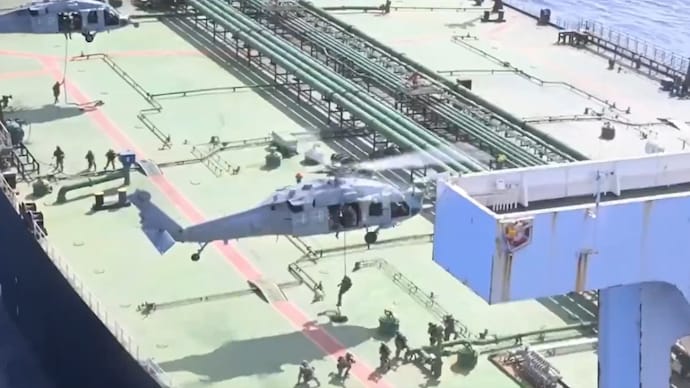
Amid a naval blockade in the Strait of Hormuz, the US military has tightened the screws on Tehran with another tanker seizure associated with the smuggling of Iranian oil, pushing an already fragile situation closer to open maritime confrontation. The timing is critical. Just a day earlier, Iran's Revolutionary Guards took control of two vessels shipping in the Strait of Hormuz.
The Pentagon released video footage showing American personnel boarding the tanker Majestic X, offering a rare on-ground view of the operation. The vessel was intercepted in the Indian Ocean between Sri Lanka and Indonesia.
"US forces carried out a maritime interdiction and right-of-visit boarding of the sanctioned stateless vessel M/T Majestic X transporting oil from Iran, in the Indian Ocean," the statement said.
"We will continue global maritime enforcement to disrupt illicit networks and interdict vessels providing material support to Iran, wherever they operate," the Pentagon statement said. According to shipping data cited by news agency Associated Press, the tanker had been heading towards Zhoushan in China before it was stopped. The Majestic X, a Guyana-flagged vessel previously known as Phonix, had already been sanctioned by US in 2024 for allegedly moving Iranian crude in violation of sanctions.
The operation is not an isolated case. The US military has intercepted dozens of vessels since it began its blockade of the Strait of Hormuz. It is not intercepting these ships near Iran, but further away in the Indian Ocean.
IRAN'S SHOW OF FORCE OVER STRAIT
Since the war began in February following US-Israeli strikes, Iran has largely shut the strait to most foreign vessels, allowing only limited movement. With peace talks collapsing just hours before the ceasefire expired, Tehran now appears to hold firm control over the waterway.
Tehran has responded with its own display of strength. State media aired footage showing Iranian commandos boarding large cargo ships, including the MSC Francesca and Epaminondas, in the Strait of Hormuz. The visuals, styled almost like a military showcase, were meant to reinforce Iran’s control over one of the world’s busiest shipping lanes.
Iran claims the vessels were operating without proper permission. Some reports have also claimed that Tehran has begun collecting tolls from ships passing through the strait, though details remain unclear. Iranian naval units -- including drones and speedboats -- are reportedly positioned to deter US naval movements in the region. Tehran repeated that it will not consider opening the strait until the Trump administration lifts a blockade of Iran's own shipping, which Washington imposed during the ceasefire.
NO TALKS, NO RELIEF FROM BLOCKADE
US President Donald Trump pulled back from threats to resume attacks on Iran in the final hours of the ceasefire but kept the naval blockade in place, with no formal extension agreed and no fresh talks on the table.
Pakistan, which hosted the only round of peace talks earlier this month and was set to hold another before it was called off, remains in contact with both sides, according to Reuters. Iran says it is open to talks in principle but blames the US blockade and shifting demands for holding back any commitment, while the delegation led by JD Vance never left Washington.
Amid a naval blockade in the Strait of Hormuz, the US military has tightened the screws on Tehran with another tanker seizure associated with the smuggling of Iranian oil, pushing an already fragile situation closer to open maritime confrontation. The timing is critical. Just a day earlier, Iran's Revolutionary Guards took control of two vessels shipping in the Strait of Hormuz.
The Pentagon released video footage showing American personnel boarding the tanker Majestic X, offering a rare on-ground view of the operation. The vessel was intercepted in the Indian Ocean between Sri Lanka and Indonesia.
"US forces carried out a maritime interdiction and right-of-visit boarding of the sanctioned stateless vessel M/T Majestic X transporting oil from Iran, in the Indian Ocean," the statement said.
"We will continue global maritime enforcement to disrupt illicit networks and interdict vessels providing material support to Iran, wherever they operate," the Pentagon statement said. According to shipping data cited by news agency Associated Press, the tanker had been heading towards Zhoushan in China before it was stopped. The Majestic X, a Guyana-flagged vessel previously known as Phonix, had already been sanctioned by US in 2024 for allegedly moving Iranian crude in violation of sanctions.
The operation is not an isolated case. The US military has intercepted dozens of vessels since it began its blockade of the Strait of Hormuz. It is not intercepting these ships near Iran, but further away in the Indian Ocean.
IRAN'S SHOW OF FORCE OVER STRAIT
Since the war began in February following US-Israeli strikes, Iran has largely shut the strait to most foreign vessels, allowing only limited movement. With peace talks collapsing just hours before the ceasefire expired, Tehran now appears to hold firm control over the waterway.
Tehran has responded with its own display of strength. State media aired footage showing Iranian commandos boarding large cargo ships, including the MSC Francesca and Epaminondas, in the Strait of Hormuz. The visuals, styled almost like a military showcase, were meant to reinforce Iran’s control over one of the world’s busiest shipping lanes.
Iran claims the vessels were operating without proper permission. Some reports have also claimed that Tehran has begun collecting tolls from ships passing through the strait, though details remain unclear. Iranian naval units -- including drones and speedboats -- are reportedly positioned to deter US naval movements in the region. Tehran repeated that it will not consider opening the strait until the Trump administration lifts a blockade of Iran's own shipping, which Washington imposed during the ceasefire.
NO TALKS, NO RELIEF FROM BLOCKADE
US President Donald Trump pulled back from threats to resume attacks on Iran in the final hours of the ceasefire but kept the naval blockade in place, with no formal extension agreed and no fresh talks on the table.
Pakistan, which hosted the only round of peace talks earlier this month and was set to hold another before it was called off, remains in contact with both sides, according to Reuters. Iran says it is open to talks in principle but blames the US blockade and shifting demands for holding back any commitment, while the delegation led by JD Vance never left Washington.

