Will China deploy its all-powerful navy amid Trump's Hormuz blockade?
Throughout the Iran war, China has remained a silent player. However, Trump's naval blockade of the Strait of Hormuz has changed the calculus. A major chunk of China's oil and gas comes through the vital waterway. Will China be forced to deploy its all-powerful navy?
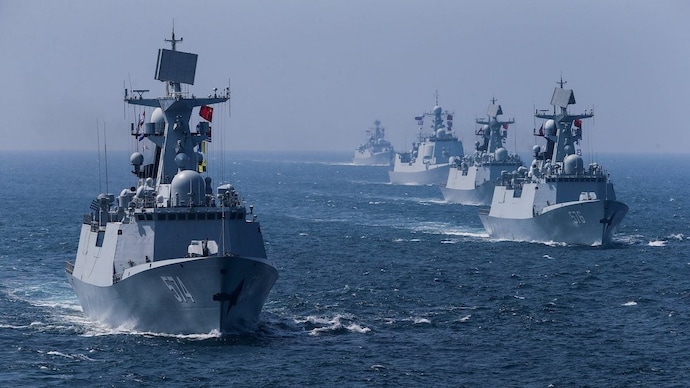
The lack of a broader Chinese military presence in the Middle East was one of the reasons the US had a free hand to attack Iran. However, the conflict is now slowly pulling in China. At the centre of it lies the Strait of Hormuz. The US's naval blockade of Iran's ports is as much about China as Iran, as 40% of Beijing's oil passes through Hormuz. It prompted one of the strictest warnings from China since the war began, cautioning Trump against interfering in its affairs. It's a recipe for confrontation.
On Tuesday, a Chinese-owned tanker returned to an Iranian port after failing to pass through the US blockade. Donald Trump imposed it following the collapse of peace talks between the US and Iran in Pakistan. The idea is to strangle Iran's oil revenues - its economic lifeline. However, it also affects China, which buys 90% of Iranian oil. This is where things might get tense.
"The Trump regime already tried to deny China access to Venezuelan oil. Now it's trying to deny China access to Iranian oil. This is not only an escalation against Iran. It is also an escalation against China," Canadian geopolitical expert Dimitri Lascaris tweeted.
Beijing's dependence on oil from the Gulf is significant enough to unsettle it. Its economy is perhaps the most exposed to supply shocks.
On Tuesday, the Chinese Foreign Ministry called the US move "dangerous and irresponsible," warning that the blockade would "only aggravate confrontation".
Thus, any attempt by the US Navy to stop a Chinese-linked oil tanker, or a bid to take physical control of the ship, could lead to a tense standoff. The situation can escalate fast, with experts suggesting it could force China to deploy its navy (PLA Navy).
"Washington's move is intended to force China onto the stage so that it could apply pressure on Iran," Zhang Lun, a professor at CY Cergy-Paris University, told DW.
WHAT ROLE HAS CHINA PLAYED IN IRAN WAR?
In fact, in recent months, Chinese ships have quietly expanded their footprint across the region. Vessels operating out of its base in Djibouti, located near the Bab el-Mandeb Strait, have moved closer to the Gulf.
In February, it deployed one of its powerful destroyers near the Gulf of Oman, ostensibly to monitor the movements of US Navy and Western warships.
More recently, there have been signals from China of a deeper engagement with Iran amid the conflict. Less than 24 hours after the US and Iran reached a two-week ceasefire, a couple of Chinese cargo planes landed in Tehran earlier this week.
"Such cargo planes carry military equipment. China is almost certainly supplying weapons to Iran in the middle of this war," Gordon Chang, an American lawyer and defence analyst, said.
Moreover, US intelligence has suggested that China was preparing to supply new air defence systems to Iran within the next few weeks, CNN reported. Even though China has denied the report, Trump has threatened Beijing with 50% tariff if it sends military equipment to Tehran.
"This started as US vs Iran. Now it's slowly turning into a US vs China situation, and that's where things get risky," tweeted geopolitical analyst Mario Nawfal.
OPTIONS FOR CHINA IF CONFLICT ESCALATES
If the situation escalates, what options do China have on the table? We spoke to defence expert Sandeep Unnithan to gauge the possible scenarios.
The most probable step would be at sea. Unnithan told indiatoday.tech that China, which boasts of the largest naval force, could escort oil tankers through the Gulf.
This, however, would not be an entirely new territory for China. Over the past decade, the Chinese naval escort taskforce - consisting of two warships and a supply vessel - has operated on rotation out of the Gulf of Aden.
It would send a clear signal to the US. That China was serious about its energy lifelines.
In terms of the number of warships, China beats the US hands down. It has 234 warships compared to the US Navy's 219. However, China has only two operational aircraft carriers (the US has 11), and its navy has far fewer submarines than America.
Crucially, the Achilles' heel for China is its lack of combat experience. Its last major conflict was the 1979 Sino-Vietnamese War.
However, China's options aren't limited to the Middle East, Unnithan pointed out.
In a more aggressive scenario, China may put pressure by targeting the US or allied shipping in other sensitive waterways like the Taiwan Strait. US military ships routinely pass through the waterway - missions that anger China. Such a move, however, risks widening the conflict's footprint.
Thirdly, Beijing may also use a diplomatic lever by delaying or postponing the summit between Xi Jinping and Trump next month.
For now, China hasn't made any confrontational moves. Initially, a reluctant player, China got involved in the conflict after its last-minute intervention brought Iran on board for the ceasefire deal.
During the month-long war, China didn't panic. It has a sufficient stock of Iranian crude for a short-term cushion.
However, Trump's naval blockade of Hormuz has changed the calculus for China as a major chunk of its oil and gas comes through the vital waterway. Thus, every move in Hormuz to pressure Iran now risks entangling China, which might be forced to enter the conflict to protect its energy interests.
The lack of a broader Chinese military presence in the Middle East was one of the reasons the US had a free hand to attack Iran. However, the conflict is now slowly pulling in China. At the centre of it lies the Strait of Hormuz. The US's naval blockade of Iran's ports is as much about China as Iran, as 40% of Beijing's oil passes through Hormuz. It prompted one of the strictest warnings from China since the war began, cautioning Trump against interfering in its affairs. It's a recipe for confrontation.
On Tuesday, a Chinese-owned tanker returned to an Iranian port after failing to pass through the US blockade. Donald Trump imposed it following the collapse of peace talks between the US and Iran in Pakistan. The idea is to strangle Iran's oil revenues - its economic lifeline. However, it also affects China, which buys 90% of Iranian oil. This is where things might get tense.
"The Trump regime already tried to deny China access to Venezuelan oil. Now it's trying to deny China access to Iranian oil. This is not only an escalation against Iran. It is also an escalation against China," Canadian geopolitical expert Dimitri Lascaris tweeted.
Beijing's dependence on oil from the Gulf is significant enough to unsettle it. Its economy is perhaps the most exposed to supply shocks.
On Tuesday, the Chinese Foreign Ministry called the US move "dangerous and irresponsible," warning that the blockade would "only aggravate confrontation".
Thus, any attempt by the US Navy to stop a Chinese-linked oil tanker, or a bid to take physical control of the ship, could lead to a tense standoff. The situation can escalate fast, with experts suggesting it could force China to deploy its navy (PLA Navy).
"Washington's move is intended to force China onto the stage so that it could apply pressure on Iran," Zhang Lun, a professor at CY Cergy-Paris University, told DW.
WHAT ROLE HAS CHINA PLAYED IN IRAN WAR?
In fact, in recent months, Chinese ships have quietly expanded their footprint across the region. Vessels operating out of its base in Djibouti, located near the Bab el-Mandeb Strait, have moved closer to the Gulf.
In February, it deployed one of its powerful destroyers near the Gulf of Oman, ostensibly to monitor the movements of US Navy and Western warships.
More recently, there have been signals from China of a deeper engagement with Iran amid the conflict. Less than 24 hours after the US and Iran reached a two-week ceasefire, a couple of Chinese cargo planes landed in Tehran earlier this week.
"Such cargo planes carry military equipment. China is almost certainly supplying weapons to Iran in the middle of this war," Gordon Chang, an American lawyer and defence analyst, said.
Moreover, US intelligence has suggested that China was preparing to supply new air defence systems to Iran within the next few weeks, CNN reported. Even though China has denied the report, Trump has threatened Beijing with 50% tariff if it sends military equipment to Tehran.
"This started as US vs Iran. Now it's slowly turning into a US vs China situation, and that's where things get risky," tweeted geopolitical analyst Mario Nawfal.
OPTIONS FOR CHINA IF CONFLICT ESCALATES
If the situation escalates, what options do China have on the table? We spoke to defence expert Sandeep Unnithan to gauge the possible scenarios.
The most probable step would be at sea. Unnithan told indiatoday.tech that China, which boasts of the largest naval force, could escort oil tankers through the Gulf.
This, however, would not be an entirely new territory for China. Over the past decade, the Chinese naval escort taskforce - consisting of two warships and a supply vessel - has operated on rotation out of the Gulf of Aden.
It would send a clear signal to the US. That China was serious about its energy lifelines.
In terms of the number of warships, China beats the US hands down. It has 234 warships compared to the US Navy's 219. However, China has only two operational aircraft carriers (the US has 11), and its navy has far fewer submarines than America.
Crucially, the Achilles' heel for China is its lack of combat experience. Its last major conflict was the 1979 Sino-Vietnamese War.
However, China's options aren't limited to the Middle East, Unnithan pointed out.
In a more aggressive scenario, China may put pressure by targeting the US or allied shipping in other sensitive waterways like the Taiwan Strait. US military ships routinely pass through the waterway - missions that anger China. Such a move, however, risks widening the conflict's footprint.
Thirdly, Beijing may also use a diplomatic lever by delaying or postponing the summit between Xi Jinping and Trump next month.
For now, China hasn't made any confrontational moves. Initially, a reluctant player, China got involved in the conflict after its last-minute intervention brought Iran on board for the ceasefire deal.
During the month-long war, China didn't panic. It has a sufficient stock of Iranian crude for a short-term cushion.
However, Trump's naval blockade of Hormuz has changed the calculus for China as a major chunk of its oil and gas comes through the vital waterway. Thus, every move in Hormuz to pressure Iran now risks entangling China, which might be forced to enter the conflict to protect its energy interests.

