British PM Keir Starmer vows closer EU ties amid growing calls for his exit
Facing mounting pressure after Labour's electoral setbacks, the UK's Keir Starmer pitches closer ties with Europe amid mounting calls to quit.
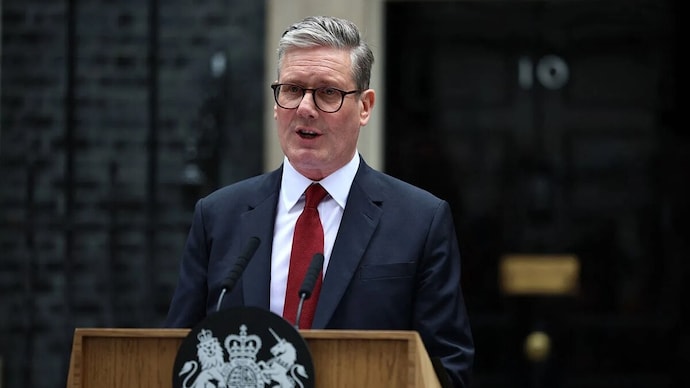
British Prime Minister Keir Starmer is set to pledge closer ties with the European Union in a bid to revive his struggling leadership after Labour suffered heavy losses in local elections across England and legislative polls in Scotland and Wales.
In a speech scheduled for Monday, Starmer is expected to say he will “face up to the big challenges” and restore “hope” to Britain, while outlining plans to place the country “at the heart of Europe” nearly a decade after the UK voted to leave the EU.
The speech comes ahead of the State Opening of Parliament on Wednesday, where King Charles III will present the government’s legislative agenda.
The Labour leader is under mounting pressure within his party after a string of electoral setbacks widely viewed as a referendum on his leadership. Several Labour lawmakers have reportedly urged Starmer to announce a timetable for his departure, amid growing dissatisfaction over the government’s economic record and political direction.
Former Deputy Prime Minister Angela Rayner, often seen as a possible successor, stopped short of openly demanding Starmer’s resignation but delivered a sharp criticism of the government’s performance. “What we are doing isn’t working, and it needs to change,” she said, accusing the leadership of fostering “a toxic culture of cronyism” and urging Labour to return to its social democratic roots.
Popularity of Starmer's party has fallen significantly since the Prime Minister led the party to a landslide victory less than two years ago. The government has struggled to deliver promised economic growth, improve public services and reduce the cost-of-living burden, while also facing criticism over policy reversals, including on welfare reforms.
Starmer has additionally faced scrutiny over his appointment of Peter Mandelson as Britain’s ambassador to Washington, a move that has sparked controversy among critics.
The recent election results highlighted Labour’s losses to both the right-wing anti-immigration Reform UK and the environmentally focused Green Party of England and Wales, underscoring the growing fragmentation of British politics traditionally dominated by Labour and the Conservatives.
Seeking to regain political momentum, Starmer seeks to place renewed emphasis on rebuilding relations with Europe. Britain formally exited the EU in 2020 following the 2016 Brexit referendum. While Starmer has ruled out rejoining the EU, the customs union or the single market, his government has already sought to ease post-Brexit trade barriers and has backed a proposed youth mobility agreement with European countries.
British Prime Minister Keir Starmer is set to pledge closer ties with the European Union in a bid to revive his struggling leadership after Labour suffered heavy losses in local elections across England and legislative polls in Scotland and Wales.
In a speech scheduled for Monday, Starmer is expected to say he will “face up to the big challenges” and restore “hope” to Britain, while outlining plans to place the country “at the heart of Europe” nearly a decade after the UK voted to leave the EU.
The speech comes ahead of the State Opening of Parliament on Wednesday, where King Charles III will present the government’s legislative agenda.
The Labour leader is under mounting pressure within his party after a string of electoral setbacks widely viewed as a referendum on his leadership. Several Labour lawmakers have reportedly urged Starmer to announce a timetable for his departure, amid growing dissatisfaction over the government’s economic record and political direction.
Former Deputy Prime Minister Angela Rayner, often seen as a possible successor, stopped short of openly demanding Starmer’s resignation but delivered a sharp criticism of the government’s performance. “What we are doing isn’t working, and it needs to change,” she said, accusing the leadership of fostering “a toxic culture of cronyism” and urging Labour to return to its social democratic roots.
Popularity of Starmer's party has fallen significantly since the Prime Minister led the party to a landslide victory less than two years ago. The government has struggled to deliver promised economic growth, improve public services and reduce the cost-of-living burden, while also facing criticism over policy reversals, including on welfare reforms.
Starmer has additionally faced scrutiny over his appointment of Peter Mandelson as Britain’s ambassador to Washington, a move that has sparked controversy among critics.
The recent election results highlighted Labour’s losses to both the right-wing anti-immigration Reform UK and the environmentally focused Green Party of England and Wales, underscoring the growing fragmentation of British politics traditionally dominated by Labour and the Conservatives.
Seeking to regain political momentum, Starmer seeks to place renewed emphasis on rebuilding relations with Europe. Britain formally exited the EU in 2020 following the 2016 Brexit referendum. While Starmer has ruled out rejoining the EU, the customs union or the single market, his government has already sought to ease post-Brexit trade barriers and has backed a proposed youth mobility agreement with European countries.

