Business News
Ethanol gets price protection, maize doesn't: What's going wrong?
The government has set the MSP for maize at Rs 2,400 per quintal. However, in mandis, farmers are often forced to sell at much lower rates.


The government has set the MSP for maize at Rs 2,400 per quintal. However, in mandis, farmers are often forced to sell at much lower rates.
India sends nearly 72% of its total basmati exports to Middle Eastern countries. As conflict spreads in the region, uncertainty has started to cloud this important trade. If the war continues for a long time, exports could fall sharply, and farmers may end up paying the price.

The global fertiliser revolution began in American military plants that manufactured bombs during World Wars I and II. After the wars ended, ammonia and ammonium nitrate plants were converted for fertiliser production. In the podcast "Annagatha" on Kisan Tak, Dr. Yashpal Sehrawat of the International Fertiliser Development Centre (IFDC) explained how explosive-making technology later became the foundation of modern agriculture.

India's MSP system is clearly expanding, with higher spending, larger procurement and more beneficiaries than before. Yet the debate has shifted from scale to security.

For many years, Iran was among India's most important markets for agricultural products, especially basmati rice. However, protests against the country's leadership and growing external pressure have unsettled trade flows.
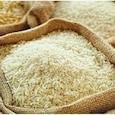
India has emerged as the world's largest rice producer, but closing the yield gap and managing water stress will decide whether this production surge becomes a lasting advantage.
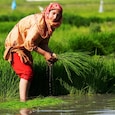
Aravalli row: A significant portion of the Aravallis falls in Haryana, and over the years, successive governments have tried to hand over large swathes of forest land to builders and corporates.

As Parliament debates a Bill to replace MGNREGA, concerns remain about whether an increase in guaranteed employment from the current 120 days to 125 days and a new name (VB-G RAM G) will translate into real benefits for rural households.

Reports suggest that if the trade deal goes through and American maize starts entering Indian markets — prices could crash, and farmers may face huge losses.

Despite this rising import bill, instead of expansion, the area under pulses cultivation has shrunk. Over the past four years, the area under pulses has declined by nearly 3.1 million hectares.
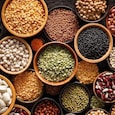
During this Kharif season, northern states such as Haryana, Punjab, and Rajasthan, and southern states including Andhra Pradesh and Telangana, experienced prolonged and abnormal rainfall.

At present, cotton cultivation area, production, and productivity are all going down. In just two years, the cotton cultivation area has fallen by 14.8 lakh hectares, while production has dropped by 42.35 lakh bales.