
E85 in India: Are we ready for the next big fuel leap?
As India adjusts to E20, the sudden shift in conversation toward E85 raises critical questions. The transition is far more complex and still appears distant. But the real question is: are we ready, and what challenges will E85 bring?
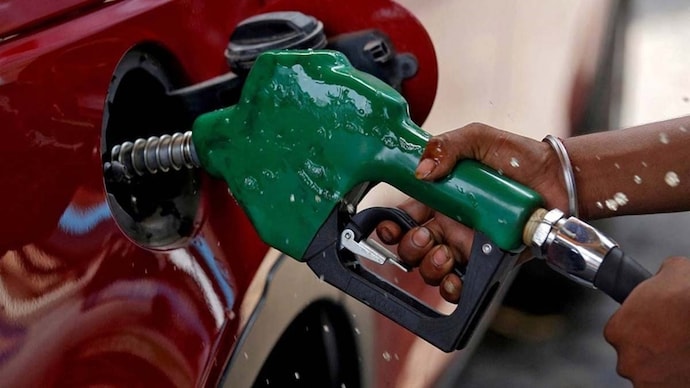

Just when the market was beginning to settle into the realities of E20 amid widespread consumer feedback about a noticeable drop in fuel efficiency, the conversation has taken a sharp and somewhat unexpected turn. Instead of a gradual progression to blends like E27 or E30, the focus has leapt straight to E85, a fuel that is predominantly ethanol. The ethanol-blending roadmap is trying to be enter a far more aggressive phase. However, unlike E20, E85 is expected to be introduced as a separate fuel grade, distinct from existing petrol blends, rather than as a direct replacement. While the policy intent remains clear, to cut crude oil imports and promote cleaner, domestically produced fuel, the transition from E20 to E85 is significantly more complex than the earlier move from E10 to E20.
A paradigm shift, not just a new fuel
India’s push toward E85 is driven by strong economic and environmental logic, from reducing oil import dependence to supporting domestic agriculture. However, unlike previous blending milestones, this transition cannot rely on interim fixes or quick conversions.
E85 represents a fundamental shift in both vehicle engineering and fuel infrastructure. While early adopters in the two-wheeler space demonstrate that the technology is viable, large-scale adoption, especially in the passenger vehicle segment will depend on how quickly manufacturers, fuel suppliers, and consumers can adapt to this new reality.
From E10 to E20
The move from E10 to E20 was relatively gradual but immediate, and in many cases, technically manageable through aftermarket conversion kits and fuel additives. The kits typically involve minor ECU recalibration or piggyback modules that adjust fuel injection timing, allowing the engine to compensate for ethanol’s lower energy density. In some instances, small upgrades to fuel lines or seals are also carried out to improve compatibility.
The reason this works is that E20 sits within a tolerance range that most modern petrol engines can handle without fundamental redesign. While there are minor downsides such as slightly lower fuel efficiency, marginally increased wear on certain components, and occasional cold-start issues, the transition remains largely evolutionary rather than disruptive.
Why E85 is a completely different challenge
The leap to flex fuel (E20 to E85), however, is not just incremental, it is transformative. Ethanol behaves very differently from petrol. It is more corrosive, absorbs moisture easily, burns hotter and is more volatile, and requires significantly different air-fuel ratios for optimal combustion. Because of this, conventional engines designed for E20 cannot simply be "converted" to run E85 using kits.
Instead, E85 demands a ground-up rethink of engine and fuel system design. This includes ethanol-resistant fuel pumps, injectors, and pipelines, along with redesigned internal components such as piston rings and valves. Equally important is a sophisticated engine control unit that can detect ethanol content in real time and continuously adjust ignition timing and fuel delivery. Cold-start systems also need to be reworked, as high ethanol blends are less volatile, especially in lower temperatures.
Unlike the E10-to-E20 shift, converting an existing E20 vehicle to E85 is neither simple nor cost-effective. The extent of hardware changes required, ranging from fuel system materials to engine internals makes retrofitting impractical in most cases. Even if partial modifications are attempted, long-term reliability becomes a major concern, with risks of corrosion, seal degradation, and inconsistent combustion.
In essence, while E20 compatibility could be achieved through adaptation, E85 compatibility requires vehicles to be designed as flex-fuel from the outset. This marks a clear break from the idea of incremental upgrades.
Early examples of flex-fuel technology in India
A glimpse of this future is already visible in India’s two-wheeler segment. Motorcycles like the Suzuki Gixxer SF 250 Flex Fuel and the Honda CB300F Flex Fuel have been engineered to run on a wide range of ethanol blends, from standard petrol to high ethanol concentrations.
In the case of the Suzuki, the changes go far beyond cosmetic updates. The bike features an ethanol-compatible fuel system, revised internal engine components, and an adaptive ECU that ensures stable performance regardless of the fuel mix. The riding experience remains largely unchanged, which underlines the effectiveness of the engineering, but achieving this level of flexibility requires significant reworking beneath the surface.
Infrastructure and consumer challenges ahead
Beyond vehicles, the rollout of E85 will also depend heavily on infrastructure readiness. Fuel stations will need separate storage and dispensing systems for E85, along with clear labelling to avoid the wrong fuel. This adds another layer of complexity for oil marketing companies already managing the nationwide E20 transition.
Consumer awareness will be equally critical. Using E85 in a non-flex-fuel vehicle can lead to serious mechanical issues, including corrosion and engine damage. Educating users about fuel compatibility will be essential to prevent costly mistakes.
What the shift means for current cars
A key concern with the proposed shift to E85 is the fate of the existing vehicles, most of which have been engineered only for E10 or, more recently, E20. These cars are not compatible with high ethanol blends, and running E85 in them can lead to serious issues such as corrosion of fuel system components, degradation of seals and hoses, erratic combustion, and long-term engine damage. If E85 were to be made mandatory in the near term, it would effectively render a vast number of current vehicles impractical to use without significant and costly modifications, something that is neither technically straightforward nor economically viable for most owners. This is why, at least for now, a rapid, blanket transition to E85 appears highly unlikely. A phased approach, where E85 is introduced as an optional fuel alongside E20 and limited to flex-fuel vehicles, is far more realistic than an abrupt mandate that could disrupt millions of vehicles on Indian roads. The shift in a logical sense seems far ahead and ideally, should not happen anytime soon or even in the next 5-10 years.
Subscribe to Auto Today Magazine