
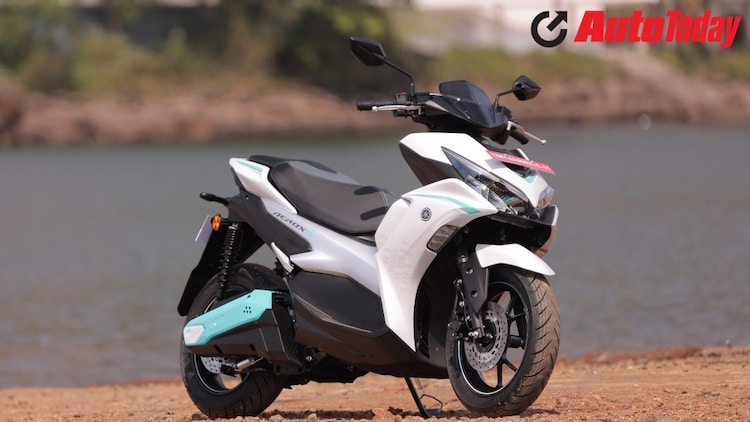
Yamaha Aerox E review, first ride: Ballistic or bust?
Yamaha is finally stepping into India's electric scooter battlefield with the Aerox E, and the big question is exactly what you asked: Is this a ballistic missile… or is it going bust?
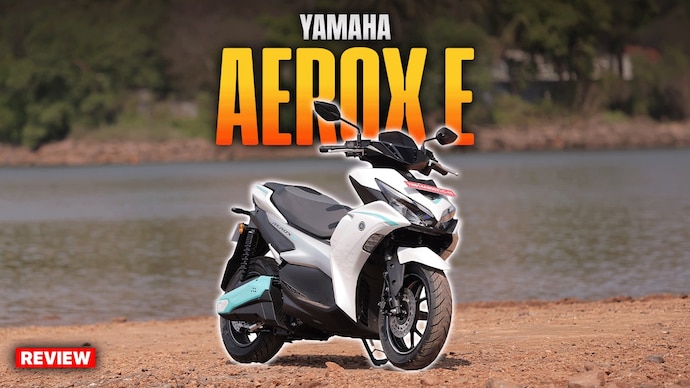
Yamaha Aerox E review

UPDATED: Mar 30, 2026 10:00 IST
Just a few months back, Yamaha showcased two electric scooters for the Indian market. The first one is the Yamaha EC-06, and the second one was the Yamaha Aerox E. While the EC-06 is based on the River Indie platform and targeted as a family scooter, the Aerox E was surely something for the enthusiasts. So is it as good as the ICE counterpart? Let’s find out.
Yamaha Aerox E: Design and dimensions
The Yamaha Aerox E has always been a cool-looking scooter, and thankfully, very little has changed with this electrified version. It retains the same overall design, dominated by the twin LED headlamp setup up front, chunky telescopic forks, and 14-inch wheels at both ends. The central tunnel remains unchanged and, in profile, the distinctive ‘X’ pattern continues to enthral enthusiasts. The rear section, too, remains identical to the petrol-powered version.
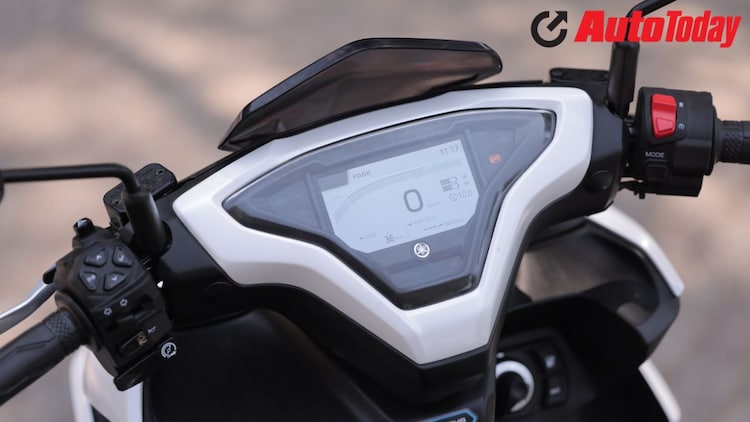
What has changed, however, is the instrument panel, which is now a 5-inch TFT LCD with crisp graphics. The switchgear has also been revised, and on the left-hand side, there’s a new set of buttons that allow you to scroll through the menus on the instrument cluster.
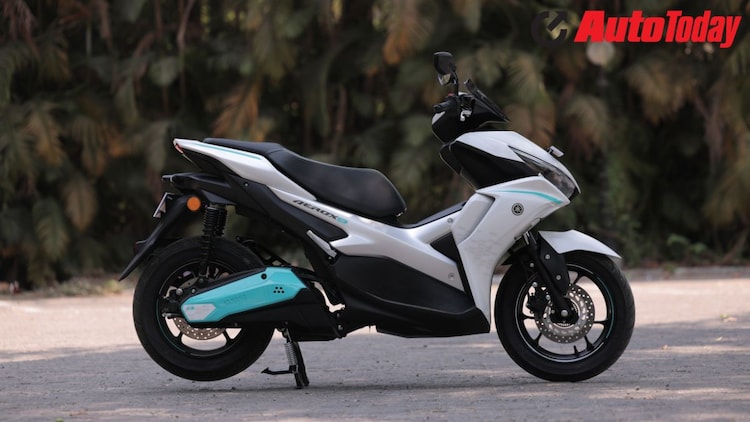
A closer look at the dimensions reveals that this is essentially an electrified Aerox. The Yamaha Aerox E measures 1,980mm in length, 700mm in width, and 1,150mm in height, which is identical to the ICE version. However, the Aerox E now gets a slightly longer wheelbase of 1,360mm.
Yamaha Aerox E: Storage space, seating, practicality
Let’s be honest — no one buys an Aerox for outright practicality. That said, there are still a few basic expectations from a scooter, and the Aerox E does fall short in this regard.
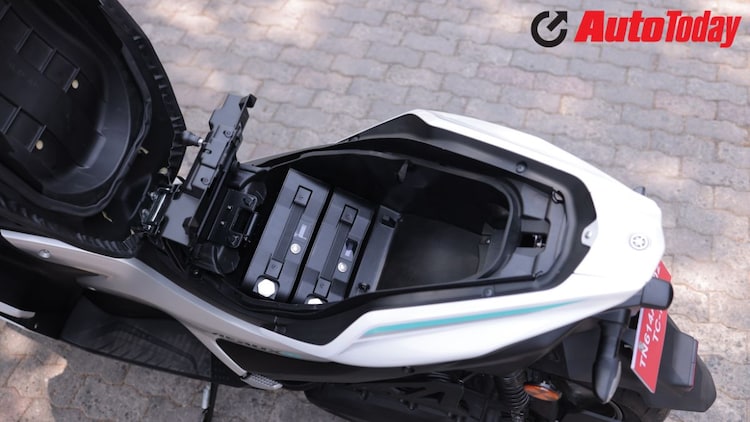
The underseat storage has been largely taken up by the twin removable battery packs, leaving very little room for anything else. The battery cover, too, feels somewhat makeshift and lacks the level of sophistication you would expect from a premium offering.
The only saving grace is the brick charger, which is neatly housed in the central tunnel — the same space that accommodates the fuel tank in the ICE version. However, even here, the cover feels flimsy and, if not handled with care, may not hold up well over time.
This leaves you with the small glove compartment on the front apron, which is, quite simply, very limited in capacity. The presence of the central tunnel also rules out the option of carrying or hanging items on the floorboard, further impacting everyday usability.
Being a full-blown maxi-scooter, the central tunnel doesn’t allow you to mount the Aerox E in the conventional step-through manner. Instead, you have to swing a leg over, much like getting onto a motorcycle. That, in itself, isn’t much of an issue.
However, the seat has been revised and features an unusual incline that makes it difficult for the rider to settle into a comfortable position. The handlebar falls easily to hand and the floorboard offers adequate space, but the sloping seat causes the rider to constantly slide forward, which can become uncomfortable over longer rides.
It’s unclear why Yamaha chose to redesign the seat this way, especially since the one on the ICE version offers a slightly better riding position. That said, there is the option of aftermarket seats, many of which provide more room and improved cushioning, significantly enhancing overall comfort.
Yamaha Aerox E: Motor, ride modes, battery and charging
Powering the Aerox E is an electric motor that produces 9.4kW of maximum power and 48Nm of torque. The scooter offers three ride modes — Eco, Standard and Power — along with a Boost mode that unlocks the scooter’s full performance and enables it to reach a claimed top speed of 95.5kmph. The Boost function remains active for 10 seconds, after which it cuts out and becomes available again once the battery management system (BMS) allows it. Notably, the Boost mode returns fairly quickly and proves to be the scooter’s saving grace when you need that extra burst of performance.
The Aerox E uses twin removable battery packs, each rated at 1.5kWh. These batteries weigh 13kg each, and the scooter can also be ridden using a single battery if needed. Together, the two batteries deliver a claimed IDC range of 117km. Charging both batteries takes approximately six hours and 20 minutes.
Yamaha Aerox E: How is it to ride?
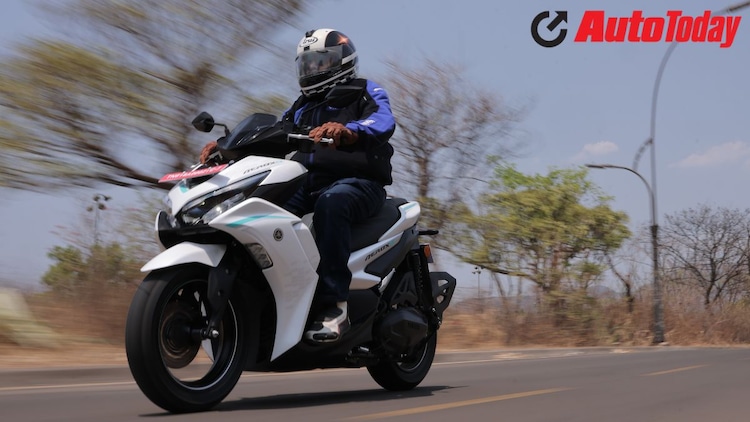
The Aerox nameplate has long been synonymous with performance and sharp handling, and we expected the electric version to follow the same philosophy. Unfortunately, that isn’t entirely the case.
In Eco mode, the scooter feels sluggish, with acceleration taking its time. On our test route, which included a few inclines, this mode felt outright dull. Switching to Standard mode improves things slightly, but the Aerox E still struggled to go beyond 54kmph on an incline. Hit the ‘Boost’ button, and you do get a burst of acceleration — albeit briefly. Once the Boost cuts out, you’re left waiting for it to become available again.
Even in Power mode, the scooter isn’t particularly quick. The throttle has a long travel and, even when fully twisted, the Aerox E takes its own time to reach 70kmph. The typical instant surge associated with electric scooters is missing, which came as a surprise. Once again, the Boost function ends up being the go-to solution when you need urgency.
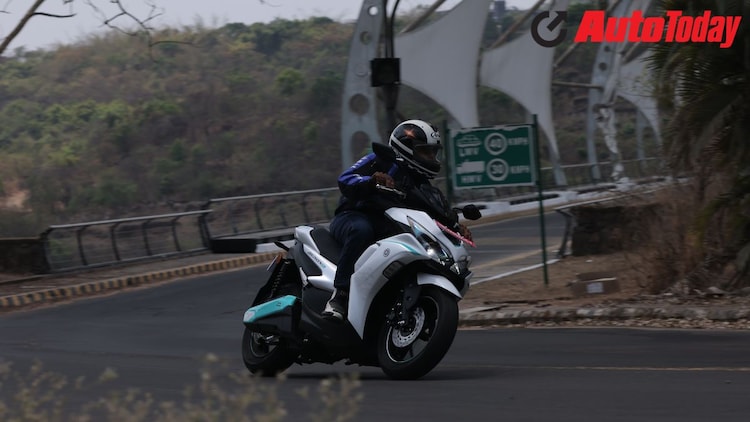
Thankfully, the handling characteristics remain true to the Aerox lineage. The scooter enjoys corners and feels eager to lean, making it genuinely fun to ride through twisty sections. It feels planted and predictable, and this is one area where the Aerox E truly shines.
However, where the scooter disappoints significantly is the front suspension. It struggles to cope with uneven surfaces and feels unsettled over gravel patches and potholes, often crashing through with loud thuds that can catch the rider off guard. On our test scooter, the front-end plastic cladding around the headlamp even began to rattle — something we didn’t expect from Yamaha, especially since the standard Aerox doesn’t exhibit this issue.
The rear suspension, however, performs better and does a reasonable job of keeping the rider comfortable, trying its best to balance out the shortcomings at the front.
Yamaha Aerox E: Verdict
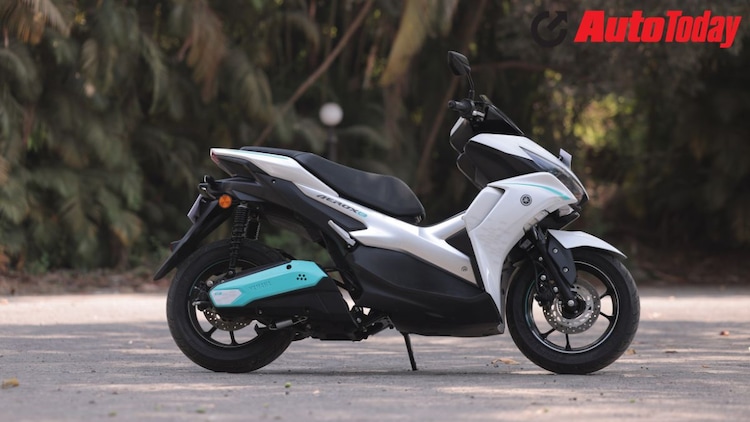
As a big fan and owner of the Aerox Version S, the electric iteration comes across as a bit of a disappointment. While the scooter certainly looks the part, it lacks the signature Aerox effect. The thrill that typically comes with riding a fast, engaging scooter is noticeably absent.
Then there’s the suspension, particularly at the front, which leaves much to be desired. It’s puzzling why Yamaha hasn’t fine-tuned it better for Indian road conditions, especially given the brand’s strong reputation for ride and handling.
The final nail in the coffin, however, could well be the pricing. The Aerox E is expected to be priced upwards of Rs 2 lakh (ex-showroom), which may make it a tough sell considering the compromises.
Subscribe to Auto Today Magazine
- Ends