
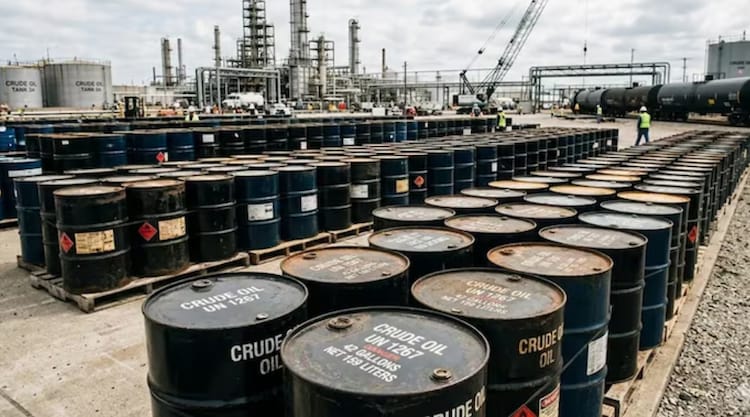
As global crude oil crisis deepens, the only cure may be a demand shock
Reopening the Strait of Hormuz may gradually ease supply pressures, but the world may still need lower fuel demand to stop the crisis from spilling into prices, inflation and growth. Read on to know why demand destruction may be needed to restore balance between oil supply and demand.
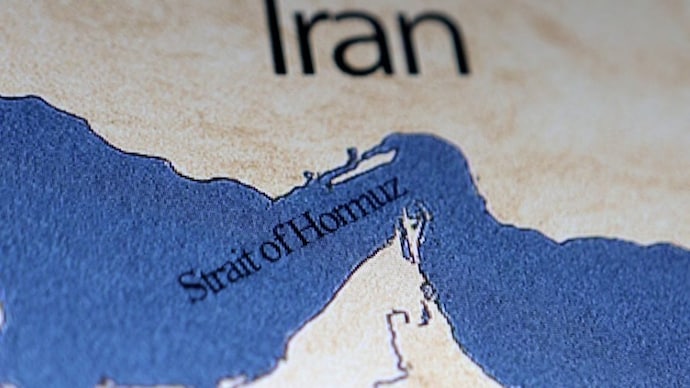
Even if the Strait of Hormuz reopens today, the global crude oil crisis may not ease anytime soon. (Photo: Reuters)

New Delhi,UPDATED: Apr 21, 2026 13:15 IST
The Strait of Hormuz still remains blocked, and much of the world is waiting for it to reopen. There is growing urgency across nations because the blockade has choked a vital oil route and triggered an energy crisis that appears to be worsening with each passing day.
But there may be more bad news ahead.
Several estimates now suggest that even if the key shipping route opens today, the global crude oil crisis may not ease anytime soon. As the situation stands, the key passage remains wrapped in confusion, with hopes now pinned on another round of talks between the US and Iran.
But the bigger problem now lies beyond the waterway itself.
Demand is still strong, while supply has already taken a hit. This mismatch, caused by weeks of disruption during the West Asia war, may prove harder to repair than many initially believed.
indiatoday.tech had earlier reported that the world may have underestimated the scale of disruption caused by the conflict. As fresh warnings emerge from energy researchers, brokerages and global agencies, that concern now appears increasingly relevant.
A growing number of analysts now say restoring balance to the oil market may require a harsh measure: voluntarily lowering demand.
Or, in the language of commodities, demand destruction.
THE CASE FOR DEMAND DESTRUCTION
HFI Research, a boutique energy-focused platform, recently made a forceful case for demand destruction.
Its core argument is that the oil supply shock has not ended and may worsen the global energy crisis from here. The firm estimates that around 11 million to 13 million barrels per day of disrupted supply will eventually be felt through lower crude stockpiles, tighter fuel supply or demand being pushed down by higher prices.
The research firm also says that even an immediate ceasefire would not restore normalcy overnight. Around 160 million barrels currently in floating storage would still need weeks to reach shore, while tankers pushed off usual routes could take months to return to regular shipping cycles.
Before moving ahead, readers should know that some of HFI’s projections are aggressive and should be treated as scenarios, not certainty. Even so, the firm’s broader warning deserves attention: reopening a route does not instantly repair an oil system that has already been disrupted.
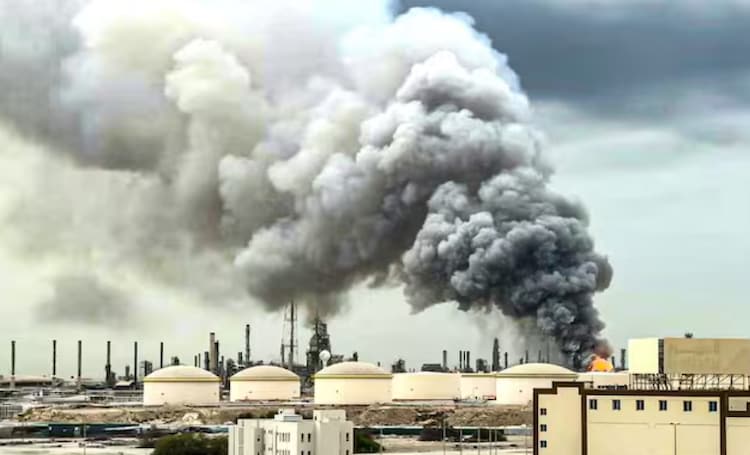
Citi analysts, quoted in a Reuters report dated April 20, also estimated that global oil inventories could still fall by around 900 million barrels even if a ceasefire is extended. The reasons include earlier disruptions, slower production ramp-ups and logistical bottlenecks that continue to weigh on supply.
That matters because inventories are the market’s shock absorber. When stocks fall quickly, prices become more volatile and buyers become more anxious.
The International Energy Agency (IEA) has also turned more cautious. It now expects global oil demand to decline in 2026 by around 80,000 barrels per day, which would mark the first annual drop since Covid.
The agency has also warned that demand destruction could spread if scarcity and higher prices persist. That is not a minor shift. It suggests high prices and uncertainty may already be changing behaviour.
The Australia and New Zealand Banking Group, or ANZ, has said weaker demand may be needed to rebalance the market if inventories remain tight. Economists at ING, the Dutch financial services group, have been even blunter: higher oil prices themselves destroy demand.
That phrase captures the mechanism perfectly as the strain is already spilling into real economies.
Pakistan has already announced work-from-home measures, a four-day office week and temporary school closures to reduce fuel use as oil prices strain its economy. South Korea has stepped up emergency monitoring of crude imports and domestic fuel markets.
In the United States, the national average gasoline price has climbed to around $4.04 per gallon, reviving pressure over rising fuel costs. Across Europe, governments remain wary of another round of transport and utility inflation if crude stays elevated.
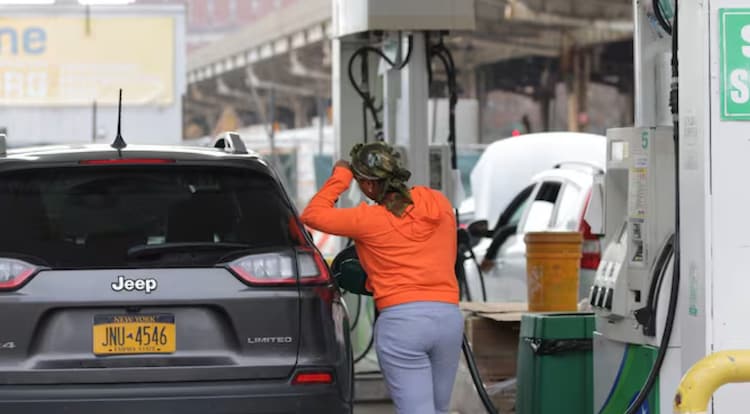
That is how an oil shock moves. It starts offshore and lands at home.
HOW DOES IT WORK?
Demand destruction sounds technical, but the idea is simple. When oil becomes expensive enough for long enough, people and businesses are forced to use less of it.
Families postpone travel. Drivers cut non-essential trips. Airlines trim routes or raise fares. Freight firms pass on higher costs and see slower movement. Factories slow production. Households spend more on fuel and less on everything else.
No government needs to formally announce it. It often happens normally, through millions of private decisions shaped by higher costs.
Though governments can accelerate the process too, whether by encouraging work from home, pushing public transport, reducing fuel subsidies, allowing higher pump prices or promoting alternatives like EVs.
That is why economists call it demand destruction. Consumers simply call it pressure.
THE COVID OIL DEMAND SHOCK
During Covid, demand for crude oil collapsed in a way the modern world had never seen before. It was involuntary, triggered by a virus that shut borders, grounded flights and locked down cities.
It was a different kind of crisis, but there is one useful comparison. Covid disrupted supply chains, but demand also fell sharply. Painful as it was, that helped rebalance the oil equation.
In April 2020, global oil demand fell by roughly 29 million barrels per day, according to the IEA. Roads emptied, offices shut and factories slowed. It was the sharpest demand shock in modern oil history.
This time, the equation is harder to balance because there is no lockdown. It is business as usual across much of the world. Demand remains elevated, but supply sources and shipping lines have been hit.
That is where demand destruction comes into play. Countries may need to explore ways to reduce consumption, at least until supply routes and production sources normalise. And that may take time.
That is why some analysts argue the market may still need a Covid-like fall in fuel use, not because governments order people indoors, but because sustained high prices make normal consumption harder to maintain.
For countries that import large amounts of oil, reducing dependence on crude through various measures, in other words, squeezing demand, could be one way to protect citizens from higher energy costs. But it is easier said than done, given how deeply economies still depend on oil.
That said, the current crisis should spark a broader conversation on how nations can use alternatives and improve efficiency to cut reliance on traditional energy sources.
While there are still other ways to soften the blow, OPEC producers could raise output. Strategic reserves can be tapped. Shipping routes can gradually normalise. Diplomacy can cool the risk premium.
But all of that takes time. And markets rarely wait patiently when inventories are thin.
That is why demand often ends up doing some of the adjustment before supply fully catches up.
The real story may no longer be whether the Strait of Hormuz reopens. It may be whether the oil market has already entered a phase where weaker demand does more of the balancing than fresh supply.
- Ends