
Selling your old car? Here's how to transfer no claim bonus before it is gone
One important thing to understand is that your No Claim Bonus belongs to you and not your car. When you sell your vehicle, the NCB does not get transferred to the new owner.
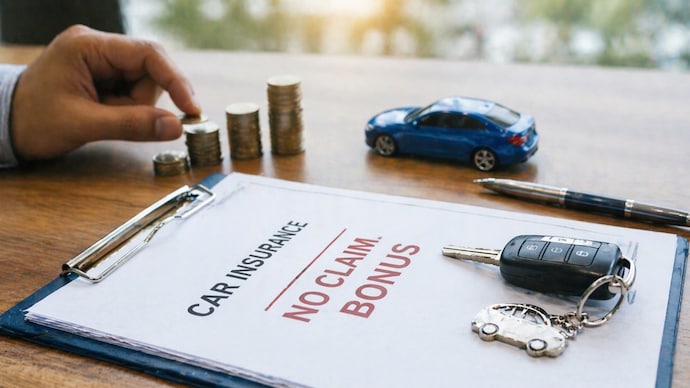

Most Indians selling a car usually focus on getting the right resale price, transferring the RC, and completing the paperwork at the RTO, as these are some of the most important parts of the process.
However, amid all these steps and formalities, one crucial detail is often overlooked, and it can quietly increase the cost of your next car insurance premium: the No Claim Bonus (NCB).
Here’s the full picture, and what you need to do about it.
WHAT IS NCB AND WHY IT BELONGS TO YOU
Every year you drive without making a single insurance claim, your insurer rewards you with a discount on the Own Damage (OD) component of your motor insurance premium.
As per IRDAI guidelines, this discount starts at 20% after the first claim free year and can gradually increase up to 50% after five consecutive claim free years. For instance, on an OD premium of 12,000, a 50% NCB means savings of 6,000.
One important thing to understand is that your No Claim Bonus belongs to you and not your car. When you sell your vehicle, the NCB does not get transferred to the new owner.
It stays with you, provided you take the required steps at the time of sale. Many car sellers are unaware of this and end up losing the bonus they have built over several years.
For customers who want added assurance, many insurers offer an NCB Protect add on. This feature allows you to make a claim usually up to one claim without losing your entire No Claim Bonus.
The availability, claim limits, and conditions of NCB Protect vary by insurer and are subject to specific terms and conditions. Suppose you make one partial loss claim during the policy year without losing your No Claim Bonus.
With this add on, your NCB does not reduce renewal for example; a 50% NCB stays at 50%. In some cases, it can even move up to the next slab, such as a 45% NCB increasing to 50%, ensuring your safe driving record continues to benefit you.
WHAT TO DO WHEN SELLING YOUR CAR
Once your car is sold, you should inform your insurer at the earliest and request an NCB Retention Certificate. This document confirms your claim free driving history and allows you to carry forward your No Claim Bonus.
Since NCB itself is portable, the certificate can be used whether you continue with the same insurer or switch to another one for your next vehicle.
To obtain this certificate, you will typically need to submit a copy of your existing policy document, proof of sale such as a delivery note or sale agreement, valid KYC documents, and a written request for NCB retention to your insurer.
Also, if your policy is active at the time of sale, for example, you sell your car in June but the insurance policy runs till December, certain steps are required to retain your NCB benefit. Your existing policy has a 20% No Claim Bonus (NCB) on an Own Damage (OD) premium of 10,000 (i.e., an NCB benefit of 2,000).
In this case, you have two options:
(1) cancel the Own Damage portion of the policy from June onwards and keep only the mandatory Third Party cover active
(2) if your insurance policy is still running and you want to continue using your No Claim Bonus (NCB), you must first settle the NCB adjustment with your insurer.
If the NCB has already been applied, the insurer will recover the NCB amount on a pro rated basis, depending on how long the policy has been active.
After this, the insurer issues an NCB retention letter or NCB certificate, which confirms your accumulated bonus. This certificate allows you to carry forward the same 20% NCB to your new car’s insurance policy and enjoy a lower premium.
The process of retaining NCB is not complicated, but timing is important. Delays in informing the insurer can lead to ownership related queries and complications during the endorsement process for the buyer. Prompt intimation helps ensure a smoother transition and protects your accumulated bonus.
THE GRACE PERIOD, COMMON PITFALLS, AND HOW NOT TO LOSE YOUR NCB
Here’s some relief for those who are not buying a new car immediately. An NCB Retention Certificate remains valid for up to three years, allowing you to preserve your accumulated bonus even if you are between cars or taking time to decide on your next purchase.
That said, NCB is not unconditional. It is lost if you make a claim during the policy period or fail to renew your policy within the allowed time frame.
Most insurers allow a grace period typically up to 90 days after policy expiry during which you can renew and still retain your NCB. If you sell your vehicle without securing the retention certificate, the bonus cannot be carried forward.
One often overlooked strategy is assessing whether filing a small claim is financially worthwhile. If the repair cost is lower than your deductible or the long term value of your NCB, paying out of pocket may be a better decision.
Preserving a high NCB often results in greater savings over future policy years than a minor claim payout.
Selling a car is a financial decision. So is protecting the insurance benefits you have earned over the years. Your No Claim Bonus is your reward for safe driving. Take a few minutes to secure it before selling your car and enjoy the savings on your next insurance policy.
(The above article is authored by Aditya Kumar, Head, Motor Underwriting, Digit Insurance. Views expressed are personal.)