
The real cost of war: Economies don't bounce back easily
War is not just a short-term disruption. It is a long-term economic shock.
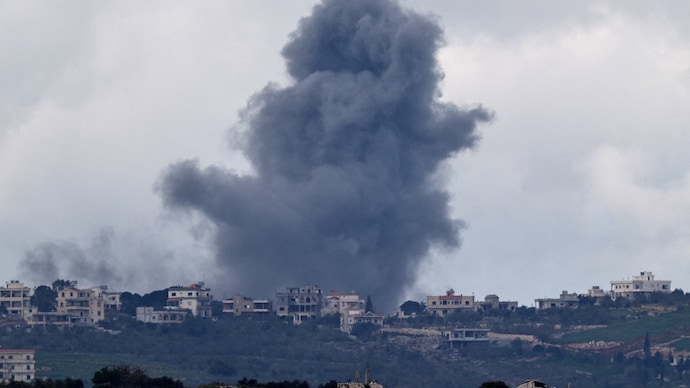

With the conflict in West Asia showing no signs of slowing, its economic impact is growing each day.
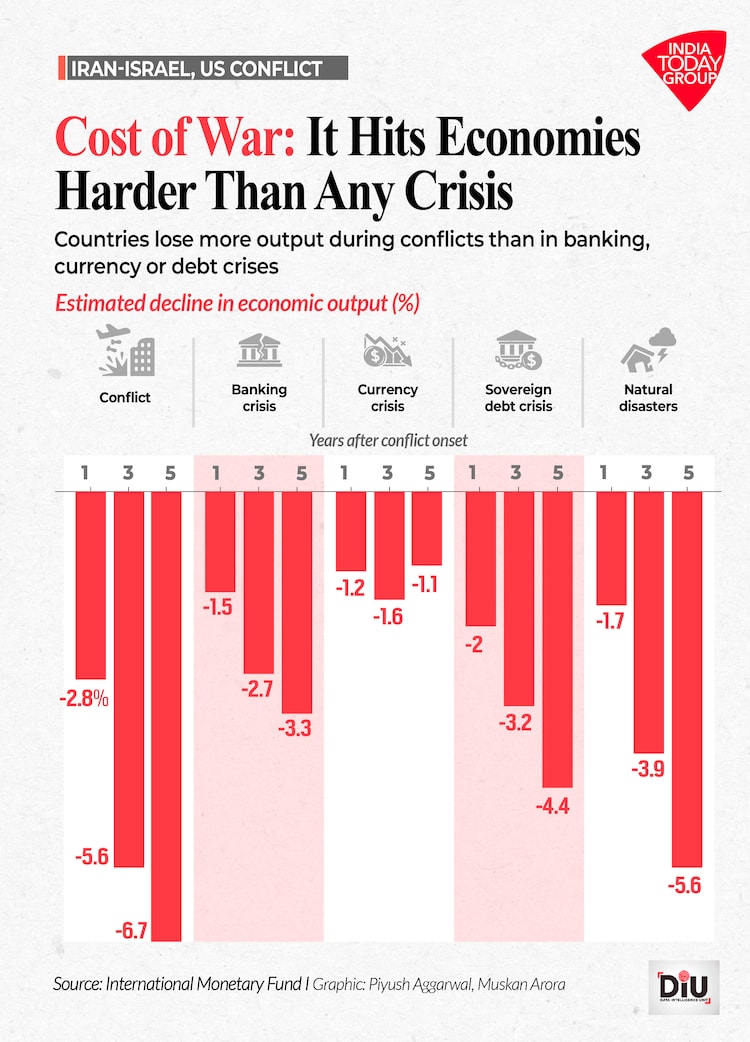
According to an International Monetary Fund report, war is the most economically damaging crisis a country can face, far surpassing banking crises, debt crises, or even major natural disasters.
A country’s economy typically shrinks by about three per cent one year after war. Five years later, the loss deepens to nearly seven per cent. Unlike other shocks, economies don’t bounce back quickly as the losses tend to stay.
This is especially relevant for West Asia right now. Countries directly affected or even those nearby are not just dealing with short-term disruption. They are likely facing years of weaker growth.
What is affected?
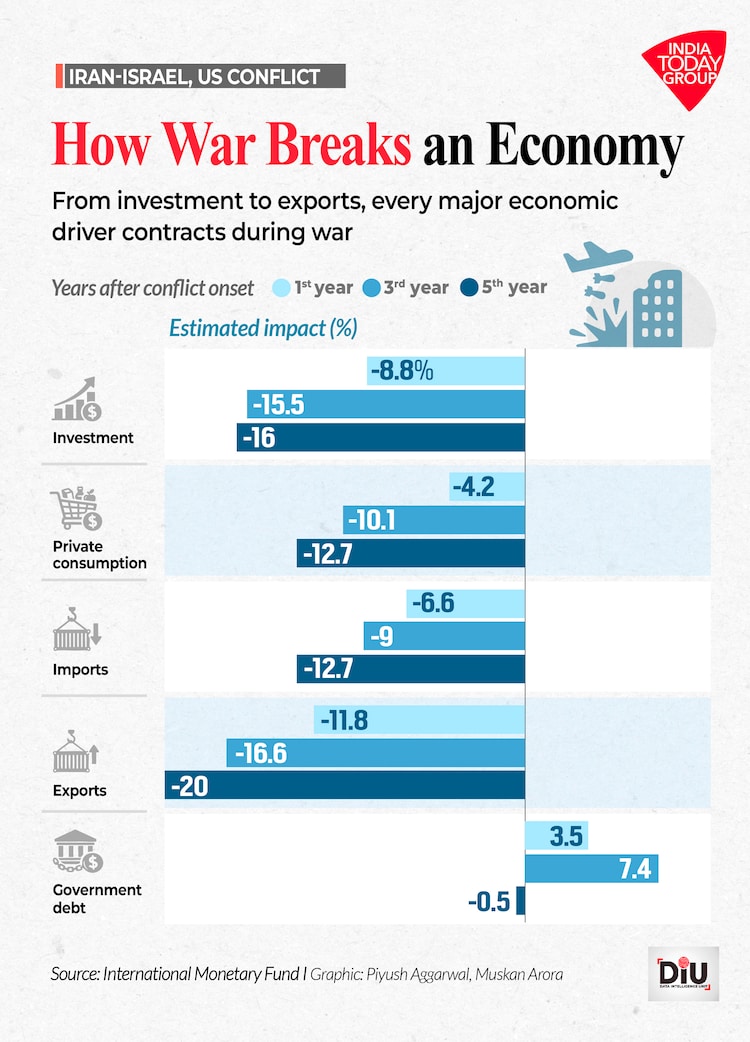
The IMF estimates show that the damage due to war runs deeper than just GDP. It hits production, investment, trade, and labour.
Investment takes one of the biggest hits. In the years following a conflict, investment declines by 9–16 per cent between one and five years compared to pre-war trends. Without investment, economies struggle to rebuild capacity and return to growth.
Private consumption also weakens (4–13 per cent) as incomes fall and uncertainty rises. At the same time, government debt often rises while spending increases, due to defence spending. However, this does little to offset the slowdown in economic activity.
Also, there exists a high risk of conflict relapse, with nearly 40 per cent of countries experiencing renewed conflict within five years, which further slows down recovery.
The situation is more challenging for poorer countries, as they struggle to rebuild, and many rely heavily on external support.
Even after five years, output remains well below where it would have been without conflict. In fact, the IMF analysis shows these losses persist even after a decade.
It's not only the belligerent countries that suffer, but neighbouring countries and trade partners also see their output fall by up to one per cent in the first couple of years due to spillover effects. These come through disrupted trade, higher energy and food prices. Especially for a region like West Asia, these spillovers are significant.