
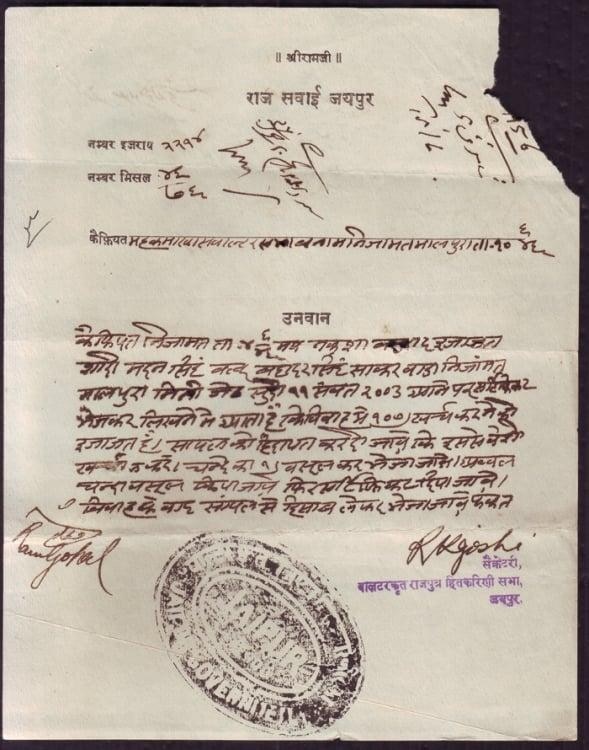
The great ink debate: When Indian bureaucrats argued for 13 months over pen colours
Bureaucrats in Indian ministries were unable to decide in 1999 who should write in which colour. The debate lasted 13 months, and the conclusion reflected a legacy from the British era. But why did bureaucrats enter into a debate over something as simple as ink?
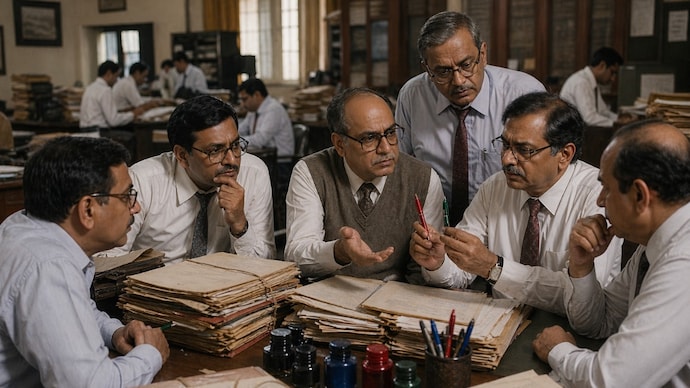
Shourie, in his memoir, noted how 13 months were spent in the Indian Bureaucracy to decide which officer would write using which ink. (AI-generated image)

New Delhi,UPDATED: Apr 22, 2026 15:43 IST
India’s bureaucracy once spent 13 months debating which colour of ink officers were permitted to use on official files. It sounds improbable, almost satirical, yet it happened. The debate began with the use of ink colours by two junior-level officers and eventually involved top ministries over a long period.
It was during the British era that different colours of ink were used by officers at different levels, ensuring that writing lasted longer on documents, as files often had to be sent to England.
This practice continued post-Independence, and for decades the same legacy persisted, until junior-level officers made the mistake of using two ink colours they were not supposed to use.
Even today, seventy-seven years after India’s independence, many colonial-period norms can still be observed in government offices.
Traces of British rule continue to shape how India’s bureaucracy works, quietly influencing how it thinks, writes, and functions every day.
When an IIT alumnus, Ketan, pointed out on X how white towels draped over chairs, popular during the British Raj, continued post-independence signal rank and distance, it sparked a wider conversation about inherited authority.
Gurdeep Singh Sappal, former CEO and Editor of Rajya Sabha TV and ex-OSD to the Vice President of India, joined in.
What began with a simple observation about office furniture soon moved to files, and from files to ink, one of the most understated yet telling tools of bureaucracy.
"Regarding the colour of ink to be used for noting and signature, Sh. Arun Shourie has written a hilarious, if not ridiculous, memoir as minister," he wrote on X.
Sappal brought to life a striking anecdote from the memoir of Arun Shourie, who served as Minister of Communications in the Vajpayee government between 2003 and 2004.
INDEPENDENT INDIA INHERITED BOTH THE FILES AND THE PHILOSOPHY
Shourie, in his memoir, noted how 13 months were spent in the Indian Bureaucracy to decide which officer would write using which ink.
The debate began in 1999, when two officers in the Ministry of Steel used red and green ink, colours traditionally reserved for senior under colonial conventions.
What followed was not a simple correction, but a full enquiry.
Files moved from one ministry to another: from Steel to Defence, from Administrative Reforms to the Directorate of Printing, then to the Department of Personnel and Training, and even to the National Archives.
A colonial legacy, decades after Independence, continued to linger in the corridors of Raisina Hill.
What should have been a minor issue turned into a full bureaucratic exercise, drawing in n number of ministries and expert opinions.
The Directorate of Printing looked into the durability of different inks, the National Archives weighed in on preservation, and the Ministry of Defence reflected on established colour hierarchies.
At one stage, the Department of Personnel and Training responded with a simple line: “It’s your manual, you decide.” Even then, a decision did not come easily.
The process kept moving in circles, held in place by its own procedures.
The conclusion, when it arrived, reaffirmed hierarchy. Junior officers were to write in blue or blue-black ink, justified on the grounds of durability.
The seniors retained the privilege of red and green.
The Manual of Office Procedure was updated. Paragraph 32(9) restricted the use of red and green ink to officers of Joint Secretary rank and above, and even then, sparingly.
Para 68(5) states that any colour of ink may be used, as the shelf life of documents is no longer a concern, though the practice continues in Indian government offices.
This clause, paradoxically, diluted the restriction of Para 32(9).
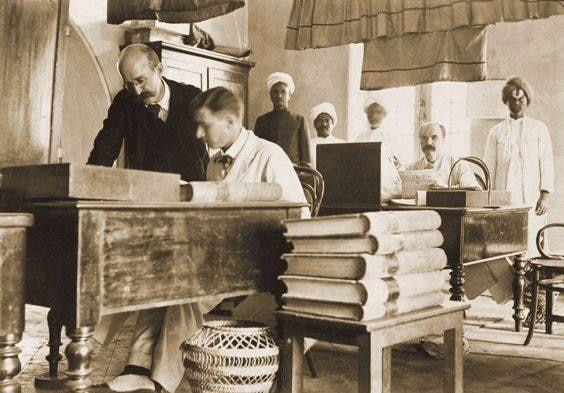
THE STORY OF INK FROM CAVES TO PAPER
The story of Ink is far older than bureaucracy. In the rock shelters of Bhimbetka, early humans used mineral colours, red, white, and green, to record their world, to communicate with us.
Over centuries, this evolved. Egyptians made black ink from soot and gum and wrote on papyrus. In ancient India, “masi” was used on palm leaves, where letters were etched and then darkened with soot and oil.
By the medieval period, iron-gall ink became common for manuscripts and official records. When Johannes Gutenberg introduced printing, he also developed oil-based inks suited for metal type, making writing easier to reproduce.
The British brought this refined ink culture to India, along with strict administrative rules. In colonial offices, ink colour signalled rank, red and green for senior authority, blue and black for junior staff.
Ink, in the Indian bureaucracy, is much more about writing, signifies it is control and who is the authority.
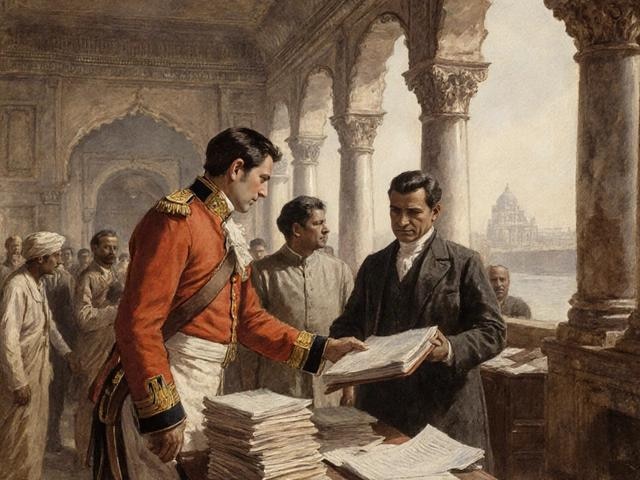
As the sociologist Max Weber observed in his analysis of bureaucracy, authority in modern states often operates through impersonal rules and visible symbols.
The colour of ink, the format of a file, the placement of a signature are not minor details.
Similarly, Michel Foucault wrote about how systems of knowledge and control are embedded in everyday practices.
In this light, the ink debate is not absurd, and it reveals so much about the colonial imprints.
Writers and observers of bureaucracy have long noted this tendency. In his essays, Shourie often pointed out how administrative systems can become preoccupied with procedure at the cost of purpose.
The British novelist George Orwell, who had firsthand experience with imperial administration, once remarked on the peculiar rigidity of colonial systems, where rules often outlived their relevance. The Indian context appears to echo that observation.
What Sappal highlighted in his post on X brings attention to a colonial-era legacy that continues to linger in India’s bureaucracy.
The white towel on the officer’s chair.
The red telephone on the desk.
The peon standing at the door.
The green ink reserved for the senior sahib.
For 13 months, the Indian Bureaucracy discussed the ink but not what it should write about.
- Ends