
CBSE's silence on tender controversy is deafening. 3 questions it must answer now
The allegations against CBSE may or may not stand the test of scrutiny. The questions raised by students certainly deserve to. Until the board directly addresses them, the Coempt tender row will remain a story about transparency as much as procurement.
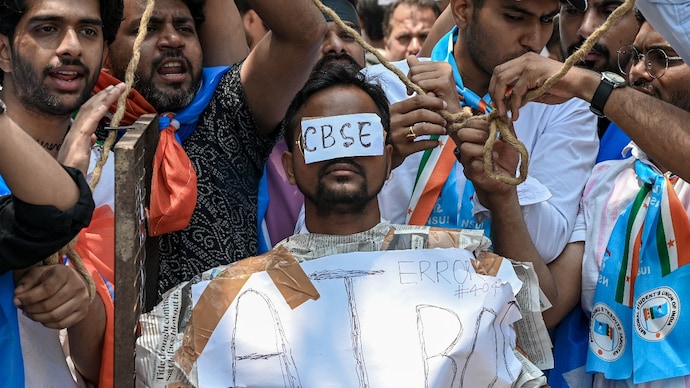

Millions of students are expected to justify every answer they write in an examination hall, yet when students began asking questions about CBSE’s own tender process, they found remarkably few explanations.
Weeks after a student-led audit of the board’s On-Screen Marking contract triggered a national controversy, the questions have only multiplied while the answers remain scarce.
The debate today is no longer just about Coempt Eduteck. It is about why CBSE appears unwilling to explain itself.
For most students, the board examination cycle ends when the results are declared. This year, it did not. Instead, what began as concerns over answer sheets and the newly introduced On-Screen Marking system has snowballed into one of the most unusual accountability debates Indian education has witnessed in recent years.
At the centre of it sits Coempt Eduteck, the Hyderabad-based company awarded CBSE’s digital evaluation contract, and a growing list of questions about how that contract was awarded in the first place.
What makes this controversy remarkable is not merely the allegations being made, it is who is making them. Not rival companies, not even politicians, and no procurement watchdogs.
But, students.
THE QUESTIONS AT THE CENTRE OF THE CONTROVERSY
The concerns raised publicly have focused on whether modifications to tender conditions altered the competitive landscape of the bidding process and whether those changes require fuller explanation.
To be clear, there is currently no official finding that the tender was rigged or illegally awarded. No investigative agency has publicly concluded that corruption took place, and no authority has determined wrongdoing on the part of Coempt Eduteck or CBSE.
Yet public confidence does not depend solely on legal conclusions. It also depends on transparency.
The central question raised by critics is not simply whether the process complied with procurement rules. Rather, they are asking three fundamental questions:
1. Has CBSE adequately explained why certain eligibility requirements changed during the tender process?
2. Were those changes necessary from a technical or administrative standpoint?
3. Did those changes ultimately benefit Coempt Eduteck in securing the contract over TCS?
These questions might have remained buried in procurement documents had they not been picked up by an unlikely group of investigators — the very students who are affected by the system.
TEENAGERS WHO STARTED READING BETWEEN THE LINES
The controversy gained momentum after Class 12 student Sarthak Sidhant began examining CBSE’s publicly available tender records relating to the On-Screen Marking project.
His analysis focused on changes made to eligibility criteria and technical requirements across different versions of the tender documents. Using procurement records available in the public domain, he argued that several conditions appeared to have evolved over time in ways that deserved closer scrutiny.
The findings spread rapidly online before attracting national media attention.
Soon, other students, young researchers and technology enthusiasts began conducting their own reviews of the documents. Instead of debating marks, they were comparing tender clauses. Instead of arguing over answer keys, they were examining procurement processes.
It was a striking reversal of roles here. The institution responsible for evaluating students suddenly found itself being evaluated by them.
WHEN PROCUREMENT BECAME A NATIONAL DEBATE
The issue expanded beyond education circles when political leaders began amplifying the concerns. Congress leader Rahul Gandhi publicly questioned the evolution of the tender conditions and called for greater scrutiny of the procurement process. AAP's Arvind Kejriwal also highlighted concerns raised by student investigators and drew attention to allegations circulating in the public domain.
The significance of these interventions lies not in the politics but in the sequence of events. The politicians did not create this controversy, they simply followed it. The questions originated with students who spent weeks studying documents that most adults would never bother reading.
That alone should have prompted a detailed institutional response. The controversy intensified further when cybersecurity activists and researchers began raising concerns about vulnerabilities linked to systems associated with the evaluation ecosystem.
Questions emerged about data exposure and digital security safeguards. These concerns widened the debate from simple procurement practices to broader issues of trust and governance.
CBSE acknowledged that vulnerabilities had been identified in a portal used for answer-sheet related services and stated that corrective measures were being undertaken. At the same time, the board maintained that the core evaluation platform itself remained secure and had not been compromised.
Even so, every new issue pushed attention back to the original question of how the system was selected, implemented and overseen. That remains unaddressed till date.
CBSE'S 'ACKNOWLEDGEMENT' IS NOT ENOUGH
CBSE has consistently denied allegations of favouritism in their tender award to Coempt. The board has maintained that the procurement process complied with established government procedures and that the contract was awarded through a legitimate process. It has also described several claims circulating online as misleading and factually incorrect.
Those denials are part of the record and deserve to be acknowledged. But they have not ended the debate.
That is because many of the specific concerns raised by students and independent analysts remain unanswered in the public domain. The board has broadly defended the process without publicly engaging in detail with many of the questions that triggered the controversy in the first place.
If the tender process was robust, many critics argue, there should be little hesitation in explaining precisely how and why key decisions were made.
It is this silence that is becoming the story...
Perhaps the most revealing aspect of this controversy is not contained in any tender document.
India Today.in has reached out to CBSE multiple times over the past several days seeking detailed responses to questions surrounding the Coempt Eduteck contract, the changes in tender conditions, the concerns raised by student investigators and the broader transparency issues that have emerged.
At the time of publication, despite at least five separate email queries, no substantive response had been received. That silence has become increasingly difficult to ignore.
Public institutions are not expected to be beyond criticism. Nor are they expected to respond to every allegation made online. But when concerns are backed by publicly available documents, amplified by national political leaders and debated across the country, the expectation of transparency becomes difficult to dismiss.
A detailed explanation would not necessarily vindicate the critics, it might well vindicate CBSE. But explanations require engagement. Silence does not.
WHY THIS MATTERS BEYOND ONE CONTRACT
The Coempt controversy is no longer simply about a vendor or a tender, it is about the relationship between public institutions and the citizens they serve. Millions of students are expected to justify their answers every year in examination halls across the country. They are taught that transparency, reasoning and evidence matter.
This controversy has produced a generation of students applying those same principles to the institution that evaluates them. They have asked questions, they have cited documents, have highlighted inconsistencies they believe deserve answers.
CBSE has every right to disagree with their conclusions. What it cannot reasonably expect is for the questions to disappear simply because it chooses not to answer them.