
Urdu cannot be written in Devanagari for entrance test, IIMC tells Delhi HC
IIMC has told the Delhi High Court that its Urdu Journalism entrance test can be held only in Urdu script. The stand has sharpened the dispute over academic autonomy, access and the use of Devanagari for Urdu.
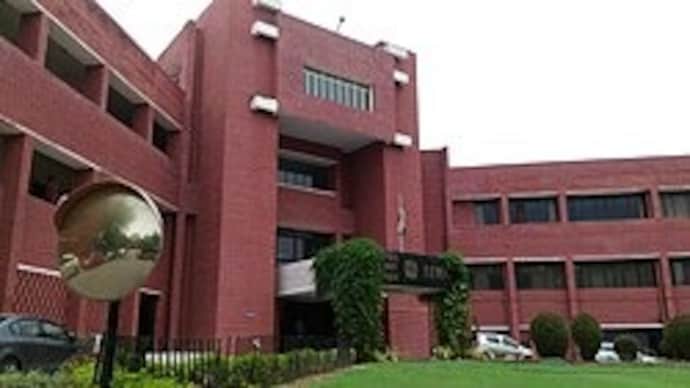

The Indian Institute of Mass Communication (IIMC) has defended its decision to conduct the entrance examination for its Urdu Journalism programme only in Urdu script, telling the Delhi High Court that the institution has the academic authority to determine examination standards and is not bound by historical practices, literary traditions, or industry trends.
The issue arose after IIMC revised its admission notification for the Urdu Journalism course and made Urdu script mandatory for the entrance examination.
The decision was challenged in the Delhi High Court by Jharkhand-based graduate Upasana Kumari and other petitioners, who argued that Urdu has historically been written and studied in both Urdu and Devanagari scripts.
In its reply affidavit before the court, IIMC rejected the contention that Urdu can be written in Devanagari for the purpose of its entrance examination.
IIMC DEFENDS URDU-ONLY SCRIPT RULE, REJECTS HISTORICAL AND LITERARY ARGUMENTS
IIMC told the Delhi High Court that historical traditions, literary practices, and the views of leaders such as Mahatma Gandhi and Ram Manohar Lohia cannot override its academic decisions on admissions.
The institute argued that it has the authority to conduct the Urdu Journalism entrance examination only in Urdu script and is not obligated to permit Devanagari.
In its affidavit, IIMC also rejected comparisons with the Urdu programme at Maulana Azad National Urdu University, saying the courses are different. It further argued that the use of Devanagari in Urdu newspapers, books, digital platforms such as Rekhta, or by broadcasters does not determine its examination policy.
The institute maintained that constitutional provisions and the National Education Policy do not require it to alter its admission process. It has asked the court to dismiss the petition, recover litigation costs from the petitioner, and refrain from granting any relief that would change the revised examination pattern.
HOW THE DISPUTE OVER DEVANAGARI IN URDU JOURNALISM ADMISSION BEGAN
The dispute began after IIMC's admission notification of 27 May 2026 stated that the Urdu Journalism entrance examination could be taken in both Urdu and Devanagari scripts. Several students unfamiliar with the Urdu script reportedly applied following the announcement.
However, the institute later withdrew the notification and issued a revised advertisement making Urdu script mandatory. IIMC told the Delhi High Court that the earlier mention of Devanagari was a departmental error that was corrected once it came to notice.
The petitioners have challenged this explanation, arguing that previous admission notifications never made Urdu script compulsory and that students had long been allowed to use Devanagari in examinations, assignments, journals and other academic work. While IIMC has denied these claims, the petitioners have submitted documents to support their case.
The Delhi High Court will now decide whether IIMC's decision falls within its academic autonomy or whether the concerns raised by the petitioners warrant judicial intervention.