
From Mahindra & Mohammed to M&M: The Partition story behind the brand
The journey from Mahindra & Mohammed to Mahindra & Mahindra became a story of resilience, where even after the departure of a founding partner, the Mahindra brothers carried the company's vision forward. They went on to build one of India's leading automobile groups, shaping a legacy that continues to evolve.

The cries of the Partition of India were heard across families on both sides of the newly drawn border, and in the middle of this upheaval, when people were leaving homes and choosing between two nations, a small company founded just two years earlier quietly found itself at a crossroads.
It was a moment that would go on to shape its future.
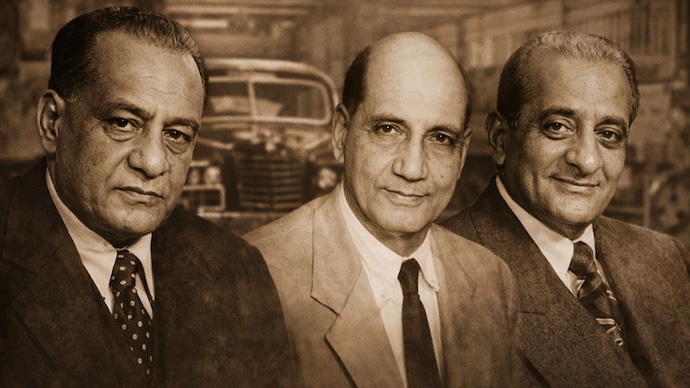
In 1945, in Ludhiana (Punjab), two brothers, Kailash Chandra Mahindra and Jagdish Chandra Mahindra, along with a friend, Ghulam Mohammed, set up a steel trading firm and, in a gesture reflecting both trust and partnership, named it Mahindra & Mohammed.
The company was one of India’s earliest. The founders and major shareholders, the Mahindra brothers, ensured that all three shared an equal identity in the business, even though their investments and shareholdings varied eloquently.
At that point, it was just another trading company, dealing in steel, operating in a country still under British rule, with little indication that it would one day grow into one of India’s largest business groups.
Then came 1947.
As the country split into India and Pakistan, the partnership too underwent a division of its own, not through disagreement but through circumstance, as Ghulam Mohammed moved to the newly formed Pakistan.
There, he would go on to become the country’s first Finance Minister and later its Governor-General, while the Mahindra brothers chose to stay back in India and continue building the business.
The question that followed was simple but practical; what happens to the company’s name?
By then, the initials “M&M” had already been printed on documents, letterheads, and invoices. Instead of starting afresh, the brothers decided to retain what already existed, changing the full form but keeping the identity intact, and this is how Mahindra & Mahindra came into being.
The relationship, however, did not end at the (new) border.
Years later, in 1955, when Ghulam Mohammed visited India, he remained in touch with the Mahindra family.
THE EARLY YEARS OF M&M
The company had been set up on October 2, 1945, when two brothers, Jagdish Chandra Mahindra and Kailash Chandra Mahindra, along with Ghulam Mohammed came together to establish what was then known as Mahindra & Mohammed.
Before the company took shape in 1945, the foundations of this partnership were already in place through professional and personal ties. Jagdish Chandra Mahindra and Ghulam Mohammed worked together at Tata Steel.
Their shared experience and understanding of business showed the path to consider building something of their own. JC Mahindra brought in key assets, while his younger brother, Kailash Chandra Mahindra, joined as an active partner.
Ghulam Mohammed, who would later move to Pakistan, also looked after the finances as CA. He completed his early education in Lahore and later went to MAO college in Aligarh.
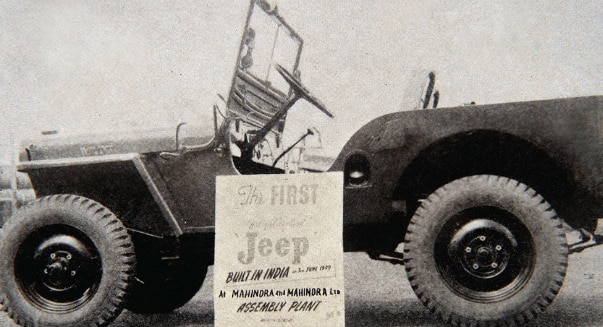
The shift from trading to manufacturing for M&M began soon after, and by 1947, the company had entered the automobile space by assembling Willys Jeeps, marking its first major move into production at a time when India was beginning to build its industrial capacity.
In 1949, this transition became more visible when 75 Willys Jeeps arrived in India from the Willys Overland Export Corporation in completely knocked down (CKD) condition. The jeeps were assembled at Mazagon in Bombay, laying the foundation for what would later become one of the company’s most recognised business segments.
The company continued to grow through the 1950s, and on June 15, 1955, Mahindra & Mahindra went public, followed by its listing on the Bombay Stock Exchange in 1956. With this, the company marked its entry into the formal financial market and expanded its access to capital.
By the early 1960s, the company had expanded further, entering the tractor segment through a partnership with International Harvester, aligning itself with India’s agricultural needs. This was at a time when food production and rural mechanisation were becoming central to policy and planning.
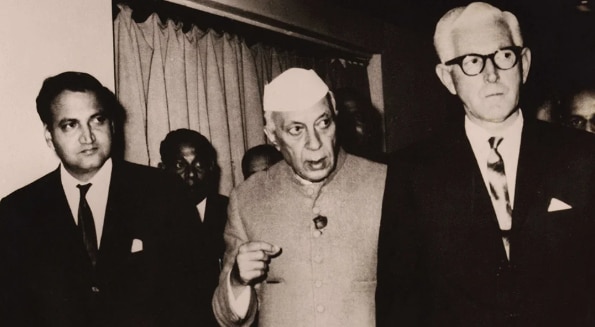
Under the leadership of Keshub Mahindra, who took over as Chairman in 1963, the company began to diversify steadily, building partnerships with global firms such as Mitsubishi and Peugeot, and moving into sectors beyond automobiles.
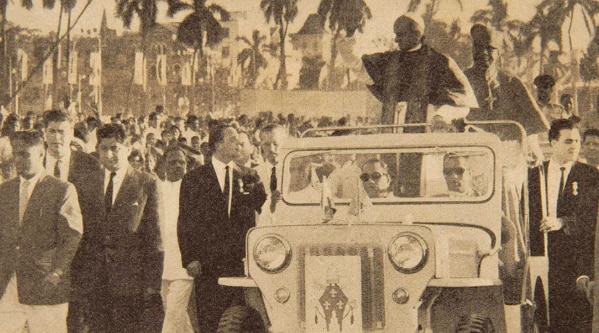
One of the defining public moments came in 1964, when a specially manufactured Mahindra Jeep was used during the visit of Pope Paul VI to Bombay, where he, along with Valerian Cardinal Gracias, greeted thousands during the Eucharistic Congress.
This placed the company’s product at a moment of national and international attention.
Over time, Mahindra vehicles, especially its jeeps and tractors, became widely used across rural and semi-urban India.
Today, the group operates across multiple industries, but its origins remain tied to a moment in history when a business had to redefine itself in the middle of a national division. It then evolved alongside a country that was building itself from the ground up.
The story of Mahindra & Mahindra is not just about growth or diversification, it is also about continuity, of a name that survived the Partition of India.
What began as Mahindra & Mohammed became M&M in the shadow of Partition, not by design but by circumstance. Even today, the early years of the company carry the imprint of that moment, reminding us how businesses, like people, were shaped by one of the most defining chapters in the subcontinent’s history.
- Ends