
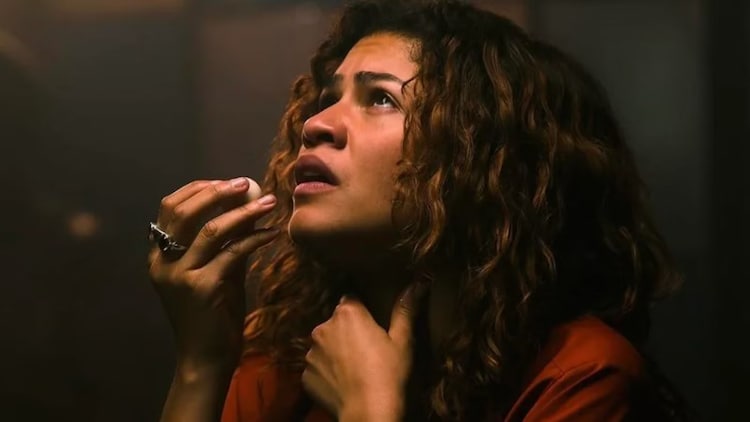
Euphoria 3 finale: Not just Rue, the series failed all its women
As Euphoria reached its final stretch, its women increasingly became symbols rather than people. That shift left the series facing questions about whether it examined female experience or merely packaged it as spectacle.
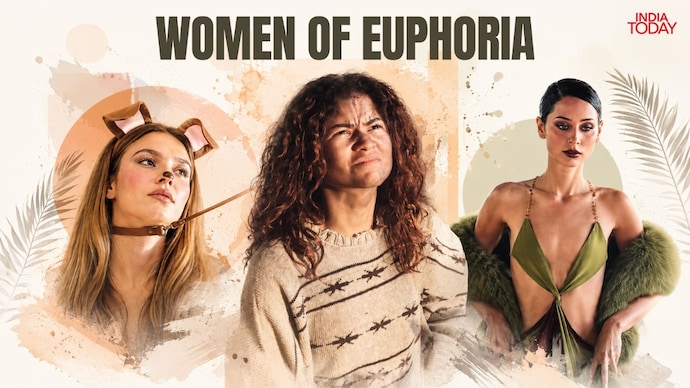
Euphoria Season 3 focussed more on spectacle than genuine female complexity. (Credit: India Today/Arun Uniyal)

Mumbai,UPDATED: Jun 3, 2026 09:06 IST
For seven years, Euphoria sold itself as a story about young women. It gave us Rue’s heartbreak, Cassie’s insecurities, Jules’ longing, Lexi’s observations and Maddy’s hard-earned self-worth. It was praised for centring female experiences and criticised for packaging them as spectacle. And now that the glitter has settled on one of television’s most divisive dramas, its biggest legacy may not be its shocking twists or viral moments, but an uncomfortable question: did Euphoria ever truly understand the women it was portraying?
What exactly was Euphoria trying to say about women?
At its best, the HBO series was a sharp portrait of adolescence. It followed Rue Bennett (Zendaya), a teenager battling addiction, alongside equally complicated young women—Cassie Howard (Sydney Sweeney), Maddy Perez (Alexa Demie), Jules Vaughn (Hunter Schafer) and Lexi Howard (Maude Apatow), all trying to make sense of themselves in a world obsessed with defining them.
The show’s early success came from rejecting easy labels. These women were contradictory, messy and deeply human. Which is why the final season feels so divisive. For a series built on complexity, many of its women ended up feeling strangely one-dimensional.
Rue: The protagonist who became a tragedy
No character benefited more from Euphoria's emotional honesty than Rue. What made Rue extraordinary was never her addiction. It was her humanity. She was observant, funny, cruel, intelligent and painfully vulnerable. In the early seasons, addiction informed her story. By the end, it increasingly became her story. (Cue: her tragic end)
The complexity remains largely because Zendaya's performance refuses to let Rue become a clich. Yet there is an undeniable narrowing of possibilities. The girl who once felt infinite gradually becomes defined by survival, and somewhere Levinson found a way to link her arc with sex workers along with her tangible history with drugs. A lethal combination if you ask, and yet everything is just surface level.
While it is understandable why Levinson decided to give Rue the ending that he did, it is also hard to ignore how Rue was seen as a beacon of hope for those dealing with addiction. Also, Zendaya had mentioned during promotions of Season 2 that she hopes the character gets a redemption arc. There is no doubt that Rue remains the heart of Euphoria. But she also becomes its tragedy.

Cassie: When a character becomes a spectacle
If Rue is the emotional centre, Cassie Howard is Euphoria’s greatest contradiction. Cassie began as one of Levinson’s most perceptive creations: a young woman who mistook desire for love and attention for validation. It was a painfully accurate portrayal of female insecurity. Which is why her Season 3 trajectory feels so revealing.
Her rise as an online adult-content creator makes narrative sense. If desirability has always been her currency, monetising it becomes the logical next step.
The idea is fascinating. The execution is where the discourse begins. Throughout the season, Cassie is repeatedly framed through the lens of consumption, primarily shot through male gaze. Even when she realises how lucrative this business is, the portrayal is designed to titillate men. She never stops seeing herself from a male gaze and that was perhaps the most disturbing part of Cassie in Season 3. 100 x zoom on her topless front, wearing baby doll outfits, even posing as a dog, all of these only for her to never real own herself.
One understands the point. Cassie is being objectified. The question, however, is whether the show is critiquing that objectification or participating in it. The most frustrating part is that Cassie once felt like so much more. By the end, she increasingly resembles a metaphor for desirability rather than a fully realised person. And metaphors are rarely as interesting as people.

Maddy: The woman who almost escaped
Which brings us to Maddy Perez. The internet’s favourite “boss bitch.” What makes Maddy compelling isn’t her confidence. It’s her self-awareness. Unlike Cassie, she eventually learns that being desired and being valued are not the same thing. She understands beauty and power but refuses to build her identity around either. In a series filled with women searching for themselves, Maddy is one of the few who comes close to finding herself, even if the journey remains unfinished.
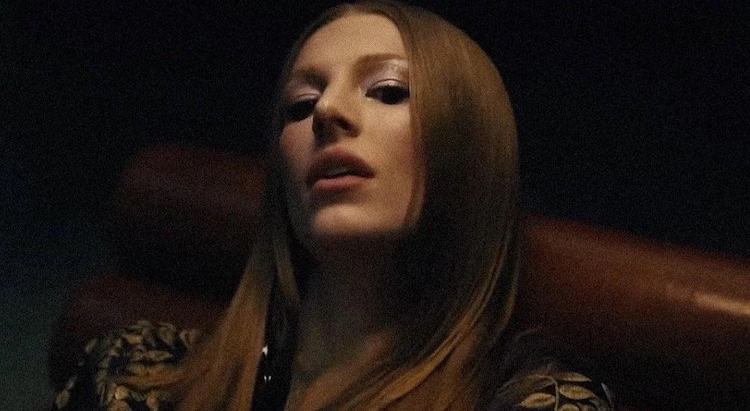
Jules, Lexi and the women left behind
Few characters arrived with as much promise as Jules Vaughn. Hunter Schafer’s portrayal felt genuinely groundbreaking, offering one of television’s most nuanced depictions of identity, desire and femininity. Then the show seemed to lose interest. As Euphoria progressed, Jules increasingly drifted to the margins.
The same could be said for Lexi, whose role as observer often proved more compelling than the stories she was ultimately given. Even Kat Hernandez, once central to conversations about body image, confidence and online identity, gradually disappeared from the narrative altogether.
And that may be the biggest criticism of Euphoria’s final act. Not that it just sexualised women. Television has always done that. Not that it depicted female suffering. Stories need conflict.
It’s that a show once fascinated by female complexity increasingly reduced its women to singular ideas. And somehow all of it is related to sex and drugs, alone! All of its women were trapped in a world where sex, addiction and mess were hard to escape.
The Euphoria paradox
The first two seasons, for all their excesses, felt genuinely curious about young women navigating identity, sexuality and trauma. By the final season, that curiosity often gave way to spectacle.
What began as an exploration of womanhood increasingly felt like an exercise in watching it. The visual language remained obsessed with bodies, suffering and shock value, often at the expense of the interior lives that once made these characters compelling.
Understanding women requires more than observing them. It requires allowing them complexity beyond their pain, desirability and symbolism.
And that may be Euphoria’s enduring paradox. For all its brilliance, the show created unforgettable women. Yet by the end, it often seemed more fascinated by watching them unravel than imagining who they could become.
As the final credits roll, one question lingers: Was Euphoria celebrating female sexuality, or simply packaging it for consumption?
Euphoria is available for streaming on JioHotstar in India.
- Ends