
Unchosen review: Atmospheric cult drama led by strong performances and slow pacing
Director Jim Loach and creator Julie Gearey deliver Unchosen, a haunting look at faith and control. Despite a slow pace, Molly Windsor's quiet rebellion makes this psychological thriller series deeply immersive.
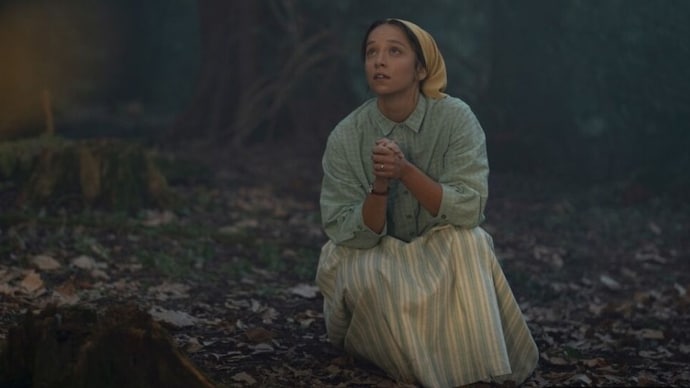

Director Jim Loach and creator Julie Gearey’s six-episode British psychological thriller Unchosen is set in the closed world of the Fellowship of the Divine, a rigid Christian sect in rural England where scripture governs daily life and any deviation is met with swift penance. At the centre of the story is Rosie, played by Molly Windsor, a devoted young mother whose carefully ordered existence begins to fracture after a dramatic encounter with an outsider.
The Netflix series follows a measured look at control, longing and the burden of inherited belief. Loach builds a tightly contained atmosphere through muted colours, constant rain and hushed communal scenes that make the Fellowship appear calm on the surface while remaining deeply oppressive. The setting becomes central to the series, shaping both the tensions within the community and Rosie’s growing sense that the life around her is beginning to splinter.
Christopher Eccleston plays the authoritarian Mr Phillips with a mix of piety and threat, while Siobhan Finneran brings equal force to the role of his formidable wife. Asa Butterfield gives Adam, Rosie’s husband, a layered inner conflict, and Fra Fee plays the enigmatic Sam with an unsettling charisma. Among the strongest performances is Olivia Pickering as Grace, Rosie and Adam’s partially deaf daughter. Her innocence, vulnerability and visible fear in moments of confusion and terror lend the story much of its emotional force, and her performance gives Grace a presence that extends well beyond plot function.
Windsor anchors the series with a restrained but steadily intensifying performance. Her Rosie is a woman formed by duty and obedience, slowly confronting the fractures in the world she has accepted for so long. The series explores repressed sexuality through restrained gestures, loaded glances and forms of intimacy shaped by a system that closely polices desire. Patriarchy is shown not through declarations but through daily rituals and expectations that quietly influence bodies, ambitions and relationships. In that setting, the drama’s treatment of women’s agency emerges through small acts of resistance that feel gradual and grounded.
The opening episodes hold attention through family tensions and a steadily building unease, with the cast suggesting a depth the material is often close to fully exploring. Windsor, Butterfield, Fee and Pickering all bring a range that keeps the drama engaging. At the same time, the series does not always make the most of that promise. Some of its more intense passages begin to repeat familiar confrontations and emotional rhythms without substantially developing them. The pace slackens in the middle episodes, and the score, with its brooding strings and atmospheric swells, at times feels too recognisable, making certain scenes seem repetitive rather than more immersive.
Unchosen may not emerge as a major standout, but it remains a thematically rich and atmospheric drama about the personal cost of rigid structures and the painful uncertainty that comes with awakening. Its slow-burn approach, combined with committed performances, gives the series enough weight to sustain interest even when its pacing falters.
Unchosen is available for streaming on Netflix.