
'Death is no defeat': CPR to Asha Bhosle sparks end-of-life debate
Asha Bhosle's CPR has raised questions about dignity in death.
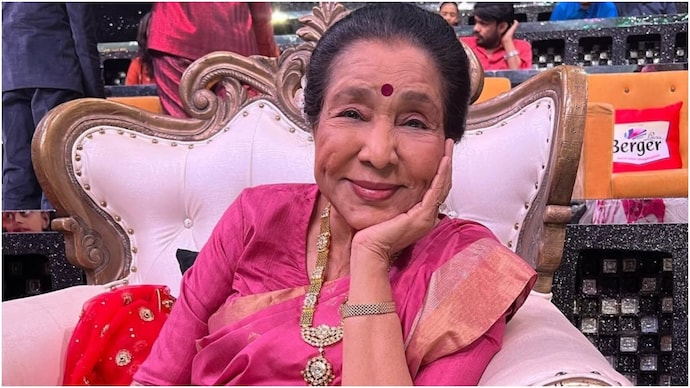

 Dr S P Kalantri, head of medicine at the Mahatma Gandhi Institute of Medical Sciences (MGIMS) in Maharashtra’s Wardha, has witnessed thousands of deaths up close while serving in intensive care units over a career spanning nearly 40 years.
On April 12, he wrote on X that he found it “distressing” that Asha Bhosle reportedly received CPR, or cardiopulmonary resuscitation, before the legendary singer was declared dead.
In ICUs, CPR is typically initiated immediately when a patient experiences cardiac arrest (when the heart stops beating) or respiratory arrest (when breathing stops), indicated by unresponsiveness, no pulse, and no breathing.
“A life of such music and grace deserves a dignified farewell, not the trauma of futile ICU rituals. True care means knowing when not to use machines. Sometimes, the deepest act of respect is letting go and allowing a soul to depart in peace (sic),” read his post.
The post drew angry comments from many, including several doctors, who retorted that physicians often do “everything” in their capacity to “revive” every patient.
Bhosle, 92, often celebrated as one of the greatest and most influential playback singers of Indian cinema, was declared dead due to cardiac arrest following multi-organ failure at Mumbai’s Breach Candy Hospital on Sunday.
She had been hospitalised a day earlier due to a severe chest infection and extreme exhaustion after days of illness at home.
The information that CPR was attempted on her, Dr Kalantri told India Today, prompted him to express his view that many Indian hospitals and doctors still do not recognise “the art of letting people go in dignity."
This is despite landmark judgments by the Supreme Court – first in 2018 and then in 2023 – which established the constitutional validity of an advanced medical directive (AMD) and the foregoing of life support.
Yet, many doctors are yet to accept and begin practising this idea.
“To each his own, Sir. Just as one wills for do-not-resuscitate, one can also opt for active life-saving measures. The patient's/family's autonomy is supreme (sic),” wrote another doctor on Dr Kalantri’s post.
Quoting American surgeon Atul Gawande’s widely acclaimed book Being Mortal: Medicine and What Matters in the End, which argues that medical care should focus on well-being rather than mere survival, Dr Kalantri said it is high time doctors realise that it is the quality of life – and not survival at any cost-that should matter.
DEATH AND DIGNITY
In simple terms, the Supreme Court’s end-of-life ruling – also known as the “passive euthanasia” law – allows people to write a “living will”, a legal document that enables anyone over 18 to choose the medical care they would like to receive if they develop a terminal illness or a condition with no hope of recovery.
The law also specifies norms for withdrawing or withholding artificial life support from terminally ill patients.
Recently, following another landmark judgment by the Supreme Court allowing the first court-permitted passive euthanasia, Harish Rana, 32, who had been in a vegetative state for the last 13 years, was taken off life support and passed away.
In the historic Aruna Shanbaug case in 2011, the Supreme Court allowed passive euthanasia in India, stating that it was possible under a stringent court procedure, though Shanbaug later died naturally after being in a vegetative state for 42 years.
Dr Kalantri said he felt compelled to share his thoughts on the circumstances around Bhosale’s death because Indian healthcare settings often see death as a defeat, when that should not be the case.
Bhosale lived a full and beautiful life until the age of 92 – she deserved dignity in death, he insisted.
“Death is a medical phenomenon – but it also has philosophical, ethical and spiritual dimensions, and it is important for Indian healthcare providers to grasp these aspects, especially in the context of critically ill patients,” said Dr Kalantri.
“Those with no hope of recovery, the very old, and the critically ill deserve to die in peace – preferably at home, surrounded by loved ones, instead of a technical death in a sterile ICU environment,” he added.
Dr Kalantri also underlined that many hospitals and doctors, in order to avoid legal scrutiny later, practise defensive medicine – where every available machine and intervention is used before a patient is finally declared dead.
However, when it was pointed out that in Bhosle’s case, since no AMD was known to be available, the choice of withdrawing life support rested with the next of kin, Dr Kalantri said that many Indian doctors fail to adequately counsel families on the futility of such treatments.
WHY INDIA NEEDS CODE STATUS
Some experts, meanwhile, underlined that in most developed countries, code status – a documented medical order specifying a patient’s preferences for resuscitation, including CPR, intubation, and mechanical ventilation if their heart or breathing stops – is determined at the time of hospital admission.
However, said Dr Raj K Mani, a Delhi-based critical care specialist who has been instrumental in pushing for end-of-life laws in the country, many Indian hospitals do not follow this practice.
According to Dr Mani, hospitals do not always record DNR or DNAR (Do Not Attempt Resuscitation) mandates. Under this mandate, as per a 2020 guideline by the Indian Council of Medical Research (ICMR), the treating physician, the patient, or their next of kin record at the time of admission when not to attempt resuscitation if the patient’s heart stops.
“I fully endorse Dr Kalantri’s view that a 92-year-old woman would have needed a calmer, more peaceful death without too many futile medical interventions following a cardiac arrest,” Dr Mani told India Today.
One thing most Indian doctors do not understand, he pointed out, is that no legal or medical text mandates that CPR must be performed after every cardiac or respiratory arrest, without considering nuances such as medical history, age, and the patient’s overall context.