
Widowhood, divorce, and women's health: What South India's numbers reveal
Southern States report significantly higher numbers of women who are widowed, divorced or separated compared to the national average. Experts say longer female life expectancy, ageing populations, later marriages and higher male mortality may all be contributing factors.
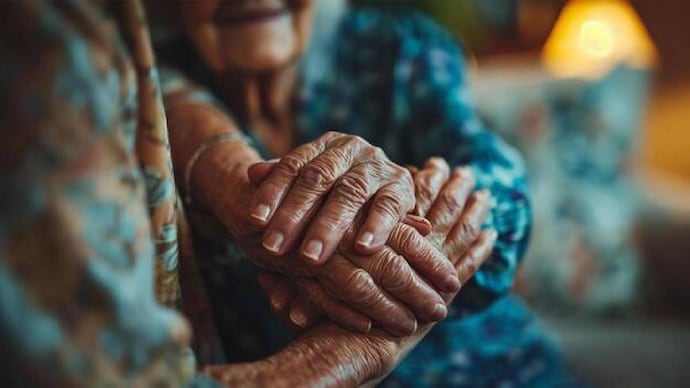

A new government report has revealed a striking demographic trend in India: women in South India are far more likely to be widowed, divorced or separated than women in most other parts of the country.
According to the Sample Registration System (SRS) Statistical Report 2024, all five southern States — Tamil Nadu, Kerala, Karnataka, Andhra Pradesh and Telangana- recorded a higher share of women living without a spouse than the national average. The trend stands out because no other region in India shows such a consistent pattern across all major States.
At the national level, 5.4 per cent of women were classified as widowed, divorced or separated. However, the figures in the southern States were considerably higher. Tamil Nadu recorded the highest share among larger States at 11.6 per cent, followed by Kerala at 10.4 per cent. Karnataka reported 8.6 per cent, Andhra Pradesh 8 percent and Telangana 7.6 per cent.
The findings have sparked discussions about the social and demographic changes taking place in southern India, particularly as the region continues to experience population ageing and rising life expectancy.
TAMIL NADU AND KERALA LEAD THE LIST
Tamil Nadu's figure of 11.6 per cent means that more than one in every ten women in the State is widowed, divorced or separated. Kerala follows closely at 10.4 per cent.
Together, the southern States occupied five of the top seven positions nationally, highlighting a regional pattern that differs sharply from much of northern and central India.
The report combines widowed, divorced and separated women into a single category, making it impossible to determine how much each group contributes individually. However, the overall numbers suggest that women in southern States spend a larger portion of their lives without a spouse compared to women elsewhere in the country.
WOMEN LIVE LONGER THAN MEN
One major reason behind the trend appears to be life expectancy.
Women in southern States generally live longer than the national average and often outlive their husbands. As a result, more women eventually become widows.
Kerala has the highest female adult survival rate in India. According to the report, a woman aged 15 in Kerala has a 94.5 percent chance of surviving until the age of 60. Other southern States also perform well, with female survival rates close to or above the national average.
At the same time, men in several southern States experience relatively higher mortality during their working years.
Telangana records 4.6 male deaths per 1,000 population, one of the highest rates among larger States. Karnataka records 4.5 deaths per 1,000, while Tamil Nadu reports 4.2. These figures are higher than the national average of 3.6 deaths per 1,000.
Higher male mortality means more women are likely to lose their spouses and spend later years as widows.
POPULATION AGEING IS PLAYING A BIG ROLE
Another key factor is population ageing.
Southern India is home to some of the country's oldest populations. As people live longer and birth rates decline, the proportion of elderly residents increases.
Older populations naturally have higher rates of widowhood because spouses pass away over time.
Kerala has the highest proportion of elderly women in India, with women aged 60 and above accounting for 15.8 per cent of the population. Tamil Nadu follows with 14.8 per cent.
In both States, elderly women significantly outnumber elderly men. This reflects a combination of longer female life expectancy and higher male mortality.
The trend is visible in both urban and rural areas. Kerala's rural female elderly population stands at 16.1 per cent, showing that the phenomenon is not limited to cities.
BIHAR PRESENTS A SHARP CONTRAST
The situation looks very different in Bihar, which records the lowest share of widowed, divorced or separated women among larger States.
Only 2 per cent of women in Bihar fall into this category, less than one-fifth of Tamil Nadu's figure.
Bihar also has a much younger population. Elderly women account for only 7.8 per cent of the population, nearly half the proportion seen in Tamil Nadu.
Women in Bihar marry earlier, at an average age of 21.7 years. Male mortality rates are also lower than those seen in many southern States.
Similar patterns are observed in Uttar Pradesh, Haryana and Jammu and Kashmir, where fewer women live without a spouse and populations are generally younger.
WHAT THE DATA REALLY SHOWS
The report does not prove that longer life expectancy, later marriage or higher male mortality directly cause higher rates of widowhood, divorce or separation. However, the data shows a strong connection between these factors.
States with older populations, higher female survival rates and greater male mortality tend to have larger shares of women living without a spouse.
As southern India continues to age faster than the rest of the country, the number of widowed, divorced and separated women is likely to remain higher than the national average. The trend highlights how demographic changes are reshaping family structures and the lives of millions of women across the region.