
Deepinder Goyal to launch 'Temple' brain wearable device soon: Sources
Zomato founder Deepinder Goyal appeared on a popular podcast wearing an unusual brain-monitoring wearable called Temple. As wearable tech evolves beyond fitness, this launch could push boundaries in real-time cognitive tracking, potentially opening up a new category in consumer health technology.
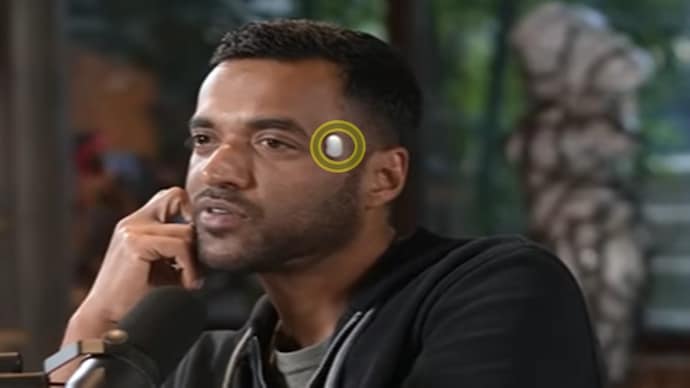

As Deepinder Goyal gears up to launch his much-teased brain-monitoring wearable ‘Temple’ in the coming months, the device is already generating significant buzz across tech and health circles. The manufacturing of the device starts next week according to sources. Positioned as an experimental leap into neuro-tech, the forehead-mounted sensor is designed to track cerebral blood flow in real time, an indicator linked to brain health, cognition, and ageing.
The upcoming release marks a sharp pivot for Goyal from food-tech into deep science and longevity-focused innovation. While details around pricing and functionality remain limited, early teasers and funding momentum have fueled curiosity, even as experts caution that the device is still in a nascent, unvalidated stage. The retail price of the device is expected to be around Rs 72000, the source told us.
But the real story behind what Deepinder Goyal was wearing on his temple is quite different and far more interesting. The metallic-coloured clip-like device is called Temple. It’s an experimental wearable that tracks brain blood flow in real time.
The idea is simple, if ambitious: monitor how blood circulates through the brain continuously. Blood flow to the brain is seen by many in science as a key sign of neurological health and ageing. By logging this data, researchers hope to better understand what happens inside our heads as we age.
Goyal’s interest in this goes beyond a podcast prop. He’s been testing the device himself for around a year. According to his posts and interviews, he and his team came up with Temple while working on something they call the Gravity Ageing Hypothesis, a theory about gravity’s long-term effects on blood circulation and ageing.
The Temple wearable is linked to Goyal’s personal research initiative, Continue Research, funded with his own money. Reports say he has put in about $25 million (around Rs225 crore) to push the work forward.
Important to note: this is not a Zomato product. Temple is still in the experimental phase.
Still, its appearance online triggered a wave of memes and curiosity across social platforms.
Experts say wearable sensors that monitor cerebral health are an active area of research, though such tools usually remain in labs or early trial stages. Real-world use far outside controlled studies is rare, and at this point Temple sits firmly in the research zone.
Goyal has shared more about his Gravity Ageing idea online, suggesting that over decades gravity’s pull could slow blood flow to the brain, and that could influence how we age. That claim has drawn both interest and scepticism, with some commentators questioning how much gravity alone can explain ageing patterns.
For now, the Temple device stands more as a conversation starter than a consumer gadget. Whether it evolves into a commercial health tool or remains a niche research instrument, its viral moment on the Raj Shamani podcast has put wearable brain monitoring in the spotlight.