
Why are we so afraid to stand out? Psychiatrist explains
Standing out often triggers discomfort, resulting in anxiety and self-consciousness for many people. There's comfort in sameness that hides a deeper tension between fitting in and staying true to individuality.
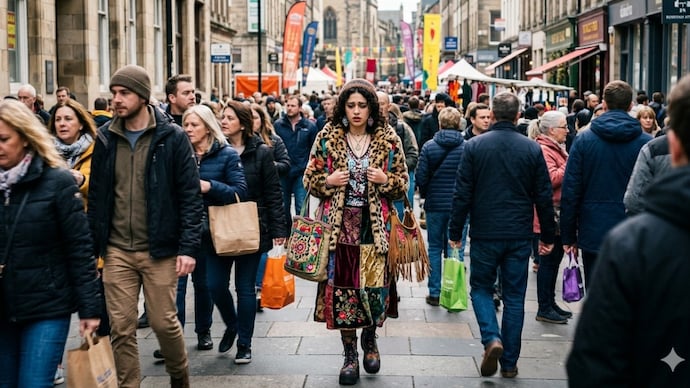
Looking ‘out of the place’ feels like peak anxiety.

New Delhi,UPDATED: Apr 14, 2026 15:20 IST
What if to feel included you have to disappear? This is exactly what people are doing today. The urge to fit in is so high that most people are ready to sacrifice their authentic selves.
The fear of being judged and standing out is bending people towards conformity. People usually find comfort when they feel accepted or fit in well among peers. Somewhere between wanting to be seen and not wanting to be judged, sameness becomes the safest and the simplest choice.
ANXIETY OF STANDING OUT
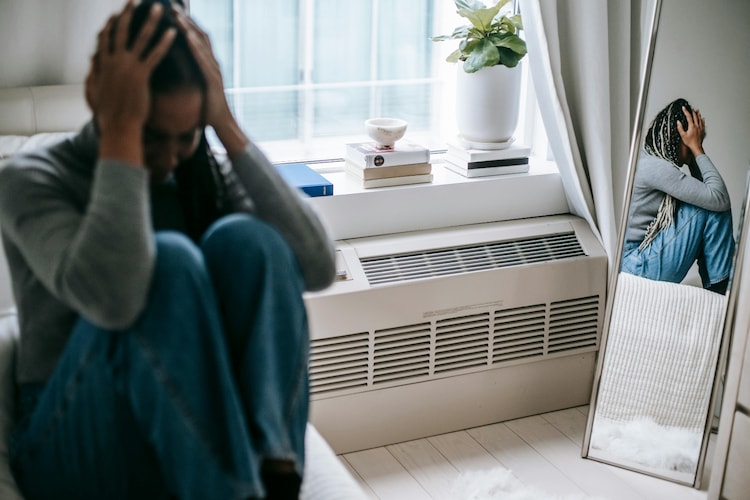
Looking ‘out of the place’ feels like peak anxiety. For many, showing their individuality makes them feel self-conscious. Standing out, even unintentionally, can heighten the sense of self-awareness, how you look, how you speak and how you are being perceived, which creates discomfort.
To ease this discomfort, people start moulding themselves according to what is considered “normal.” Self-conscious thoughts like 'Am I over or underdressed?,' 'Was I too loud?', 'Did I say something wrong?', amplify anxiety.
A study on a systematic review of research on conformity, suggests that the act of conformity is influenced by fear of social judgement, desire to belong, group pressure and context; who you're with, situation, and culture. They feel a hidden pressure to fit in which is still powerful in this modern time of individualism.
As a coping mechanism, people mirror the tone of conversations, adopt a similar style, often their opinion and change how they present themselves. The fear of being disparate shapes behaviour, reinforcing the anxiety of standing out.
BELONGING OVER AUTHENTICITY
The people are already wired to seek acceptance and inclusion. The need to be accepted outweighs the desire to be different.
Even when an individual desires to be unique, social dynamics push them towards conformity. People adjust their behaviour according to ‘how others are behaving’ and what is socially accepted.
“The root of this lies in human social behaviour, where individuals seek connection, security, and a sense of community, as it is wired into us from an evolutionary perspective. This need to belong often leads people to prioritise fitting in, causing individuality to be suppressed under dominant social norms," psychiatrist Dr. Sneha Sharma explains.
SAMENESS FEELS EFFORTLESS
Being unique needs a lot of creativity and effort while adapting to someone else’s personality or style feels easy. There is no need to overthink decisions while following what’s common. Sameness removes the burden of standing out.
Too many choices can be exhausting while copying others is making simplified decisions.
A study on social conformity despite individual preferences for distinctiveness, shows that copying others is actually a smart strategy as common behaviours are often successful and safe. People conform not just by choice but also to avoid negative outcomes.
The study adds that this bias makes conformity easier because it reduces mental effort and helps individuals avoid social risk. As a result, sameness feels effortless while standing out requires more cognitive and social effort.
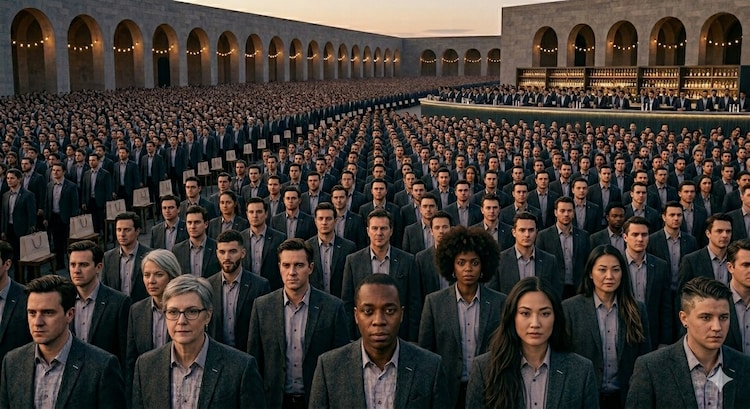
At some point, even diversity starts looking like conformity when viewed collectively. People choose differences that are already accepted. Therefore, being different becomes predictable and helps to reduce anxiety in social situations.
WHO WIRED YOUR BRAIN THIS WAY
One of the major reasons people believe in conformity is the environment they’ve been in. Norms are learnt early and eventually become automatic. From childhood, family and school have been the first places to teach value.
They teach the idea of “appropriateness” which gets engraved in the brains of people. Those rules are blindly followed without any questions as it often feels uncomfortable.
Culture conditionally turns external rules into internal habits. It is so deeply ingrained that following them feels natural and questioning them feels like stepping out of the place.
Even friend groups, offices and online communities, all have their own norms and, in order to fit in, people feel the need to adapt according to their preferences.
The media also plays a huge role in shaping one’s perspective of normal. Often trends create temporary versions of normal. Due to social media norms, they are now faster and more fluid.
In a world constantly celebrating individuality, the pressure of being normal is still on the run. Sameness may feel comfortable, but there is an underlying anxiety of standing out. A quiet pull of sameness shapes how we think, act and speak.
While conformity reduces anxiety and makes social interaction easier, it also blurs individuality, turning authenticity into something that is expressed only within socially acceptable limits.
- Ends