
How Jan Vishwas 2.0 brings trust value to ease of doing business in India
By decriminalising most minor offences and replacing jail terms with fines, the Jan Vishwas (Amendment of Provisions) Bill offers a trust-based business framework
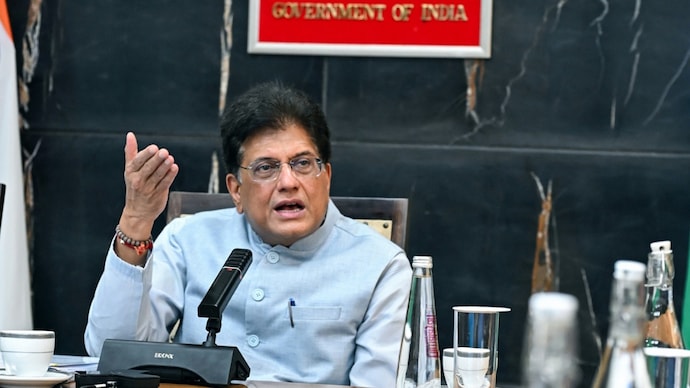

 Some regulatory changes are incremental while others mark inflection points. Jan Vishwas 2.0 is certainly one of the latter.
Indian businesses have long been burdened by heavy compliance requirements. According to the research report ‘Jailed for Doing Business’, produced by the Observer Research Foundation and TeamLease RegTech, two out of every five obligations under laws enacted by the Centre and states carry the risk of imprisonment of the entrepreneur for non-compliance.
Against this backdrop, the Jan Vishwas (Amendment of Provisions) Bill, 2026, promotes a governance framework that is trust-based rather than punishment-heavy. The bill removes criminal penalties for most minor offences, ensuring that individuals and businesses are not subjected to jail terms for small violations. Instead, these are replaced with monetary penalties.
The bill amends 784 provisions across 79 central Acts. Of these, 717 provisions have been decriminalised, with imprisonment largely replaced by financial penalties.
“This essentially enables the government to reallocate state capacity from low-value criminal enforcement to higher-order regulatory functions by rationalising 784 provisions,” says Rishi Agrawal, CEO and co-founder of TeamLease RegTech, a leading regulatory technology company.
This shift will help regulators move from a stance of distrust to one of guidance and facilitation, making it easier for businesses to operate while also improving the effectiveness of enforcement, adds Agrawal.
The decriminalisation of minor procedural lapses will also free up administrative and judicial bandwidth, allowing regulators to focus on more serious risks. Replacing imprisonment with monetary penalties will ease the burden on administrators as financial penalties are simpler to enforce than criminal proceedings. It also reduces reliance on courts, enabling regulators to handle a higher volume of cases internally, explains Agrawal.
The bill also introduces graded penalties, recognising that not all violations warrant the same response. Minor, first-time defaults may attract lower penalties while repeat violations face stricter action, ensuring a more proportionate approach to enforcement.
Additionally, the bill provides for issuance of “improvement notices”—formal warnings that require businesses to rectify non-compliance within a specified timeframe before any punitive action is taken. This preventive approach allows businesses to correct issues early while reducing the overall burden on the system.
Another significant benefit of Jan Vishwas 2.0 is that it empowers departments to resolve a high number of violations internally. “Cases that would otherwise move through the judicial system can now be assessed, decided and closed within ministries themselves. This shifts enforcement from being court-dependent to administrative and continuous,” says Agrawal.
This will reduce the burden on courts and enable faster, more predictable outcomes. It also allows the state to respond more efficiently to non-compliance, focus judicial resources on serious offences and strengthen overall compliance management by embedding decision-making within departments.
Subscribe to India Today Magazine