
Why fire at Pachpadra refinery that Modi was to inaugurate raises burning questions
Was the refinery adequately safety-checked, ask critics, or were timelines hastened for a politically significant inauguration in poll season in India
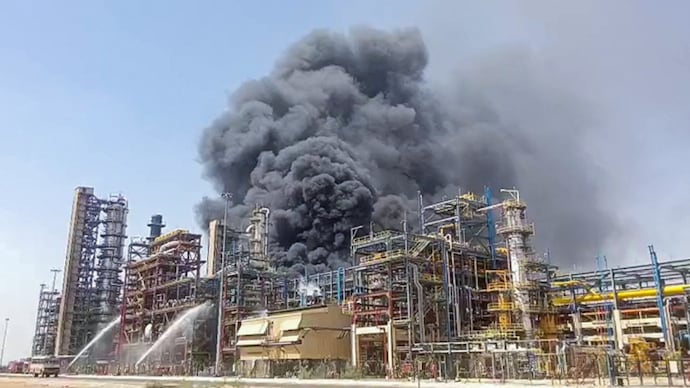

 The massive fire at the Pachpadra refinery complex in Rajasthan’s Balotra district a day before its scheduled inauguration by Prime Minister Narendra Modi has denied India’s energy sector a landmark moment. Modi’s April 21 visit was cancelled, and with it, weeks of elaborate preparations—reportedly involving significant public expenditure—went to waste.
One of the potential causes of the blaze is speculated to be leakage of hydrocarbons. While authorities are assessing the damage, early indications suggest the refinery’s key components, such as the crude distillation unit (CDU), may have been impacted.
Industry experts warn that if core systems have suffered heat or structural damage, sections of the refinery could require dismantling and rebuilding—potentially delaying operations by months or even years. That means further escalation of costs.
The Rs 80,000 crore greenfield refinery project is supposed to manufacture petrol, diesel and a wide array of petrochemical products. Operated by HPCL Rajasthan Refinery Limited in partnership with the Rajasthan government, it has had a long political and administrative journey.
The foundation stone of the project was laid in 2013 by then prime minister Manmohan Singh and Congress leader Sonia Gandhi. Ashok Gehlot was Rajasthan chief minister at the time. It got stalled, redesigned and revived under successive governments. Post-fire, questions have naturally arisen over the revised financial structures and returns.
The tragedy has not only jeopardised timelines but also invited scrutiny of whether safety norms were compromised to meet a politically significant inauguration date amidst ongoing elections to state assemblies.
Insiders indicate large-scale political events of this nature often involve extensive mobilisation costs, including arrangements for crowds, logistics and infrastructure, with public sector undertakings expected to shoulder a substantial part of the burden. Those expenditures now stand sunk, with no official clarity yet on the total outlay.
The Union government has ordered a high-level probe, but the controversy has already acquired political overtones. Opposition leaders in Rajasthan, including Gehlot and Leader of the Opposition Tika Ram Jully, have demanded a transparent investigation into whether undue haste or pressure contributed to the accident.
The episode has also reignited concerns over the tendency to prioritise political deadlines over a project’s technical readiness. The accusation: bureaucrats often fail to present an honest assessment to the political leadership, especially when faced with ambitious deadlines set by those in power. Instead of flagging risks, officials are accused of aligning themselves with political expectations, often at the cost of safety and long-term viability of projects.
Rajasthan has faced similar situations in the past. During Gehlot’s tenure as chief minister, there was pressure to operationalise the Jaipur Metro before assembly elections. However, an INDIA TODAY report raised security concerns over commissioning it before the mandatory trial run. Gehlot, after an independent verification from the Delhi Metro Rail Corporation, deferred the launch.
Critics cite multiple examples in the state. The Dravyavati river restoration project, pushed aggressively while the BJP’s Vasundhara Raje was chief minister, remains incomplete years later because false deadlines were promised to her.
The Rs 1,500 crore Kota Riverfront project, conceived along a small stretch of the Chambal river, is reportedly incurring losses after promising to attract millions of tourists and transforming Kota’s economy.
More recently, concerns have been raised internally about the design and feasibility of a proposed 26-storey IPD (indoor patient department) tower at Jaipur’s SMS Hospital, the state’s largest government medical college cum hospital. A senior bureaucrat has reportedly questioned the project’s scale and design, suggesting that a 15-storey structure would have been more practical and useful for IPD and compliant with fire safety. Critics argue that the current design risks operational and safety inefficiencies and a high annual maintenance expenditure of about Rs 45 crore.
Advisors linked to such whimsical projects are also understood to be involved in conceptualising a Rs 6,000 crore convention centre in Jaipur styled on the grand Bharat Mandapam complex in New Delhi. Officials privately acknowledge that a project like this could become financially unviable as it seemed driven more by grandeur than demand.
Such concerns feed into a broader narrative: that administrative systems in Rajasthan often bend to political ambition despite starkly different ground realities. The Pachpadra refinery fire has become a shocking example of what could go wrong when that balance tilts too far.
Barmer–Jaisalmer MP Ummeda Ram Beniwal and others have questioned the quality of work at the refinery, alleging that inexperienced workers were given contracts. It has also been alleged for long that local leaders, cutting across party lines, heavily benefitted from the refinery work.
Chief minister Bhajan Lal Sharma, who holds the petroleum and mining portfolio in the BJP government, is expected to face difficult questions. While operational responsibility lies with the refinery management, political accountability for the timing of the inauguration and preparedness cannot be easily evaded.
Equally pressing are questions around safety protocols. Were all mandatory trials and stress tests completed? Was the refinery genuinely ready for commissioning? That the fire reportedly broke out near the site designated for ceremonial events, including a havan, has further raised eyebrows.
Far beyond the immediate damage, the refinery fire represents a reputational setback. It raises uncomfortable questions about governance decision-making and the risks of prioritising optics over operational readiness. As investigations proceed, the focus will be on establishing the technical cause of the fire. But the larger issue—whether systemic pressures and administrative compliance played a role—may prove far more consequential for future projects in Rajasthan and elsewhere.
Subscribe to India Today Magazine