
Why Suvendu Adhikari wants Modi govt to handhold Bengal bureaucracy's rebuild
Serving and retired bureaucrats say the trainings organised in Delhi will end the Trinamool Congress era of 'resistance' to central deputation for Bengal officers
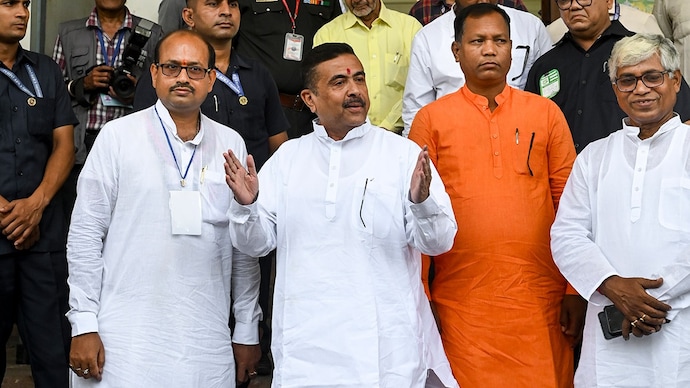

 West Bengal has begun what many bureaucrats are describing as a significant administrative reset, with a renewed focus on training, central deputation and restructuring of the state bureaucracy under the new BJP government and its chief minister Suvendu Adhikari.
Adhikari had announced on May 11 that his cabinet had empowered the chief secretary to initiate central government training programmes for officers of both national and state cadre. The cabinet also decided that IAS, IPS and state police officers would undergo central training programmes, signalling a major shift from the previous administrative culture in the state.
The process effectively began on May 12 when eight officials from the West Bengal health department underwent training in New Delhi at the National Health Authority, the topmost entity implementing the Centre’s Ayushman Bharat Pradhan Mantri Jan Arogya Yojana. While a few junior officials were in the group, the main focus was on officers linked to information technology. The training primarily dealt with the technical aspects of implementing Ayushman Bharat in Bengal.
Officials from the state’s urban development and municipal affairs department are also undergoing training while similar programmes for other departments are expected to follow.
For many Bengal bureaucrats, such exposure to central institutions and training mechanisms is unusual. Several serving and former officials privately acknowledged that opportunities for training, higher studies and central deputation had become limited in the years under Trinamool Congress rule.
A young IAS officer had earlier remarked that officials in Bengal often felt professionally “stagnated” because they were rarely allowed to attend training programmes outside the state, pursue academic opportunities or move on deputation to the Centre. Bureaucrats argue that such exposure is essential not only for career growth but to improve governance.
The issue has practical implications as well. Bengal officials have to frequently negotiate projects and administrative matters with the central government. However, the number of Bengali or Bengal-cadre officers in key positions in Delhi has sharply declined over the years because of the state’s perceived reluctance to send officers on central deputation. Senior officials believe the new approach could gradually reverse that trend.
At the same time, the Adhikari government has moved aggressively to end the practice of reappointing retired bureaucrats to government-backed posts. On May 12, the state issued an order terminating 243 officials whose tenures had expired but who had either been reappointed to the same or different posts or were serving as nominated office-bearers drawing government salaries.
The move has broadly been welcomed by serving IAS and IPS officers, especially younger bureaucrats who believe such extensions blocked promotional opportunities and delayed administrative restructuring.
However, the decision has also triggered some resentment within sections of the bureaucracy. Some officers whose names appeared in the termination list claimed they had already submitted their resignations earlier on May 12 before the government order was issued. Including their names in the final list was viewed by some of them as unnecessarily humiliation.
Even as the BJP government attempts to signal administrative reform and generational change, there are indications of continuity at the top. There is a strong possibility that chief secretary Manoj Kumar Agarwal may receive an extension after his retirement in the coming months.
Taken together, the developments suggest that the new government is attempting to balance administrative continuity with structural reform—opening up training and central exposure for officers while simultaneously clearing out longstanding post-retirement arrangements within the system.
Subscribe to India Today Magazine