

 Handcrafted ByOur Editors
 How a first-time TMC MLA got 60 MLAs to rebel against Mamata in weeks
A rebel Trinamool faction led by Ritabrata Banerjee submitted signatures of 60 MLAs to back him as Leader of the Opposition. The move has raised questions about how a first-time TMC MLA managed to rally 60 of the 80 legislators against Mamata, and that too within weeks of the poll rout.
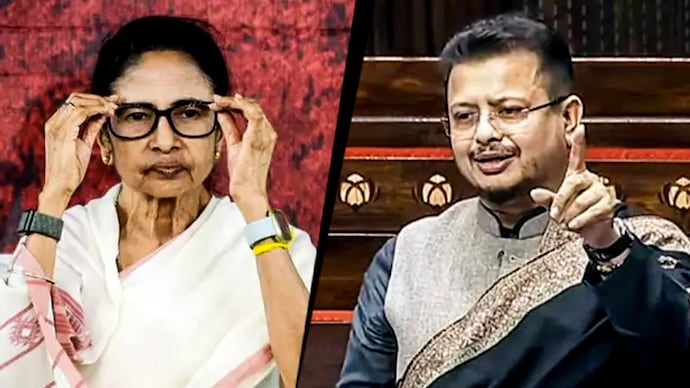


As the Trinamool Congress grappled with its biggest internal crisis, with a rebel group led by first-time MLA Ritabrata Banerjee claiming to be the real authority, several have drawn parallels with the 'Maharashtra model'. A few years ago, Eknath Shinde and Ajit Pawar triggered a similar crisis, leading to splits in the Shiv Sena and NCP, respectively. Now, Ritabrata is no Shinde or Pawar. Nor is he a mass leader. The bigger question then is how a first-time TMC MLA managed to rally 60 legislators against Mamata? And that too within a few weeks after the election rout.
We will come to the answer shortly. But first, it is important to understand how events unravelled so rapidly for the TMC. The Mamata Banerjee-led party has not merely won one or two elections, but has governed Bengal for three consecutive terms. The party appeared politically unassailable until recently. However, the election loss sparked desertions and dissent within the TMC even before the BJP government could form its full Cabinet.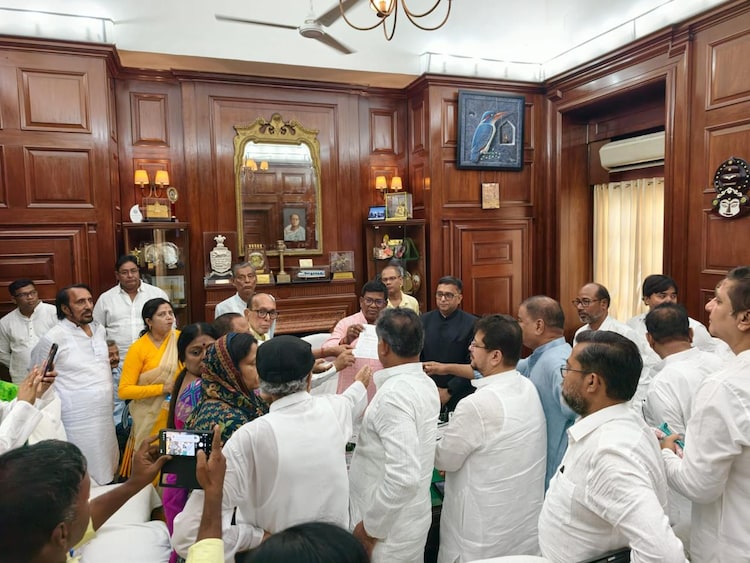
BEHIND THE CRISIS IN TRINAMOOL
At the heart of the crisis in Trinamool lies the allegation that the party forged signatures of its own MLAs in a letter endorsing Sobhandeb Chattopadhyay as the Leader of the Opposition (LoP). The controversy came to the fore after a complaint was lodged with the Assembly secretariat by MLAs Sandipan Saha and Ritabrata.
Within hours, the Trinamool expelled the two MLAs for "anti-party activities". It came amid buzz that Ritabrata, who has had two stints in the Rajya Sabha (once each under TMC and Left), was trying to organise a split and may claim to be the "real TMC".
The signs have been ominous for the Trinamool for quite some time. Last week, 60 of the 80 TMC MLAs skipped a meeting at Mamata's residence. Even on Tuesday, at Mamata's first street protest after the poll drubbing, only eight MLAs and six MPs were present.
It underscored the scale of discontent brewing within the Trinamool. Eventually, the rebel group met the Assembly Speaker on Wednesday and submitted signatures of 60 MLAs endorsing Ritabrata as the LoP. However, in a major plot twist, the rebel group named Mamata as the leader of the party.
"We are not challenging the leadership of Mamata Banerjee. We are not trying to break, and form a separate party. We shall work under the TMC flag," a rebel TMC MLA told the media.
As the rebellion within the TMC played out in full public glare, the swiftness of the move left political observers intrigued. After all, Ritabrata, who joined the TMC only eight years ago after being expelled by the Left, does not command the kind of political influence that Eknath Shinde or Ajit Pawar enjoyed in their respective parties.
HOW IS IT DIFFERENT FROM SHIV SENA, NCP CRISES
Even for seasoned political heavyweights like Shinde and Pawar, engineering splits in the Sena and the NCP did not happen in a few weeks or months. The rebellions in the parties were preceded by months of simmering discontent.
In the case of the Shiv Sena, the seeds of rebellion were sown in 2019 when Uddhav Thackeray joined hands with the ideological opposite Congress and the NCP to form the government. Many Sena leaders and workers viewed it as an uneasy alliance that went against the party's long-standing Hindutva ideology.
The resentment continued to build over the next two years. It finally culminated in 2022, when Shinde, backed by around 40 MLAs, rebelled against Thackeray, bringing down the coalition MVA government. Shinde justified the revolt by arguing that the Shiv Sena's core Hindutva identity was getting diluted through its alliance with parties that stood on the opposite side of the ideological spectrum.
The keyword here is ideology. Both Shiv Sena and NCP have been formed based on particular ideologies. It is why even after the rebellion and ensuing split, a major chunk of workers have remained loyal to Uddhav and Sharad Pawar.
For the Trinamool, the situation is completely different. The party, which was formed by Mamata after breaking away from the Congress, was never built around any political ideology.
The rebellion by Ritabrata and the 57 MLAs is also not driven by ideology or mass support. It is more about anger towards the TMC leadership, particularly Mamata's nephew and Lok Sabha MP Abhishek Banerjee.
Stay with us, and we will explain why.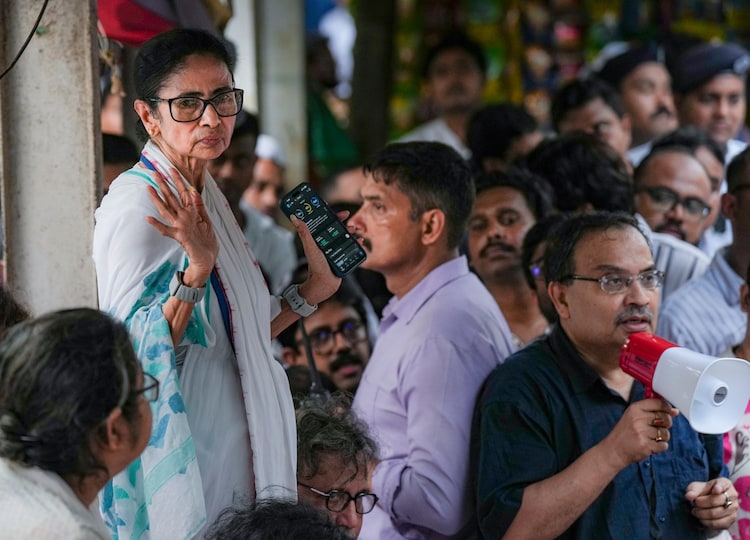
TMC NOT BOUND BY LOYALTY OR IDEOLOGY
Over the years, we have seen that a large section of Trinamool leaders and workers are not exactly bound to the party by either loyalty or ideology.
This was evident ahead of the 2021 Assembly election. Then, amid wide speculation that the Trinamool would be defeated, several high-profile leaders like Mukul Roy and Rajib Banerjee joined the BJP ahead of the election. However, as the TMC won by a thumping majority, the leaders returned one by one to the party.
In the present scenario, experts argued that it was more of a coup than a rebellion. "The BJP doesn't appear to be cultivating a powerful ideological faction within TMC; it is gathering a faction whose primary characteristic is the absence of loyalty," tweeted political analyst Sayantan Ghosh.
Thus, it is clear that anger against the leadership, rather than ideology, is behind the present turmoil. At the centre of it lies Abhishek, the de facto number 2 in the Trinamool.
Several TMC leaders have alleged that Mamata's control over her own party was curtailed as Abhishek began to run its affairs with the help of political consultancy firm I-PAC. However, for all the power that Abhishek enjoyed, he neither had any mass support nor much credibility. It is why Abhishek has faced the wrath of disgruntled TMC leaders more than Mamata.
The whole situation has been perfectly summed up by BJP national spokesperson RP Singh. In a long post on X, Singh claimed the TMC was united primarily by access to power rather than by conviction.
"What held the TMC together was not a shared vision for governance or a unifying ideological commitment, but the attraction of power and the ecosystem that grew around it," he said.
"In many ways, corruption became the party's de facto ideology and the glue that bound together leaders with vastly different political backgrounds and ambitions. As long as power remained secure, that glue held. But the moment questions began to arise about the party's future, the adhesive started weakening," the BJP leader tweeted.
In essence, the move by the rebel TMC faction puts the onus on Mamata to take sides either with Abhishek or with the Ritubrata-led group. It now remains to be seen whether Mamata can reassert control over her party and become the glue in the absence of any ideological pull.