

Umar Khalid case: Larger bench to reconsider Supreme Court order denying bail
The Supreme Court referred the issue of bail standards under the UAPA to a larger bench while reconsidering its earlier judgment denying relief to Umar Khalid and Sharjeel Imam in the 2020 Delhi riots case.
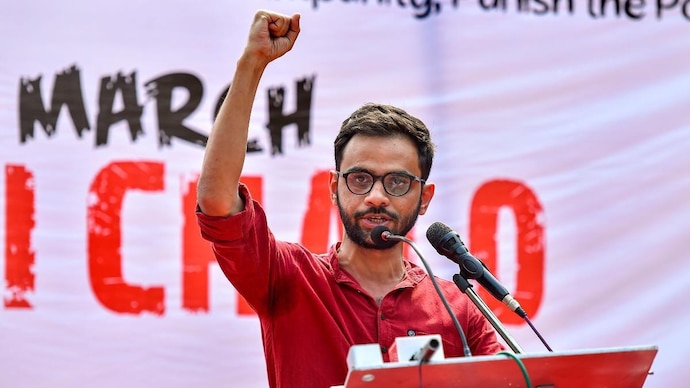


The Supreme Court is set to review the correctness of an earlier order that denied bail to Delhi riots cases accused Umar Khalid and Sharjeel Imam. The development comes after a two-judge bench recommended that a larger bench answer questions raised by two conflicting judgments of the Supreme Court on the issue of bail under the stringent Unlawful Activities (Prevention) Act (UAPA).
The two judgments differ on whether a prolonged delay in trial is a valid reason for bail under UAPA. In January this year, a two-judge bench of the Supreme Court denied bail to Umar Khalid and Sharjeel Imam holding that the charges against them were prima facie true and thus their arguments of a prolonged delay weren’t valid enough.
However, this week another two-judge bench of the Supreme Court granted bail to a person accused under UAPA while noting the delay in trial and holding that “bail is the rule and jail is the exception” even in UAPA cases. The bench also criticised the January judgment denying bail to Umar Khalid and Sharjeel Imam.
It is the conflict between these two judgments that has prompted a third bench to recommend that a larger bench settle the question of law raised by this. The third bench did so while granting interim bail to two other persons accused in the 2022 Delhi riots conspiracy case.
The issue arose after a two-judge bench of the Supreme Court comprising Justices BV Nagarathna and Ujjal Bhuyan questioned the correctness of the January ruling denying bail to Umar Khalid and Sharjeel Imam while granting bail to narco-terror accused Syed Iftikhar Andrabi in a UAPA case.
During the May 19 hearing, the Justice Nagarathna Bench opined that bail should be the rule and jail the exception even in UAPA cases.
The bench also observed that the order denying bail to Umar Khalid appeared to be inconsistent with the principles laid down in Union of India vs KA Najeeb, which held that prolonged delays in trial could justify the grant of bail in UAPA cases despite the law’s stringent bail conditions.
Meanwhile, Additional Solicitor General SV Raju, while urging the court to refer the matter to a larger bench on the issue, contended that the stringent bail standards under the UAPA do not infringe the right to personal liberty under Article 21 of the Constitution.
He argued that the principle of “bail, not jail” could not be applied uniformly to all accused booked under the anti-terror law.
At the centre of the legal debate is Section 43D(5) of the UAPA, which imposes stringent conditions on the grant of bail.
On January 5 this year, a Supreme Court bench of Justices Aravind Kumar and N V Anjaria again refused him regular bail, holding that the statutory bar under Section 43D(5) of the UAPA applied in light of allegations relating to the “planning, mobilisation and strategic direction” of the riots.
The same bench, however, granted bail to five co-accused persons, including Gulfisha Fatima, while permitting Khalid to revive his bail plea after one year.
Unlike ordinary criminal law, where bail is generally the norm, the UAPA requires courts to deny bail if the accusations appear “prima facie true” based on the chargesheet and case diary, effectively placing a heavy burden on the accused even before trial.
The development came on the same day that the Delhi High Court granted a three-day interim bail to Umar Khalid to enable him to meet his ailing mother, who is undergoing surgery.
INSIDE UMAR KHALID’S PROLONGED BAIL BATTLE
Umar Khalid has been lodged in Tihar Jail since his arrest in September 2020 in the Delhi riots conspiracy case under the UAPA, while the trial has seen little substantive progress. His attempts to secure bail have repeatedly failed.
A Delhi trial court denied him regular bail, and on October 18, 2022, the Delhi High Court also rejected his plea, observing that he was in “constant touch” with co-accused persons, that the allegations against him were “prima facie” true, and that the accusations disclosed, at first glance, the commission of a “terrorist act”.
Khalid approached the Supreme Court in 2023, but the matter was adjourned multiple times and one judge recused from hearing the case. In February 2024, he withdrew the plea citing changed circumstances and sought to renew his case before the trial court instead.
Over the years, Khalid has secured only limited interim relief. He was granted temporary bail in 2022 to attend his sister’s wedding, again in 2024, and once more in December 2025, each time subject to conditions including restrictions on speaking to the media.
He surrendered before authorities within the stipulated time on every occasion.