


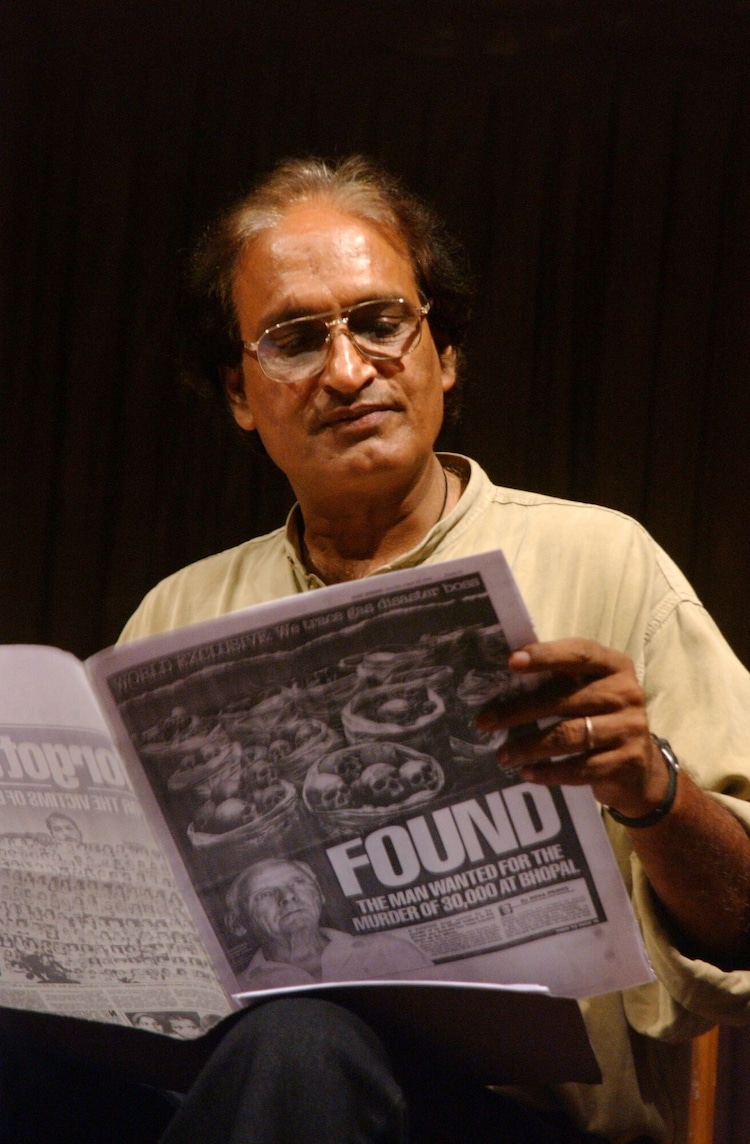
Words are brickwork, pictures are windows: Raghu Rai shaped how India saw itself
Renowned photojournalist Raghu Rai redefined Indian visual journalism by treating images as "windows" into events rather than mere accompaniments to text. His legacy spans decades of capturing the country's political upheavals, cultural life, and human stories through a lens that prioritised depth, emotion, and narrative.
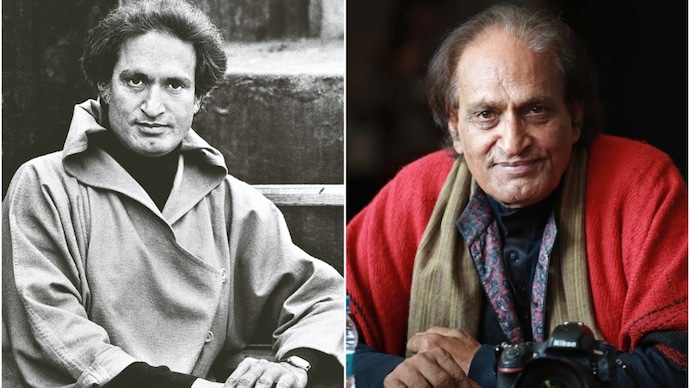
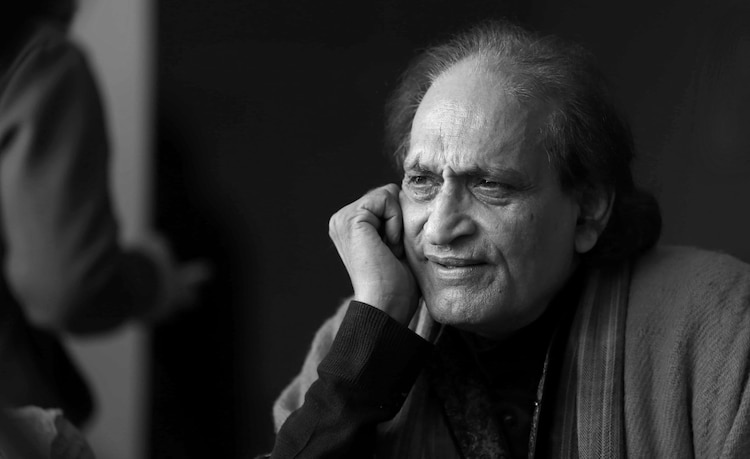
Raghu Rai, whose photographs chronicled India's public life and upheaval, died on Sunday at 83. (Photos: India Today Group)
“For me, written words are like brickwork,” Raghu Rai once said on camera, arguing that pages (in print media) should be opened up to let images become “large, powerful windows” into events. It was a belief he did not just articulate but practise for decades, shaping not just how India was seen through the lens, but also teaching a nation how to see itself.
Rai, who died on Sunday at 83 after battling cancer and age-related complications, leaves behind a body of work that did more than document India. It decoded and interpreted it. His photographs did not simply accompany stories. They often became the story.
At India Today, where he joined during its formative years in the early 1980s, Rai became central to defining the magazine’s visual identity. Aroon Purie, founder-publisher and editor-in-chief of India Today, said during the magazine’s 50-year celebrations, “Raghu is a genius... He brought a lot of energy and a different point of view to India Today. He would often call saying -- eentein bahut hain, khidkiyan chahiye, har ghar mein khidki honi chahiye (there are too many bricks, there should be windows...every house must have a window)."
Colleagues recall how he pushed constantly for space, arguing that images needed room to breathe. Pages, in his view, were not to be filled but opened up.
At a time when news magazines were driven largely by text, Rai insisted that photographs could carry as much meaning as any headline. He brought energy and a different point of view, turning the magazine into a visual archive of a country in flux. Politics remained central, but Rai expanded the frame. Society, culture, music, cinema, everyday life – all found a place in his work.
He could move effortlessly between worlds. One assignment might take him to a village scarred by violence, another into the quiet intensity of a musician’s practice. In one series, he photographed legends like Ustad Bismillah Khan, Pandit Hariprasad Chaurasia, and Pandit Bhimsen Joshi, capturing not just their faces but the emotion of their art. Viewers did not just see the music. They felt it.
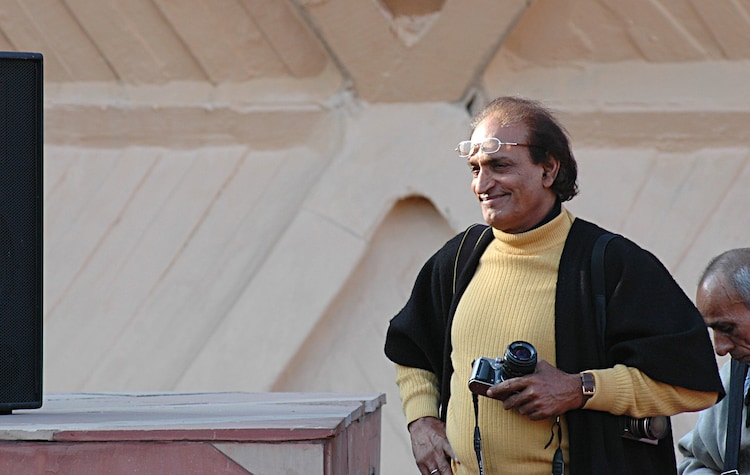
Yet it was in moments of crisis that Rai’s lens acquired a different kind of power. When the Bhopal Gas Tragedy unfolded, he produced images that would come to define the catastrophe. One photograph in particular, of a child with haunting, wide-open eyes, distilled the scale of the tragedy into a single, unforgettable frame. It was not filtered, not dramatised. It was simply there, and that made it impossible to look away.
Similarly, his work around the Nellie massacre and the turbulent years of militancy in Punjab reflected a photographer who was willing to be present in the most difficult of places. These were not images taken from a distance, but made from within the moment, often at personal risk.
The 1980s in India were marked by social and political upheaval, and Rai’s photographs captured that turbulence closely. The storming of the Golden Temple during Operation Blue Star, the violence that followed, and the assassination of Indira Gandhi were not just events he covered. They were moments he helped frame for public memory.
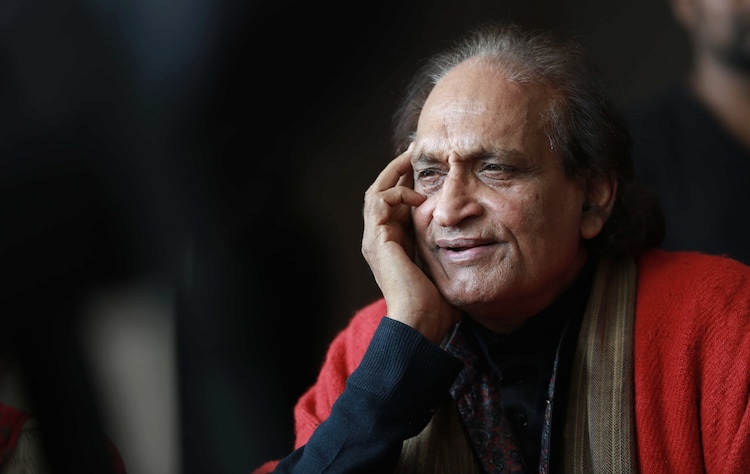
But to reduce Rai to a chronicler of tragedy would be to miss half the picture. He was equally drawn to the textures of everyday life. He photographed film stars like Amitabh Bachchan and the Kapoor family with the same attention he gave to ordinary people on the street. There was no hierarchy in his lens. What mattered was the story within the frame.
This ability to move between the monumental and the intimate is perhaps what made his work so enduring. His photographs appeared in some of the world’s leading publications, from Time and Life to The New York Times and National Geographic. In 1992, he was named “Photographer of the Year” in the United States for his work on wildlife management in India. He was also honoured by the French government with the Officier des Arts et des Lettres.
And yet, beyond the awards and global recognition, Rai remained deeply connected to the idea of India as a living, changing entity. His images were not static records. They were conversations. They invited viewers to pause, to look closer, to ask questions.
In newsrooms, where the pressure is often to move quickly, Rai argued for something slower and more deliberate. A photograph, he believed, could hold complexity in a way that words sometimes could not. It could suggest, evoke, disturb, and endure.
That philosophy continues to resonate in an age saturated with images. Today, photographs – both taken by humans and generated by AI – are everywhere, consumed in seconds and forgotten even before. Rai’s work stands apart because it resists that speed. It demands pause, attention, thinking – all things rare in this era.
Raghu Rai did not just leave behind stills. He left behind a way of seeing: one that urged editors to open the page and readers to look beyond the text, into the window.
- Ends