
2000 vs 2026: How the cost of essentials in India has changed
Comparing selected daily essential items shows how prices have changed between 2000 and 2006, giving a snapshot of increasing household expenses amid India's economic growth.
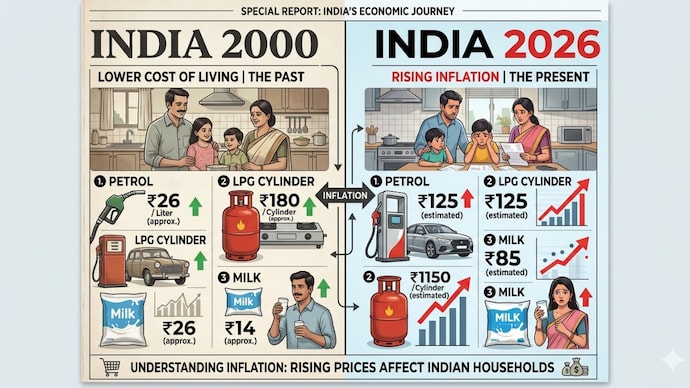

The rising cost of living has been a defining feature of India's economic journey over the past two decades. While incomes have also grown, the prices of everyday essentials such as fuel, cooking gas, milk, and other consumer goods have increased significantly since 2000.
Also read: Cost of living in India 2026: City-wise expenses and monthly costs
A viral social media graphic comparing selected prices in 2000 and 2026 has sparked discussions online. While some figures are broadly accurate, experts caution that prices vary across cities, brands, and states. Therefore, the comparison should be viewed as an indicative snapshot rather than a definitive measure of India's cost of living.
CAN YOU BELIEVE THESE PRICES? INDIA IN 2000 VS 2026
| ITEM | 2000 | 2026 | CHANGE |
|---|---|---|---|
| Petrol (1 litre) | Rs 26 | Rs 102 | Nearly 4 times higher |
| LPG Cylinder (14.2 kg, avg) | Rs157 | Rs912 | Nearly 6 times higher |
| Milk (1 litre) | Rs14 | Rs72 | More than 5 times higher |
Indicative figures only; prices vary significantly by brand, size, and state taxes.
PETROL PRICES HAVE SEEN A SHARP RISE
Fuel costs have increased substantially since 2000. Petrol, which was available at around 26 per litre in many parts of the country at the turn of the millennium, now costs around 102 per litre in several cities.
Higher crude oil prices, taxes, and transportation costs have contributed to this increase over the years.
LPG REMAINS A KEY HOUSEHOLD EXPENSE
Cooking gas prices have also risen significantly. A domestic LPG cylinder that cost approximately 157 in 2000 now costs around 912 in 2026.
Despite government subsidies and policy interventions over the years, LPG remains one of the major recurring household expenses for many families.
MILK COSTS REFLECT BROADER FOOD INFLATION
Milk, a staple in most Indian households, has also witnessed a substantial price increase. While retail prices vary by city, brand and fat content, average rates have climbed considerably over the past two decades.
Rising input costs, including cattle feed, transportation, and packaging, have influenced milk prices.
WHY THIS IS NOT THE FULL COST-OF-LIVING STORY
While the graphic highlights a few commonly purchased items, the cost of living encompasses much more than fuel and groceries. Housing, healthcare, education, transportation, utilities, and entertainment expenses all contribute to the overall cost of maintaining a certain lifestyle.
Moreover, prices differ significantly between metropolitan cities, smaller towns, and rural areas.
The comparison illustrates how the prices of several everyday items have increased between 2000 and 2026. However, it should not be viewed as a complete measure of the cost of living in India. A more accurate assessment would require a broader basket of goods and services, along with city-specific and inflation-adjusted comparisons.
As India continues to grow economically, the challenge for policymakers and households alike remains balancing rising incomes with the increasing cost of daily life.