
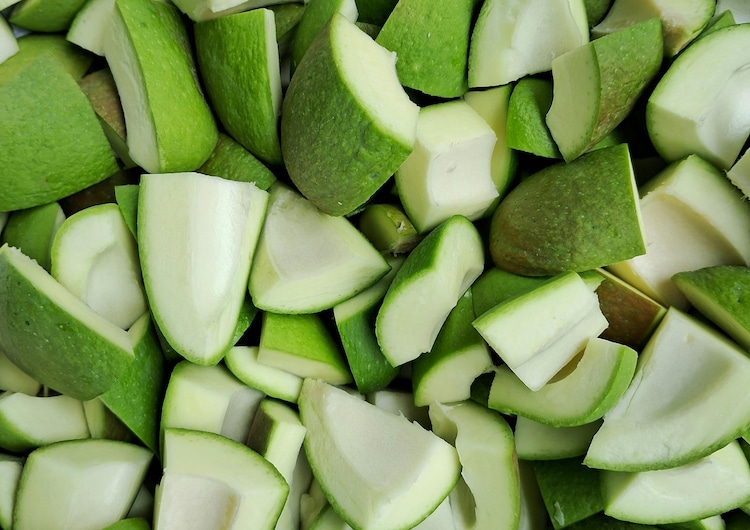
Why does mango pickle have long shelf life? IIT Madras professor explains
An IIT Madras expert explains how salt, mustard, gingelly oil and traditional techniques turn raw mangoes into aavakaya, one of Andhra Pradesh's most loved pickles, using principles of food preservation and chemistry.
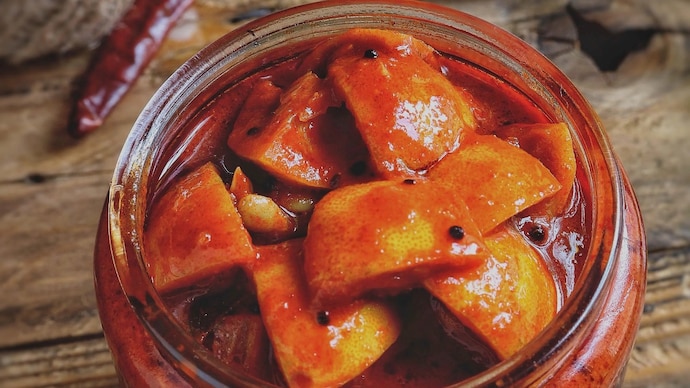
An IIT Madras professor explains the science behind aavakaya.

New Delhi,UPDATED: Jun 2, 2026 20:36 IST
Summer means mangoes. But for an Andhra household, mangoes mean more than the ripe, golden Banganapalli - the king of fruits, to be admired, sliced and eaten with appropriate reverence. At the other end of the flavour spectrum is its raw, firm, sharply sour cousin: the mango destined to become aavakaya. One is a sweet summer pleasure; the other is year-round insurance against a boring plate of curd rice.
Aavakaya is named for its defining ingredient: mustard. The raw mango provides the bite, the chilli provides the fire, the gingelly oil provides the aroma and luxuriant texture-but it is the mustard that gives this magnificent Andhra invention its identity.
How does a raw mango go from being a fleeting seasonal fruit to a pickle that can sit proudly on the dining table months later? The answer is not magic, although several grandparents may dispute this. It is a remarkably effective combination of transport phenomena, microbiology and flavour chemistry.
A raw mango, like most fruits and vegetables, contains a great deal of water held within a fibrous network of cells. It also contains sugars, organic acids and other nutrients. Once the fruit is cut, this moist, nutrient-rich material becomes potentially attractive real estate for microorganisms.
Pickling is therefore not merely a matter of adding flavour. It is our exercise to win the war against microbial squatters.
HOW SALT WINS THE WAR
The battle to win this war begins with clean, dry mango pieces and a generous quantity of salt. When salt is added to the cut mango, the liquid near the surface becomes highly concentrated with salt. Water then moves out of the mango tissue into this salty surrounding liquid, while salt gradually penetrates inward.
Food scientists call this osmotic dehydration.
But there is a subtle and important point here. Preservation does not require removing every drop of water from the mango. After all, nobody wants aavakaya with the texture of roofing material.
What matters is reducing the water activity: the amount of water that is readily available for microorganisms to use. Salt binds up part of that available water and the hydrophilic nature of the fibre binds up more, making microbial life much more difficult.
In this process, the mango remains pleasingly moist and crunchy; the microorganisms find themselves facing an unpleasantly hostile housing market.
THE SCIENCE OF KEEPING A PICKLE ALIVE
This also explains the almost ceremonial insistence on dryness during pickle-making. The mangoes must be dry. The jar must be dry. The spoon must be dry. In some households, one suspects that even the person entering the kitchen is expected to produce a certificate of dryness.
The fuss is justified. Salt suppresses the growth of many microorganisms, but it does not magically sterilise the pickle. Some yeasts and moulds are quite capable of tolerating salty, low-moisture environments. Stray water entering the jar can create a local pocket where spoilage organisms find life considerably easier.
Then comes the ingredient that makes aavakaya unmistakably itself: mustard powder.
The other spices join this carefully assembled defence team while making the pickle gloriously edible. Red chilli contributes heat and colour. Fenugreek introduces its faint bitterness and distinctive aroma.
The raw mango contributes its own acidity and crunch. The result is not a single preservative ingredient acting alone, but a coordinated system: salt, acidity, mustard chemistry, dryness, spices and clean handling all working together.
Finally comes the oil. In traditional Andhra aavakaya, this is typically gingelly oil.
It carries the aromas of the spices, coats the mango pieces and helps limit their exposure to air and accidental entry of fresh water. But one must not give the oil credit for the salt’s job: it is salt that draws water out of the mango and lowers its water activity.
The oil is more like the elegant project manager-carrying aromas, keeping the pieces coated and discouraging fresh incursions of air and moisture-while salt is the labour force doing the hard preservation work.
ALSO READ: What is the world’s most expensive variety of mango?
MORE THAN JUST A PICKLE
There is, incidentally, more drama in gingelly oil than meets the eye. In experiments from our laboratory, drops of gingelly, coconut, olive and castor oils were placed on water, and each oil spread and broke up into a characteristic pattern of holes and cellular structures. Gingelly oil produced an especially extensive oil-water boundary at its most intricate stage-more than three metres of interface from a single tiny drop.
This does not mean that gingelly oil pulls water out of mango pieces; that remains primarily the salt’s job. But it does suggest that gingelly oil can create a remarkably elaborate and evolving coating at an aqueous interface.
It is tempting to think of recipes such as this as merely inherited habit: grandmother did it this way because her grandmother did it this way. But traditional food practices often contain remarkably sophisticated empirical science.
Generations of cooks have optimized the mango variety, piece size, salt content, mustard quantity, oil level, drying procedure, storage vessel and resting time - without writing down a single transport equation or microbial-growth model.
So the next time you add a dangerous-looking quantity of aavakaya to hot rice and ghee, pause briefly before surrendering to it. You are not merely eating pickle.
You are experiencing a carefully engineered system involving osmosis, diffusion, water activity, enzyme-driven flavour chemistry, interfacial phenomena and generations of domestic experimentation.
Authored article by Prof. Mahesh Panchagnula, IIT Madras.
- Ends