
What is wet-bulb temperature? Why is it India's deadliest risk amid heatwave?
Wet-bulb temperature is becoming a serious risk in India's heatwaves. When heat and humidity rise together, the body struggles to cool itself, increasing the danger of heatstroke and death.
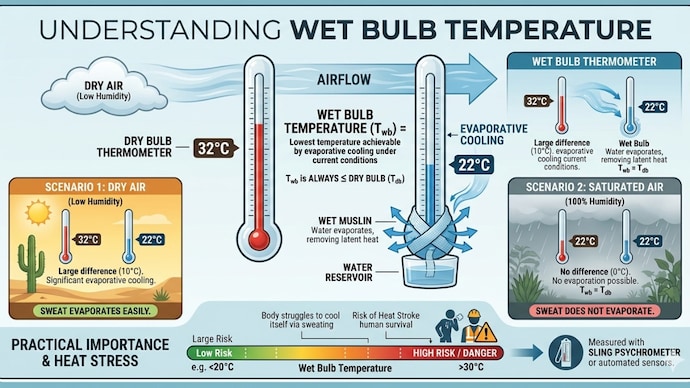

Heatwaves are not just about high temperatures anymore. What really matters is how heat combines with humidity and that is where wet-bulb temperature comes in. It measures how well the human body can cool itself through sweating. When humidity rises, sweat does not evaporate easily, making it harder to lose heat.
This can push the body into dangerous territory, even if the temperature alone does not seem extreme. As India faces hotter summers, understanding wet-bulb temperature is becoming more important than ever.
WHAT IS WET-BULB TEMPERATURE
Wet-bulb temperature is the lowest temperature the air can reach when water evaporates into it at constant pressure.
In simple terms, it tells you how effective sweating will be in cooling your body. If the air is dry, sweat evaporates quickly and cools you down. But if the air is already full of moisture, that cooling effect slows down or stops.
WHY HEAT AND HUMIDITY CAN TURN DEADLY
FAILURE OF BODY COOLING
The human body relies on sweat to regulate temperature. But when the wet-bulb temperature nears 35°C, sweat can no longer evaporate properly.
This means the body cannot cool itself, no matter how much water you drink. Internal temperature starts rising quickly, which can be dangerous.
RISK OF HEATSTROKE AND ORGAN FAILURE
Long exposure to wet-bulb temperatures above 35°C can be fatal within hours. The body loses control over its internal temperature, leading to heatstroke and, in severe cases, organ failure.
Even lower levels, between 29°C and 31°C, have been linked to increased deaths, making this a serious public health concern.
WHY INDIA IS AT RISK
India’s climate makes it especially vulnerable to rising wet-bulb temperatures.
Coastal regions already deal with high humidity, and urban areas trap heat due to dense construction. Add monsoon moisture to the mix, and conditions can quickly become uncomfortable and dangerous.
This combination creates what experts often describe as a “lethal cocktail” of heat and humidity. As global temperatures rise, such conditions are expected to occur more often.
ALSO READ: How to choose AC tonnage to reduce electricity consumption and costs
WHAT THIS MEANS FOR DAILY LIFE
For many people, especially those working outdoors or living without air conditioning, high wet-bulb temperatures can limit how long they can safely stay outside.
It also affects productivity, health and overall well-being. Heat exhaustion becomes more common, and recovery takes longer when the body cannot cool down properly.
Wet-bulb temperature is not just a technical term, it is a warning sign. As heatwaves grow more intense, it is the mix of heat and humidity that poses the real danger. Staying informed, and taking precautions could make all the difference.