

'First in my bloodline' trend: Women reject norms, prioritise careers and freedom
The 'first in my bloodline' trend has grown into a powerful movement, with women sharing milestones that break generational norms, from making independent career choices to rejecting marriage or motherhood. It reflects a deeper shift: women claiming agency, challenging expectations, and redefining freedom and success.
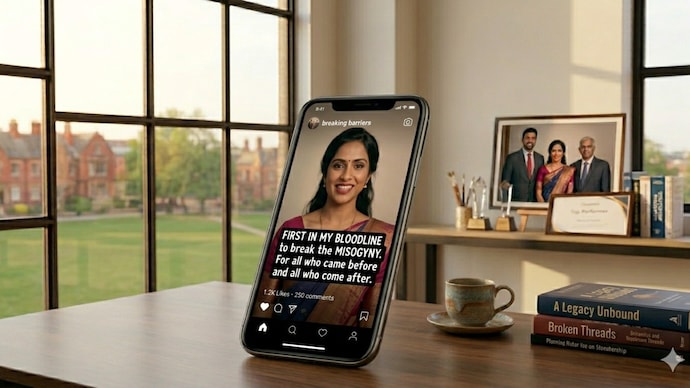
The “first in my bloodline” trend has turned into a powerful online movement where women share personal milestones that break generational norms.

Delhi,UPDATED: Mar 31, 2026 14:33 IST
“I am first in my bloodline to end my bloodline.”
Though it may sound jarring, for many women, it signals something deeper; the freedom to choose boldly.
It reflects the guilt-free choices women are making today for their own happiness. That is what the “first in my bloodline” trend is about. It is not just about being the first to achieve something but about being the first to choose differently and unapologetically.
WHAT IS THIS TREND?
This trend represents all the women who are first in their bloodline to do something. It basically means “I am the first person to do this in my family.” It may refer to things their previous generations couldn't do, weren't allowed to do, or could never imagine doing.
What started as a satirical meme on Instagram and X, soon turned into a powerful symbol for women. The trend blew up after a woman posted with a caption saying “first in my bloodline to travel without a husband."
What seemed quite ordinary turned into something extraordinary. That one post hit hard because, for many women, something as simple as travelling alone felt like a huge step towards breaking age-old traditions.
WHY IS THE TREND VIRAL AMONG WOMEN?
For most women, this trend feels personal. Women are seen achieving their aims fearlessly and this trend hits a very specific emotional nerve by showcasing it.
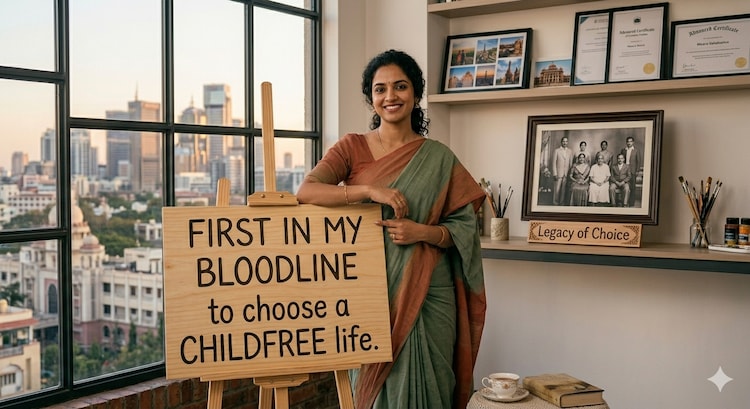
That “something” can be massive or tiny – studying, moving abroad, not marrying, not having kids, travelling alone, living alone, buying a house. Since almost every person has experienced some generational differences or other, this trend becomes very easy to join.

Sakshi Singh, 24, shares her story, “I am first in my bloodline to pursue journalism. In a family where most chose conventional, ‘secure’ careers like engineering or an MBA, especially for women, I chose differently. For me, journalism isn’t just a job but a calling; it goes beyond fixed hours and allows me to step out.”
The trend challenges traditions. This trend makes women feel bold and almost rebellious, especially in a society where their choices have limits. It turns a normal choice into a powerful statement.
Things that seem basic today but impossible previously, like earning your own money, are given an honorific status.

SMASHING THE PATRIARCHY
For generations, women have been taught to remain silent and sacrifice for their families. Now women are choosing to be loud and clear, disrupting that pattern, almost like rewriting emotional DNA.
Sharing a similar experience, Kajal Sharma, 22, says, “I come from a conservative background where girls’ education was never a priority. In my family, no girl had studied independently.”
“I became the first, later choosing journalism, a field no one imagined for a girl. Today, I stand as the only one breaking these barriers, and this is just the beginning,” she adds.
Many women don't get approval or disapproval, no explicit ‘yes’ or ‘no’, yet she carries the weight of the unspoken expectations.
Psychiatrist Dr Sneha Sharma explains the point of view behind the generational shift: “Breaking the cycle is about doing something not done before, moving beyond societal expectations, and embracing who you are. By being vocal and visible, you reclaim your identity, confidence, and it becomes liberating.”

THE GUILT FACTOR
Women co-exist in two contrasting worlds: a modern world of building a career and being independent, and a traditional world of caregiving and family responsibilities.
Though the world has now got used to women working equally, they are still expected to prioritise their family. This has been engraved in them since childhood. Therefore, doing something for her happiness feels wrong and selfish.
Dr Sharma explains, “Women are conditioned from the beginning to maintain family rituals, culture, name and respect, with an expectation to keep parents happy and be more submissive.”
“Over time, this gets internalised, so doing something outside the norm or what is expected feels like betrayal and can lead to feelings of anxiety, even when you know you are not doing anything wrong,” she says.
Women today are free but not from expectations. Women don't feel guilty because they’re doing something wrong, but because they are doing something they were taught a “good woman” never does.
Women see their achievements as a privilege and not as something basic that they deserve. They often see these opportunities as a privilege rather than a right, simply because the women before them never had access to them.

THE RIPPLE EFFECT: FIRST VS ONLY
The motive of this trend is not to be the only one, but to open the same and various other doors for the future generation.
One woman becoming “the first” changes everything for their younger siblings, cousins and future children. It's not just about an individual; it's a generational impact.
Aanya Sharma, 18, expresses, “I’m the first woman in my bloodline to simply be, speak my mind, and pursue what I want without fear or financial constraint. The women before me lived restrainedly, and because of them, I don’t have to.”
“I feel responsible to be bold and hold strong opinions; by choosing not to shrink, I am stopping the cycle of misogyny,” she adds.
WHY SHARING THE STORY MATTERS
According to Dr Sharma, “It can mean different things for different people. For some, it’s about openly embracing who they are instead of hiding parts of themselves. It’s also about finding community with others, breaking norms, and creating a sense of connection.”
“And finally, it’s about inspiring others to see that life beyond expectations can be liberating and joyful,” she adds.
Posting these stories online normalises the unconventional choices that were once frowned upon. Furthermore, it turns personal milestones into a moment of empowerment that one can celebrate.
Each post subtly pushes back against the restrictive activities or expectations, showing that breaking norms is valid and worthy.
The trend not only shows women that the uncommon is the new commonality, but it also helps inspire other women to take similar steps which they are hesitant about.
The “First in My Bloodline” trend isn't just a statement, but it's a celebration of choices and breaking barriers. And it has far-reaching consequences.
- Ends