
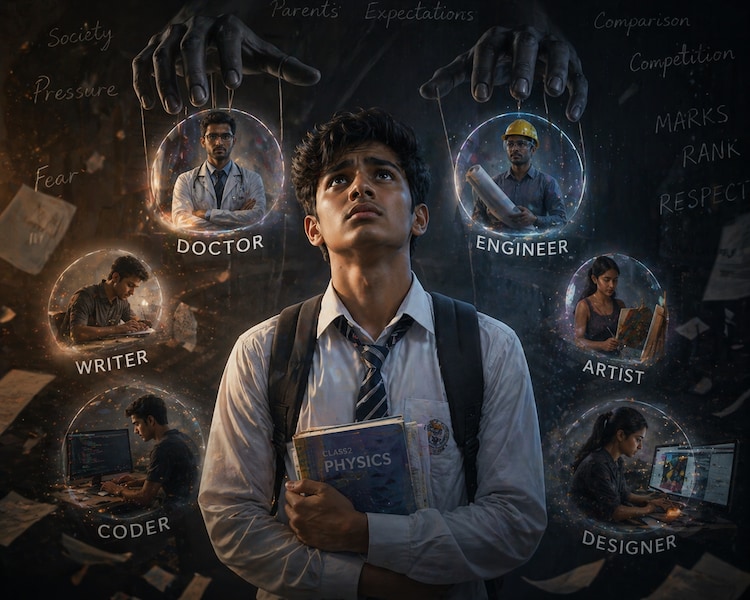
India's next job crisis may be a shortage of plumbers and electricians
As AI reshapes white-collar work, India faces a different challenge: a shrinking pipeline of skilled technicians, electricians, plumbers, nurses and mechanics. While millions chase traditional degrees, vocational education remains overlooked. Experts warn that strengthening ITIs and polytechnics may be critical to future employment, productivity and economic growth.
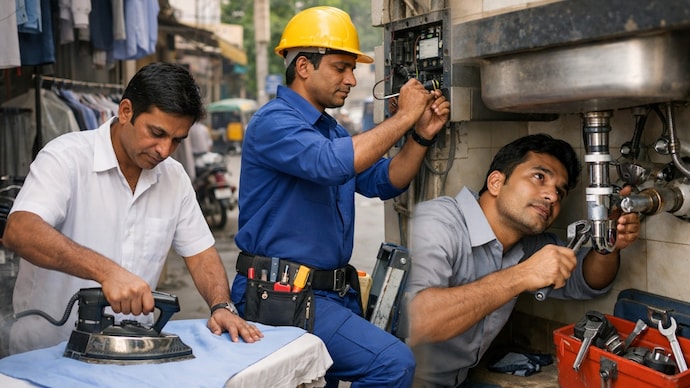
As AI reshapes white-collar work, India faces a different challenge: a shrinking pipeline of skilled technicians, electricians, plumbers, nurses and mechanics. (AI-generated image)

New Delhi,UPDATED: Jun 3, 2026 18:21 IST
Every few months, another report appears warning that artificial intelligence could transform offices, eliminate repetitive desk jobs, and reshape entire industries. Students panic. Parents worry. Companies experiment with AI tools that can write, analyse, code and create presentations in seconds.
Yet amid all this anxiety, India may be ignoring a far more immediate problem.
Go back 30 or 40 years, and it was common for people to know at least some basic plumbing, electrical or repair work. Today, many of us struggle to fix a faulty switch, a leaking pipe or a broken appliance.
Practical skills have slowly been pushed out of classrooms and family traditions, while society increasingly celebrated office jobs and university degrees. In the process, many technical trades lost status, fewer young people entered them, and the pipeline of skilled workers began to shrink.
In the race towards white-collar success, the country appears to have forgotten the value of skilled hands.
Who is going to repair the power grid, maintain industrial machinery, install solar panels, service electric vehicles, fix water pipelines, care for patients, weld critical infrastructure, or operate advanced manufacturing equipment?
THE GREAT DEGREE OBSESSION
For decades, India's middle class has followed a familiar formula. Study hard, get a degree, secure an office job.
Engineering, Management, Commerce, Computer applications -- the list goes on.
The problem is that millions are now pursuing similar qualifications while the demand for many traditional office roles is becoming uncertain. AI is increasingly capable of handling administrative tasks, basic coding, customer support, content generation, data analysis and routine documentation.
At the same time, jobs that require physical presence, technical expertise and hands-on problem-solving remain difficult to automate.
A plumber cannot fix a leaking pipe through ChatGPT. An electrician cannot repair a transformer remotely through an AI agent. A nurse cannot be replaced by a chatbot standing beside a patient.
These jobs are not glamorous in the eyes of society, but they are essential.
THE AI-PROOF ADVANTAGE
This is the argument being raised by investors and macro trend observers such as Ritesh Jain, founder of Canada-based research firm Pinetree, who has repeatedly warned about a looming blue-collar shortage in his LinkedIn posts.
His view is simple: while technology may disrupt many white-collar careers, skilled trades could become increasingly valuable.
The reason is obvious. While AI excels in digital environments, it struggles in messy, unpredictable real-world settings.
A mechanic diagnosing an unusual engine issue, a technician maintaining industrial equipment, or a nurse responding to a medical emergency is dealing with situations that require physical action, judgement and adaptability.
That makes these roles among the most resilient careers in an AI-driven economy.
Ironically, many students are spending three or four years earning degrees for jobs facing disruption while overlooking careers where demand is rising.
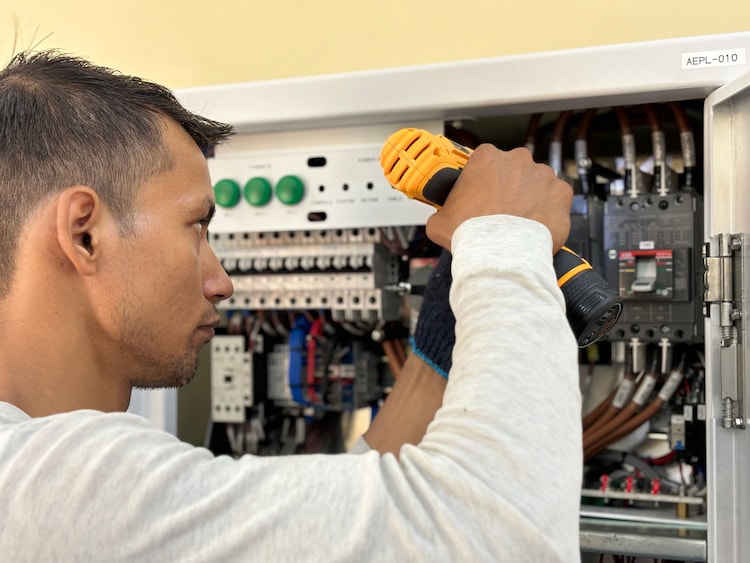
INDIA'S SKILLS PIPELINE PROBLEM
India has one of the world's largest youth populations. Yet vocational education often remains a backup option rather than a first choice.
Parents celebrate admission to engineering colleges. Few boast about admission to an Industrial Training Institute or polytechnic.
This perception gap may become a serious economic problem.
The country is investing heavily in manufacturing, renewable energy, infrastructure, semiconductor ecosystems, electric vehicles and logistics. All these sectors require large numbers of trained technicians and skilled workers.
The problem starts early. According to the Economic Survey 2025-26, nearly 92% of Indians aged 14-18 have received no skilling exposure at all, while only about 1% have undergone formal skill training.
More than 1,072 lakh adolescents reported having no skilling exposure whatsoever. Even among those who do receive training, most are concentrated in IT and business services rather than sectors such as healthcare, electrical work and industrial trades.
At a time when manufacturing, healthcare, renewable energy and infrastructure require skilled workers, India's talent pipeline remains worryingly thin.
A factory cannot function with only managers. A data centre cannot operate without electricians and maintenance teams. A hospital cannot run without nurses and technicians.
Economic growth depends on a workforce that can build, maintain and operate physical systems.
Right now, India continues to produce graduates in large numbers while skilled trades often struggle to attract talent.
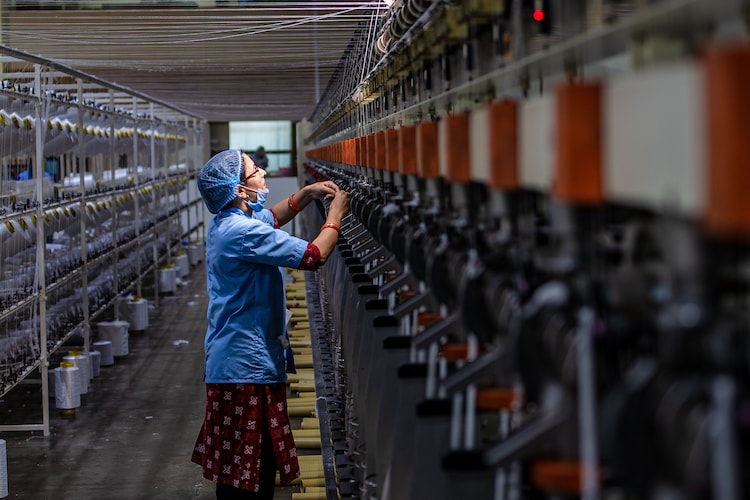
THE WARNING SIGNS ARE ALREADY VISIBLE
Ritesh Jain points to shortages in professions such as nursing. Similar concerns exist globally.
Many developed countries are already facing ageing workforces and shortages of skilled labour. In some sectors, retirements are outpacing new entrants.
The consequences can be surprisingly ordinary.
A shortage of plumbers means longer wait times for repairs.
A shortage of electricians slows housing projects.
A shortage of technicians delays industrial operations.
A shortage of nurses strains healthcare systems.
These are not futuristic concerns. They affect everyday life and economic productivity.
Healthcare offers a glimpse of what happens when a profession fails to attract enough entrants. Nursing organisations have previously estimated that India would need an additional 4.3 million nurses to meet World Health Organization norms.
India has roughly 1.7 nurses per 1,000 people, far below the WHO benchmark of 3 per 1,000.
WHY POLYTECHNICS AND ITIs NEED A REBRAND
India does not necessarily need fewer engineers or graduates. But it definitely needs a stronger balance.
Polytechnic colleges and ITIs should not be viewed as second-tier institutions. In many cases, they may offer faster employment pathways, lower educational costs and stronger alignment with labour market needs. The fact that many of these jobs are largely AI-proof is an added advantage.
The challenge India faces is not just infrastructure. It is perception. For decades, blue-collar jobs have often been seen as less prestigious than office-based careers, reducing their appeal among students and parents alike.
Countries such as Germany have long demonstrated that technical education can be prestigious, economically rewarding and central to national competitiveness.
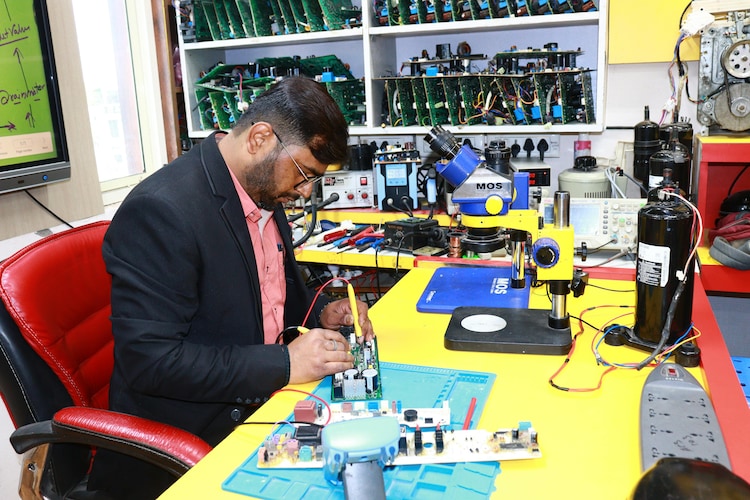
Indian students need to see examples of successful technicians, industrial specialists, healthcare workers and skilled tradespeople earning respectable incomes and building stable careers.
If India is serious about becoming a manufacturing and technology powerhouse, vocational education cannot remain an afterthought. Polytechnics and ITIs need greater investment, better faculty support, modern laboratories, updated equipment, stronger industry partnerships and regular curriculum upgrades so that students graduate with skills employers actually need.
Training students on outdated machines for jobs in advanced manufacturing, renewable energy or electric vehicles risks creating yet another skills gap.
Building more factories and infrastructure is only half the challenge. India must also invest in the institutions that train the electricians, technicians, welders, mechanics and healthcare workers needed to keep that growth running.
THE WORLD IS ALREADY RUNNING SHORT OF SKILLED WORKERS
This is not just an Indian problem. The World Health Organization estimates a global shortage of 4.5 million nurses by 2030. Across developed economies, ageing workforces and retirements are creating shortages in essential skilled occupations.
The result is rising wages and growing demand for workers with practical, technical skills that cannot easily be automated.
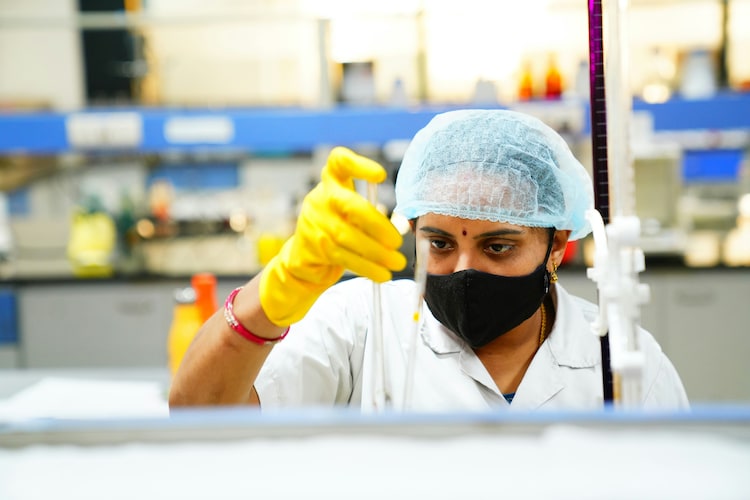
India's workforce problem is not a lack of workers but a lack of specialised workers. An Institute for Competitiveness report found that 88% of workers are employed in low-skill occupations, while vocational training remains concentrated in a narrow set of sectors.
As industries such as manufacturing, healthcare, renewable energy and infrastructure expand, employers are increasingly searching for certified technicians, electricians, machine operators and other skilled professionals who remain in short supply.
THE JOBS OF 2035 MAY LOOK VERY DIFFERENT
For years, society encouraged young people to move away from manual and technical work and towards office jobs. But AI may be forcing a rethink.
The future workforce may not be divided between blue-collar and white-collar workers. Instead, it may be divided between work that can be automated and work that cannot.
If that happens, many of today's overlooked careers could become tomorrow's most valuable ones.
India's biggest workforce challenge may not be producing more degree holders.
It may be ensuring that when the lights go out, the machines stop working, or a patient needs care, there is still someone skilled enough to answer the call.
- Ends