
Sati with a difference remains source of faith for people of Thar
A sati with a difference remains a source of faith for the people of the Thar.

ISSUE DATE: Oct 31, 1996 | UPDATED: Jun 10, 2013 14:03 IST


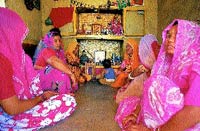
To some of the believers who flock to her temples, she is a fierce Kali-like figure; to others a gentle Sita-like mother-goddess. Says Sri Kanwar, who has built a temple to the Bhattiani Rani in her Jaisalmer home: "The sati can bless or punish. She is omnipotent."
And is a source of oracular powers, claims Sri Kanwar, who often goes into a trance when "possessed by the devi". Acting as a medium, she then answers questions from people about their future and offers solutions. "All my wealth is thanks to the devi's blessings," says Badrinath Chandak, a businessman from Jaisalmer who visits the main sati temple there regularly. Lovers, wives, professionals, businessmen, they all come seeking her help. Says Roopmati, a young, local bride: "The devi can make our married life happy, bless us with sons."
Typical of such cults, the sati history is woven into legends and lost in time. Said to belong to the Bhatti Rajput clan of Jaisalmer, she was married to a powerful Rathore Rajput of Jalor, over two centuries ago. The spread of the cult reflects that link: the two main Bhattiani temples are in Jaisalmer and Jalor, though several smaller temples are scattered across the Thar. The cult even inspired a Marwari film,Mata Rani Bhattiani, last year.
 |