
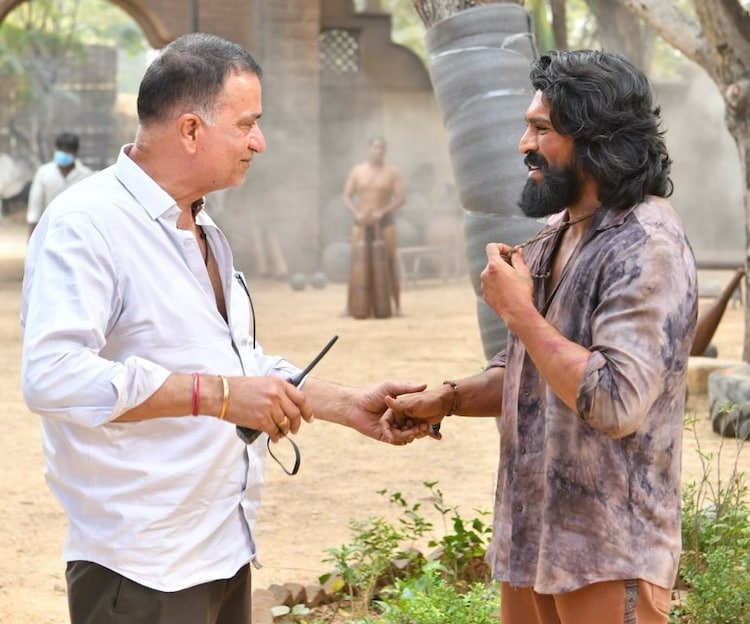
Ram Charan's Peddi injury didn't stop him from completing key scene: Sham Kaushal
Veteran action director Sham Kaushal discusses supervising the wrestling sequences in Ram Charan's Peddi, the actor's commitment despite injury, the film's emotional storytelling, and comparisons to Dangal.
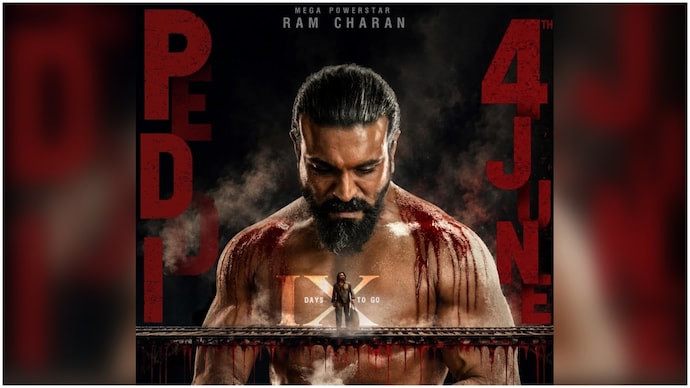
Sham Kaushal says Ram Charan completed Peddi bout despite injury.

Mumbai,UPDATED: Jun 10, 2026 20:23 IST
Veteran action director and stunt coordinator Sham Kaushal has opened up about his experience supervising the wrestling sequences in Ram Charan's film Peddi, revealing how the actor pushed through injuries, why wrestling in the film was never just about the sport, and what made the project special.
Speaking about the audience response to his work and the film's success, Kaushal said the greatest reward comes from seeing viewers connect with a project.
"It feels really good when you work hard on a film and people love it. You know the story and you're emotionally attached to it, so naturally you like it. But when you see people's reactions, it feels even better."
For Kaushal, every project is also an opportunity to grow.
"Honestly, whenever I go on a set in the morning, if I've learnt something by the evening, that day is very significant for me. I don't believe that I'm giving something; what I'm taking back is growth. We learn every day whenever we work with people — from their experiences, from actors, directors and cinematographers. I always want to remain a student."
How Sham Kaushal Came on Board Peddi
Kaushal revealed that he was specifically approached to supervise the wrestling portions of the film at Ram Charan's request.
"When these wrestling portions were going to be shot, they contacted me and said that Ram Charan ji wanted me to supervise the wrestling. I respect Chiranjeevi ji and Ram Charan a lot, so I said okay and came on board. I got involved only in the wrestling sequences, not the whole film."
The veteran action director explained that designing such sequences goes beyond choreography and requires an understanding of the emotional core of the story.
Watch the video here:
"First of all, what I think about such sequences is not important. It is very important to understand the director's point of view, what the story says, and what the characterisation demands. I did Dangal as well. In Dangal, the wrestling was different because the match had to be won. But here, the thrust was different.
"To maintain that thrust and emotion, every person involved in the wrestling is looking at it from a different perspective. The crowd has come for entertainment, but if our hero Ram Charan is fighting, his motivation is different. His disciples have a different motivation. So it is very important to understand everything. The interpretation is not what you think; what matters is what you see from the director's and writer's point of view. That's why the sequences in every film are different because they become a part of the story."
Why Dangal Became a Reference Point
Kaushal admitted that it is gratifying when his previous work becomes a benchmark for others.
"I feel very good when people give references to films like Dangal. Frankly speaking, because of Dangal, I got on board with this film as well."
Watch the Dangal movie trailer here:
He also credited the collaborative nature of filmmaking and highlighted the contribution of his colleague Navakant.
"When I came to this film, it was important to understand that wrestling is not just a simple wrestling match. There are a lot of things in it. I had a colleague on this film, Navakant, who worked as the action director. Before I came on board, I sat with him and asked whether he was okay with me supervising the wrestling sequences. He was more than happy. He's such a good person, so hardworking and talented. He's like a son to me now."
'A Single Person Cannot Do Anything'
Reflecting on the process behind the wrestling sequences, Kaushal stressed that no single individual can take credit.
"Whatever good work happens in filmmaking, I believe it is teamwork. A single person cannot do anything. The writer and director write and think well. As an action director, I brought in professional wrestler Kripal Shankar ji. Then we had to create a story within the wrestling.
"The director had to understand what emotions were required and how everything should play out. Then the actors performed it. After shooting, we would sit with the director, watch it and often come up with more ideas. He would say, 'No, let's explore this space more. Let's do this a little differently.' That's how the process evolved. Until the director was satisfied, we wouldn't move forward with the sequence.
"In the end, it's the director's medium, so I believe the director knows more than me because he is thinking about the entire film and not just one sequence. It is important to understand his vision and thought process."
He added that while technicians and action directors contribute to building a scene, it is ultimately the actor who brings it to life on screen.
"Then it's the actor's responsibility to connect with the audience through his hard work and honesty."
Ram Charan's Injury and Commitment on Set
One of the most striking revelations from Kaushal's conversation was about an injury Ram Charan sustained while filming a crucial wrestling sequence.
"Ram Charan gets the entire credit for his transformation and performance. No matter how well you have designed it, it would have looked fake and would not have connected with the audience. Today, the audience is connecting with him because he looks real; he looks like a wrestler. He has carried the emotion so honestly, and that's what has worked with the audience."
Kaushal continued, "he is such a sweet person. He is like a child. He would just come and hug me, just like Vicky and Sunny do. My relationship with him was very good. He has genuinely put in a lot of hard work."
Sharing a detail from the sets, Kaushal revealed, "I will tell you one thing. During the climax bout in the arena, on the very first day of shooting, unfortunately, Ram Charan got injured and needed stitches on his eyelids. But he completed the entire bout with those stitches because we couldn't postpone the shoot. We didn't have the stadium available again.
"He was injured, but you never got the feeling that he was hurt. That's commitment. He didn't let anyone feel that he was injured or wonder how he would complete the shoot. That is the sporting spirit. When you take all that in your stride, you are a great person."
Comparing Ram Charan's Dedication to Aamir Khan's Dangal Transformation
While Kaushal praised the entire team, he believes the biggest credit belongs to the actor and director.
"If anyone deserves credit for this, it is Ram Charan's performance and director Buchi Babu's writing. We do our work, but the actor is the one who ultimately conveys it to the audience through his emotions."
He went on to compare Ram Charan's dedication to that of Aamir Khan during Dangal.
"I think the level of commitment shown by actors Ram Charan and Aamir Khan is remarkable. With Aamir Khan in Dangal, we first shot the father's role and, within five months, he completely transformed himself physically. It is the same kind of commitment with Ram Charan."
With Peddi receiving a strong response from audiences, Kaushal remains particularly appreciative of the effort put in by Ram Charan and director Buchi Babu. Looking back on the project, he credits the film's success to a shared commitment to storytelling, ensuring that every wrestling sequence served a larger emotional purpose rather than functioning as spectacle alone.
- Ends