
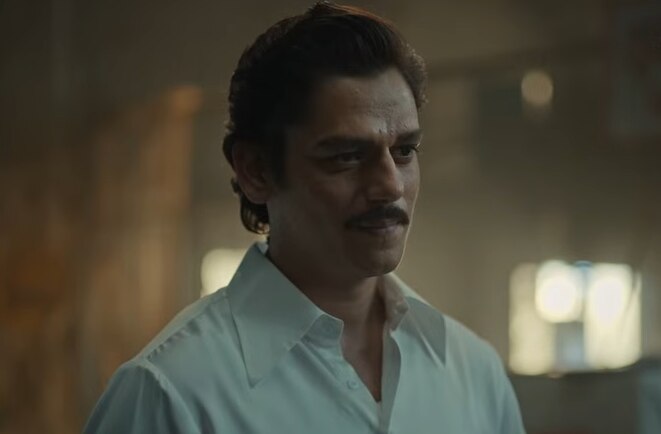
Matka King, Dahaad, Darlings, Mirzapur: Vijay Varma aces being evil next door
Vijay Varma is reorganising the way evil is shown on Hindi screen by bringing alive unsettling traits in everyday men. His roles in Darlings, Dahaad and Matka King show the scariest kind of evil is often hidden in those that we deem normal.
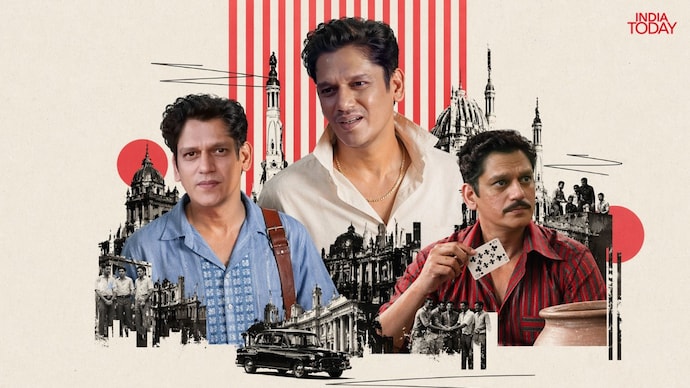
Vijay Varma plays the everyday man with a sinister streak. (Photo Credit: India Today/ Arun Prakash Uniyal)

New Delhi,UPDATED: Apr 22, 2026 07:30 IST
The Bollywood villain has come a long way since the days when bad guys were typically smugglers – scary-looking men with loud laughs who swaggered in leather jackets, with a bunch of goons behind. He is hardly ever the over-the-top dacoit, either anymore, scheming in his den to loot a nearby village with his men. The snarling terrorist is still around, though he has toned down over the years.
Vijay Varma has made being the monster on the Hindi screen a markedly different affair from all of the above – for that matter, from anything you have seen before. He wears a simple ironed bush shirt, rides an old dusty scooter and carries a tiffin box. He could look like your next-door neighbour, the colleague seated at the desk next to you, or that quiet man sitting across on a crowded local train.
Varma doesn't look or act like a villain, and that is exactly what makes him so terrifying.
With Varma, there's no need for a scary face or a loud laugh to become a monster, though. He reminds of the sobering fact: sometimes, the most dangerous people are the ones who come across as the most normal.
Vijay Varma has mastered the art of being the Everyman Villain. He plays men we know, projecting traits of evil we can barely fathom. Through his roles in Darlings (2022), Dahaad (2023), Mirzapur (2018) and now Matka King (2016), he has shown us a chilling reality: evil doesn't always wear a mask. Sometimes, it wears the face of the common man pushed to his breaking point.
The terror of the 'ordinary' husband
In Darlings, Vijay Varma played Hamza, a railway ticket collector. On the surface, he was a hardworking man dealing with a stressful job and a boss who humiliated him. But behind closed doors, he was a monster.
We’ve all heard the "sorry" that follows a domestic outburst. Hamza’s chilling dialogue – "Betu, tumhare liye hi toh kar raha hoon" (Dear, I’m doing this only for you) – is a line many Indian women would have heard in real life.
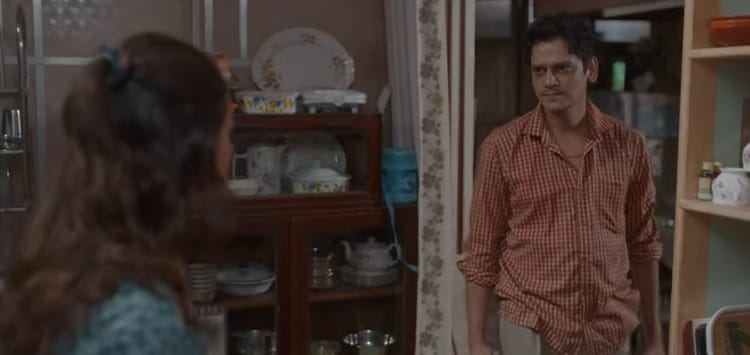
Hamza wasn’t a villain from a comic book. He was the toxic reality of domestic abuse hidden behind the respectability of a government job. Varma didn't play him with loud screams, but with a terrifying, unpredictable mood swing that made our skin crawl.
The professor next door
If Darlings made us fear the toxic husband, Dahaad made us fear the gentleman. As Anand Swarnakar, a soft-spoken Hindi professor and family man, Varma showed us the "banality of evil."
He wasn’t chasing money or power; he was a serial killer hiding in plain sight. He was polite to his wife, kind to his students and yet utterly soulless. The character showed that a man can balance a 9-to-5 life with a dark, twisted secret. He made us realise that the person helping you fix your car or greeting you with a "Namaste" might be the most dangerous person in the room.
The struggle for status in a society
In the world of Mirzapur, as the Tyagi twins, and in his latest outing, Matka King, Varma taps into the "Middle-Class Aspiration." These characters are fuelled by the frustration of being "small."
The struggle for money, the pressure to prove oneself in a system that ignores the poor, and the constant sting of insult, these are feelings every middle-class Indian understands. When his characters finally snap, it’s not because they want to "rule the world," but because they are tired of being stepped on.
In Matka King, his character Brij Bhatti captures this struggle perfectly when he asks, "Why am I not allowed to dream big?" This is the core of his villainy – the fight for dignity.
He understands the pulse of the street, and famously says, "Chahe woh ameer ho ya gareeb, sabko zindagi mein chhalang lagane ka haq hona chahiye (Rich or poor, everyone deserves the right to surge ahead in life)."
Whether it’s the gambling dens of the '60s Bombay or the lawless streets of Uttar Pradesh, Varma shows how financial desperation can turn a simple man into a cold-blooded strategist.
Why it hits so close to home
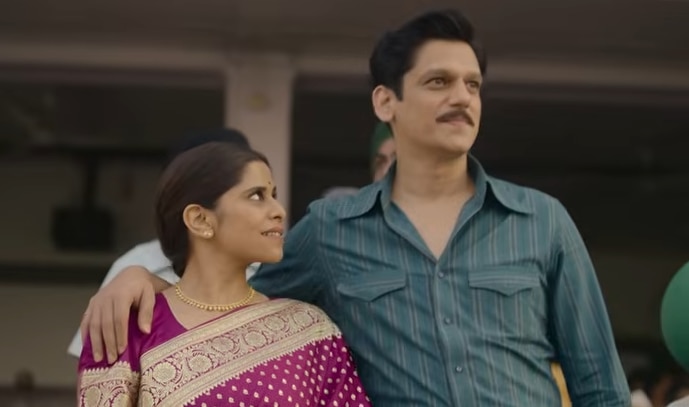
The reason Vijay Varma’s performances stay with us long after the credits roll is that they hold a mirror to the quiet desperation of the modern Indian middle class. His characters aren't born evil; they are slowly cooked in a pressure cooker of societal expectations and internal failures.
We see the familiar sting of job stress and the soul-crushing fear of being replaced in a competitive economy, mixed with the suffocating need to maintain a 'successful' image in front of judgemental relatives. This 'status anxiety' creates a fragile masculinity where a man feels he must exert control at home because he has none in the world outside.
Varma captures that precise moment when the internal rage we all swallow every day finally becomes too much to handle. He doesn’t need a signature weapon or a catchy catchphrase to scare us; he simply uses a cold, unwavering stare and a low, calm voice to show what happens when a regular person decides they are done being invisible.
Varma’s characters are what happens when a man stops swallowing that rage. He doesn’t use CGI or superpowers; he uses a cold stare and a low voice.
The neighbour you don’t really know
Vijay Varma has redefined the antagonist for the OTT era. He has moved away from Gabbar Singh and Mogambo to something that is actually discomforting. He reminds us that evil isn't an outsider; it's a byproduct of our own society, our pressures, and our failures.
Next time you see a quiet, unassuming man in a crowded market, you might find yourself looking twice. And that is the true power of Vijay Varma’s performance – he made the common man the scariest thing on screen.
- Ends