
Asha Bhosle beyond Bollywood: Her gems from the South that are not to be missed
Asha Bhosle's contribution to Indian music is immeasurable. The legend, who died on April 12, is best known for her iconic tracks in Bollywood. However, she also delivered unforgettable hits in South Indian cinema.


Asha Bhosle, the legendary singer who was honoured with the Dadasaheb Phalke Award and Padma Vibhushan, besides two National Film Awards, died on April 12, leaving behind a musical legacy that goes far beyond Bollywood. Often hailed as the queen of the Indipop genre of film songs, her iconic hits—from Aaja Aaja Main Hoon Pyaar Tera and Piya Tu Ab Toh Aaja to Dum Maro Dum and Jawani Jaaneman and more—stand as a testament to her unmatched versatility. But her voice did not remain confined to Hindi cinema.
Over a career spanning decades, Bhosle extended her reach across multiple film industries in India. She recorded songs in over 20 languages, among them the four South Indian languages—Tamil, Telugu, Kannada and Malayalam. In the South films, she delivered several gems that continue to resonate with listeners. These tracks reveal yet another facet of her remarkable range and adaptability.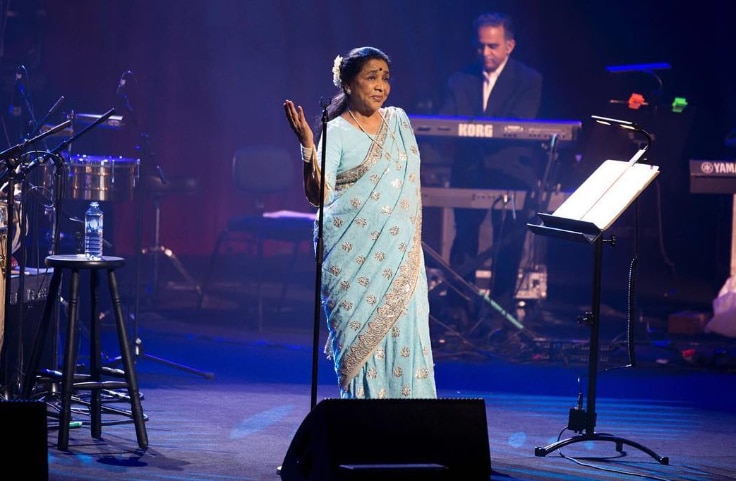
Tamil cinema
Asha Bhosle’s work in South Indian cinema may be limited, but it remains deeply meaningful—especially in Tamil cinema, where she delivered some evergreen hits in widely discussed films. Her songs reflected remarkable versatility, ranging from romance and soothing melodies to upbeat, modern numbers. Her collaborations with Ilaiyaraaja stand out as some of the most iconic, while her work with AR Rahman and Devanesan Chokkalingam, more popularly known as Deva, also remains memorable.
Asha Bhosle’s journey in Tamil cinema began on a folk note with Shenbagamae from Enga Ooru Pattukaran (1987), where Ilaiyaraaja introduced her as the voice of Shanthipriya, with lyrics by Gangai Amaran. From there, she moved effortlessly across genres and emotions. In Oh Butterfly from Meera, alongside S. P. Balasubrahmanyam, she captured the charm of playful romance for Aishwarya. With Nee Paartha Paarvai from Hey Ram, she delved into grief and longing, voicing Rani Mukerji’s Aparna opposite Kamal Haasan.
Her collaboration with Deva in Engengey from Nerrukku Ner brought a restless, pop-infused romantic energy. She then embraced a breezy, contemporary sound with September Madham, as AR Rahman reimagined her voice for a younger palette in Mani Ratnam’s evergreen romance Alaipayuthey, starring R. Madhavan. She further explored jazz with Vennila Vennila from Iruvar, where her sultry vocals elevated Aishwarya Rai’s on-screen presence.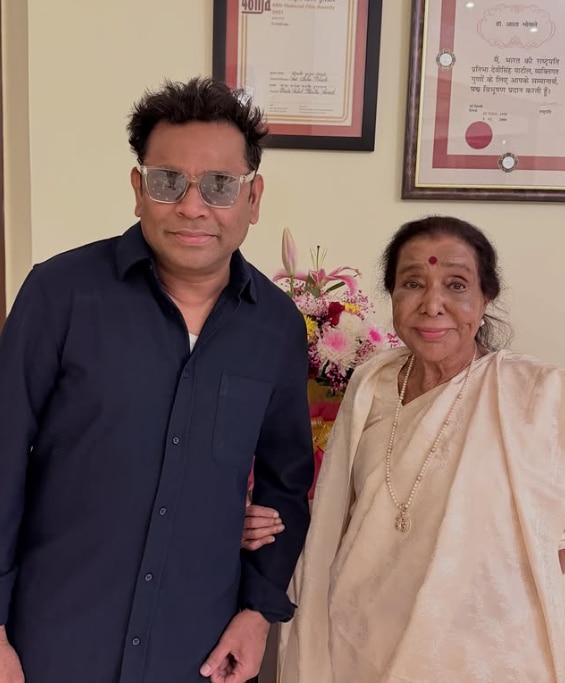
Telugu cinema
Asha Bhosle’s contribution to Telugu cinema may not be as widely recognised as her work in Tamil, but her collaborations remain noteworthy. She worked with a range of composers—from veterans like Sathyan, RD Burman and Ilaiyaraaja across languages, to later names like Oscar-winner MM Keeravani.
Her Telugu journey includes songs like Paalu Neellu from Idi Mouna Geetham (1981), composed by Sathyan, featuring Mohan Babu and Jayaprada. In Ashwamedham (1992), starring Nandamuri Balakrishna, she lent her voice to Ilaiyaraaja’s compositions, bringing alive on-screen romance with the songs Seethakalam Premaku and O Prema.
With the song Isaalakidee from Pavithra Bandham (1996)—the blockbuster featuring Venkatesh and Soundarya—Asha added emotional depth, even making a brief on-screen appearance as a singer before the film transitions into a dream sequence. Her collaboration with MM Keeravani once again highlighted her timeless appeal. A decade later, she returned with Nalo Voohalaku from the film Chandamama (2007), where her mesmerising voice blended seamlessly with KM Radha Krishnan’s Indo-Western musical style.
Kannada and Malayalam cinema
Asha Bhosle’s entry into South Indian cinema began with Kannada cinema. She debuted with Yako Eno from Kranthiveera Sangolli Rayanna (1967), composed by Laxman Beralekar, bringing a sensual texture to the song. She followed it up with Savaalu Haaki Solisi Ellara from Bettada Hoovu (1973), a remarkable eleven-minute song, which is also a live performance in the Rajkumar film. Decades later, she returned to Kannada cinema with Helade Kaarana from Mathe Mungaru (2010), marking a comeback after 37 years.
In Malayalam, her presence was even more limited but memorable. She lent her voice to Swayamvara Subhadina from Sujatha, a pleasant wedding number in the film starring Prem Nazir and Jayabharathi. It remains her only song in the language.
Compared to her body of work in Tamil and Telugu cinema, Asha Bhosle’s contributions to Kannada and Malayalam films were fewer, but they reflected her versatility. Her ability to adapt to different languages was incredible.
In conclusion
Even with a relatively small body of work in the South, Asha Bhosle made every song count. Whether it was folk, romance, jazz or modern pop, she adapted effortlessly, leaving behind tracks that still feel fresh today. Her songs in South Indian languages might have been limited, but her popularity was very much on par with the rest of her oeuvre.
Her Hindi songs, too, enjoyed a massive fan base in the South, where her iconic tracks continue to be just as celebrated. It’s a reminder that her legacy isn’t just about the number of languages she sang in, but the range and emotion she brought to each of them—no matter the language or industry.