

Raaka, Pushpa, AA23: Why Allu Arjun is Tollywood's superstar shape-shifter
After the Pushpa films, Allu Arjun continues ditching the playbook with Atlee's Raaka. He steps into a bold, unrecognisable avatar again. In this week's Cinematic Saturday, we decode how it's a sharp pivot – less comfort, more risk – and a clear sign he's rewriting his superstardom.
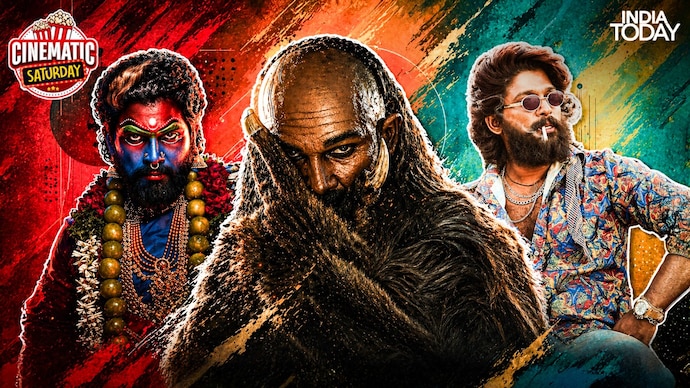
Allu Arjun is done repeating himself. Decoding why the biggest star won’t sit still. (Photo: Ankit Dwivedi/India Today)

New Delhi,UPDATED: Apr 25, 2026 09:00 IST
A bald, feral, almost unrecognisable Allu Arjun stares back in the first poster of Raaka – clawed up, stripped of all familiarity, and miles away from the swaggering Pushpa Raj that rewrote box office history.
It’s the kind of image that makes you pause and wonder: what exactly is he doing?
Because here’s the thing – this is an actor coming off the undisputed, pan-India dominance of the Pushpa films. This was the moment to consolidate, to double down on a winning formula, to give audiences more of what they've already loved. Instead, he’s chosen disruption. Again.
Also, because most superstars take the comfortable, well-lit path once they reach the summit. It involves protecting the throne, leaning into a proven formula and giving the fans exactly what they expect.
But Allu Arjun seems to have grown allergic to safety. At the absolute peak of his powers – with his box office dominance undisputed and his pan-India brand at its zenith – he is playing the most dangerous gamble a superstar can do: he is shaking his own throne.
THE PUSHPA PIVOT: CHOOSING DISCOMFORT
Reinvention in mainstream cinema is usually reactive. Actors evolve when the hits dry up or when the audience starts drifting away.
For Allu Arjun, this phase feels entirely proactive. Fresh off the seismic success of director Sukumar's 2024 film Pushpa: The Rule, where he transformed into the raw, morally ambiguous red sandalwood smuggler, he had every reason to stay rooted in that “rural mass” space.
Instead, he is stepping into the neon-lit, speculative world of Raaka, while actively seeking collaborations that push him beyond the familiar grammar of Telugu cinema.
Trade analyst Ramesh Bala, who spoke exclusively to India Today, frames this shift through the lens of his recent filmography.
“If you look at his recent films, he was this urban, stylish character in Ala Vaikunthapurramuloo. From there, he completely shifted into a rural, rugged character in Pushpa and Pushpa 2. And now with Raaka, you’re seeing him in a totally different look again,” he says, underlining that even at the top, reinvention is not optional – it is essential for longevity.
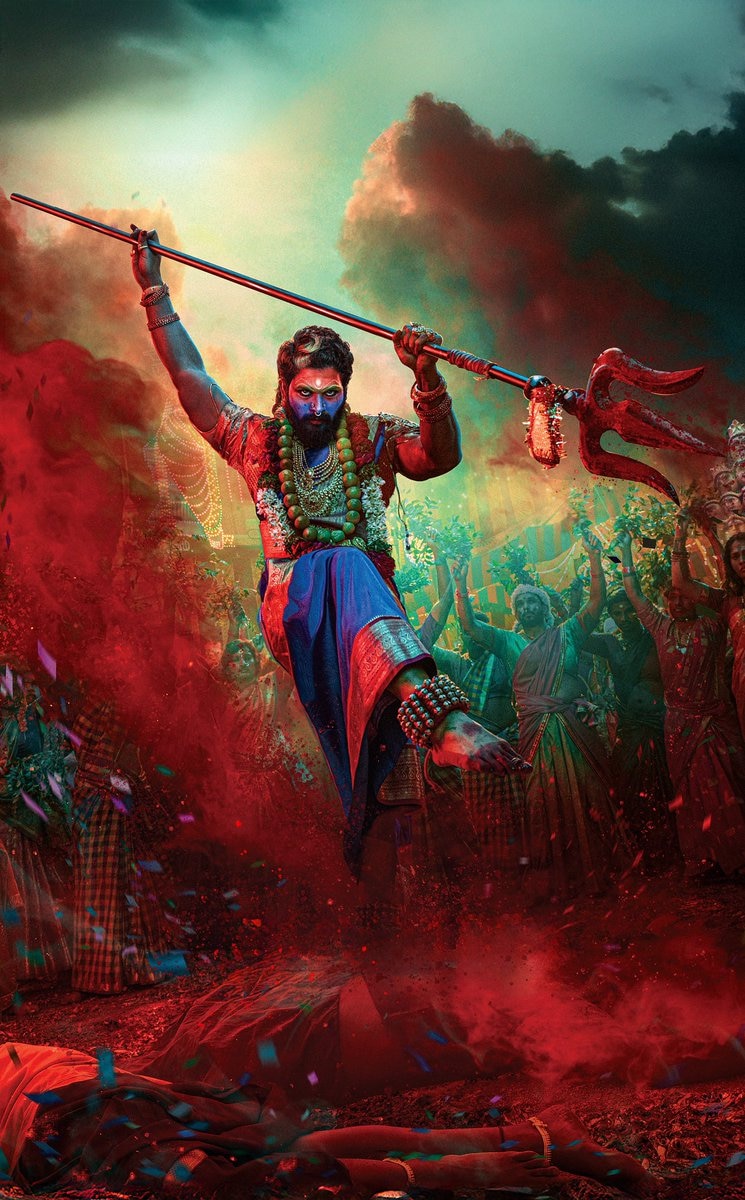
This isn’t survival. It’s legacy-building in real time. Arjun isn’t waiting for the audience to get bored; he is moving before they do.
RAAKA: A MONSTROUS DEPARTURE
If you want to understand the scale of this risk, look no further than Raaka. Directed by Atlee, the film signals more than a genre shift – it points to a full image overhaul. Allu Arjun 3.0, indeed!
The first look, unveiled on his birthday, April 8, shows him as a bald, beastly figure with tribal markings and prosthetic claws like daggers. It is a far cry from the “Stylish Star” image he is known for.
The transformation is not cosmetic. It reportedly demands hours of prosthetic work daily, signalling a physical and psychological immersion into a space Indian mass heroes rarely explore.

Bala notes that this deliberate distancing from past imagery works strategically in Arjun’s favour. “We won’t compare Pushpa with Raaka. Each film feels like a fresh start. Even though he’s a superstar, he begins with a clean slate every time because his look and world-building are different,” he explains.
The reset, in many ways, becomes his biggest advantage.
There is also a larger ambition at play. With Raaka leaning into high-concept storytelling and global-scale execution, this isn’t just about doing something new – it’s about doing it differently, and doing it bigger.
THE CROSS-INDUSTRY GAMBLE
What makes this phase particularly fascinating is Arjun’s choice of collaborators. Instead of staying within the safety of familiar creative ecosystems, he is betting on filmmakers from different industries, voices that bring their own syntax to storytelling – Atlee, Lokesh Kanagaraj and, according to reports, Basil Joseph.
Working with Atlee brings a certain emotional scale and mass sensibility, while Kanagaraj's storytelling thrives on gritty world-building, morally grey characters and a tightly woven, interconnected narrative style. He collaborated with Kanagaraj for his next, tentatively titled AA23.
Then comes the reported collaboration with Basil Joseph, whose Minnal Murali proved that even within a superhero framework, emotional grounding can be everything.
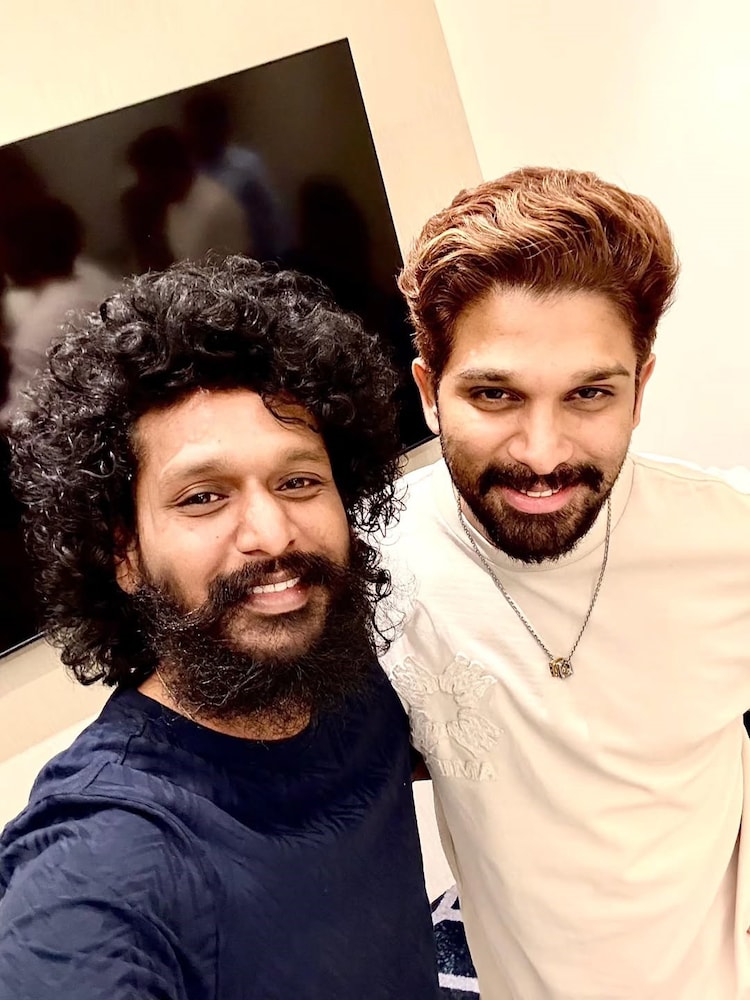
This instinct to surrender to a director’s world, rather than imposing a star persona, is something Bala highlights as well. “He adapts to the director’s vision. If it’s a rural storyteller like Sukumar, he transforms into that world. If it’s something else, he changes accordingly. That’s why audiences accept him in completely different roles,” he says.
For Allu Arjun, Raaka isn’t just another ambitious project – it’s a leap into a vision that has been years in the making. Filmmaker Atlee has carried the idea since he was 18, holding onto it through every phase of his journey as a filmmaker.
And perhaps that’s the quiet shift here – Arjun is not just choosing scripts; he is choosing systems that allow him to disappear and re-emerge. And probably, that's the need of the hour!
See AA23 announcement video here:
THE MAKING OF A RELENTLESS PERFORMER
Before that turning point, Arjun's filmography already felt like a low-key reinvention reel. From the boyish charm of Bunny (2005) and Happy (2006) to the breezy, lovestruck energy of Arya (2004), he built an early image rooted in romance and relatability.
Then came the stylish pivot with Julayi (2012) and the ultra-polished swagger of Ala Vaikunthapurramuloo (2020), where his screen presence became a statement in itself.
He dipped into a historical space with Rudhramadevi (2015), only to strip it all down for Pushpa, trading gloss for grit and landing on something raw, rugged, and completely unfiltered. Just when you thought you had him figured out, he’d switch it up.
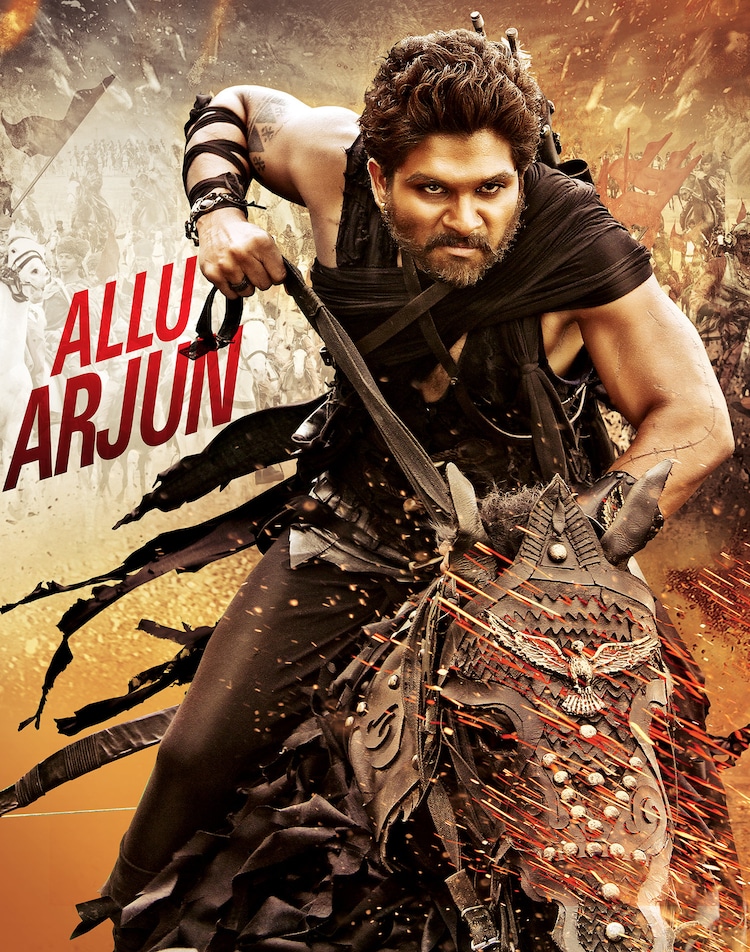
What makes this arc even more layered is where it began. Long before the pan-India hysteria, there was a fleeting appearance in the 2001 film Daddy, where a young Allu Arjun appeared as a dancer. Mind you, the film was headlined by Chiranjeevi.
Director Suresh Krissna, who worked with him then and spoke exclusively to India Today, recalls a striking sense of discipline even in that brief role. “Even for that small appearance, his dedication stood out. He rehearsed extensively and kept checking if he could do better. That hunger to improve was evident from day one,” he says.
Krissna also points out that Arjun’s reinvention is not accidental – it is deeply conscious. Coming from a formidable film family, he understood early on that standing out would require carving an identity of his own. “He didn’t chase safety; he chased identity. That’s why his reinvention has worked consistently,” he adds.
BREAKING THE MOULD
Halfway through this piece, one thing is clear: in an industry where most stars find a winning formula and stick to it like gospel, Arjun is doing the exact opposite – he’s rewriting the rulebook mid-game.
Sure, actors like Ranveer Singh (Dhurandhar films) or Yash (KGF, Toxic) have flirted with reinvention, but more often than not, they’re still playing within their comfort zones, just with a new coat of paint.
Ramesh Bala believes Arjun’s balance between reinvention and scale is rare. “Reinvention combined with pan-India success is not easy. Some actors experiment with looks, others have pan-India reach. But doing both consistently is difficult. Right now, I don’t see many actors matching him on both fronts,” he says.
What makes this sharper, as director Suresh Krissna notes, is that this instinct isn’t new – it’s deeply ingrained. Having seen him from his earliest days, Krissna points out that Arjun “never became complacent” and kept working on himself even after success, constantly refining his style, performances, and script choices.
More crucially, he adds, “he didn’t chase safety; he chased identity,” a mindset that explains why he continues to push beyond comfort zones when most stars would settle. This willingness to alter the core – rather than just the edges – is what sets this phase apart.
THE PAN-INDIA PUSH AND WHAT IT DEMANDS
Post Pushpa, Arjun is no longer just a Telugu star; he is a pan-India force. And with that comes a different kind of expectation – one that demands novelty, scale, and universality.
“Today’s audience is globally aware. They expect something new. If you repeat yourself, they lose interest,” Bala explains, adding that reinvention has effectively become “the new currency” for staying relevant.
Ironically, the pan-India space doesn’t limit him – it expands him. Bigger budgets, wider reach, and access to global talent allow for more ambitious storytelling. And as Suresh Krissna observes, that scale only works because of Arjun’s mindset.
“In many cases, he has gone beyond the script and elevated the material through his performance. Whenever I’ve met him, he speaks only about cinema – characters, performances, and how to do better work. There is no resting on past success,” he says. That constant hunger is precisely what keeps him pushing boundaries, even when he doesn’t have to.
But it also raises the stakes. The question is no longer whether a film will work; it is what it is doing differently.
Amid this expansion, there has been speculation about Arjun shifting base to Mumbai. Those close to him have clarified that while he is travelling frequently for Raaka and staying close to its production ecosystem, Hyderabad remains home.
It’s a practical move, not a personal one – less about relocation and more about control. When the scale grows, so does the need to oversee it.
THE NEW CURRENCY OF STARDOM
Now, let’s not romanticise this – none of it is safe. Familiarity still sells, and predictability often guarantees openings. But the rules are changing. Audiences today want more than repetition. They want surprises. They want to see the performer behind the persona.
And Arjun seems to understand that instinctively. His choices suggest a star who is not content with being celebrated for what he has already done, but is invested in what he can still become.
As the conversation around Raaka builds and his collaborations expand across industries, this phase begins to feel less like an experiment and more like a defining chapter.
Because sometimes, the real power move isn’t holding on to a winning formula. It’s knowing exactly when to let it go.
- Ends