
No sweets, no ghee, no paneer: India's milk at risk as heatwave takes charge
This week's edition of Climate On My Plate explores how rising global temperatures could threaten India's deep reliance on milk, affecting production levels, supply stability and prices as climate change puts increasing stress on dairy farming.
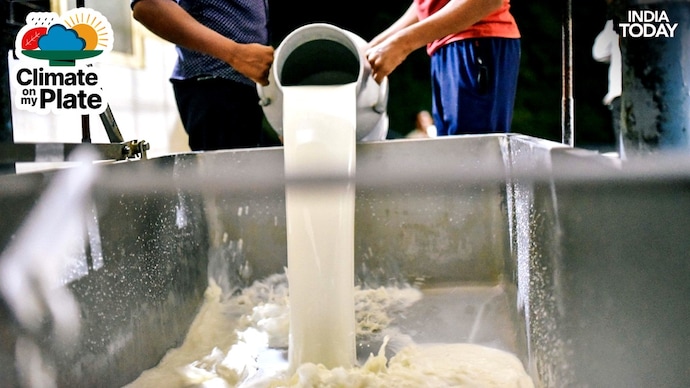

 India loves milk.
The morning chai, the paneer on the dining table, the sweets and milk chocolates at every celebration, the ghee drizzled over dal and rotis, almost everything that defines Indian food comes back, in some form, to dairy.
But the industry that powers all of this is under growing stress from a force that no cooperative or breeding programme was built to handle. A force born from a rapidly warming planet.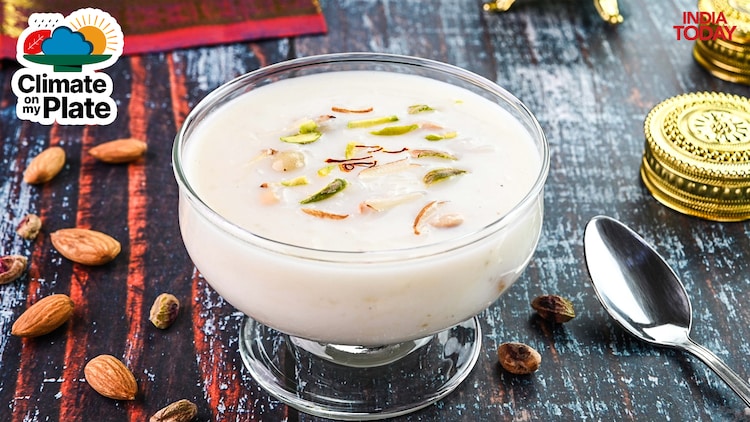
IS INDIA'S DAIRY AT RISK?
Most people take the litres of milk sitting in their refrigerators for granted. They don't realise that it's slowly slipping away from our daily lives, and could soon just disappear altogether.
India is the world’s largest milk producer, accounting for roughly 25% of global output, with domestic production reaching 239 million tonnes in 2024.
The monetary value of milk produced in India exceeds the combined worth of rice and wheat put together. That means even the country’s two most important crops can't collectively compete with the milk India produces and consumes.
Yet this remarkable industry now sits squarely in the crosshairs of climate disruption.
A 2024 CEEW report found that over 80 million farmers who depend on cattle rearing are already observing climate impacts on their animals. It further added that buffaloes and crossbred cattle, which dominate Indian herds, are more vulnerable to these impacts than indigenous breeds.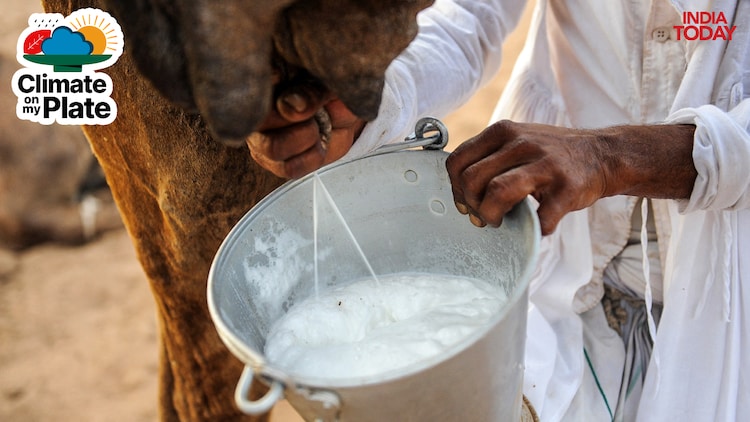
HOW DOES HEAT HURT MILK?
Extreme heat, which continues to become frequent in India, poses a direct threat to milk production and can effortlessly shut down the country's milk supply.
When temperatures rise beyond a cow or buffalo’s comfort zone, the animal stops eating as much, diverts energy away from milk production toward simply keeping its body cool, and produces measurably less milk of lower quality.
Researchers have found that heat stress reduces milk output by up to 25.8% in seasonal conditions.
Projections also show that in India’s arid and semi-arid grassland systems, which includes large swathes of Rajasthan, Gujarat, and Maharashtra, milk production per animal could fall by nearly 25% by the end of the century under a high-emissions scenario.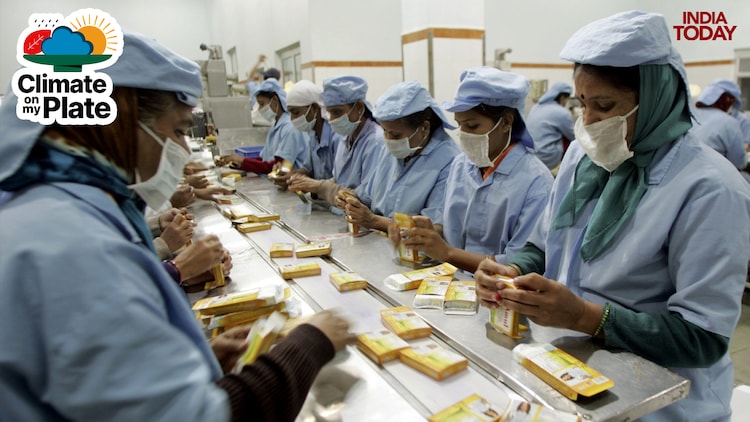
The situation on the ground is already deteriorating.
In the summer of 2025, an unusually intense early heatwave across northern and central India caused daily milk collections to drop significantly in several regions, creating procurement pressure that translated directly into price hikes across India’s leading dairy brands.
In 2023, average milk prices had already risen by over 12% compared to 2022, driven in part by climate-linked supply stress and rising feed costs.
If one needs an idea about what 2026 might have in store, take a look around. The temperatures are soaring, with new regions breaking new records every day.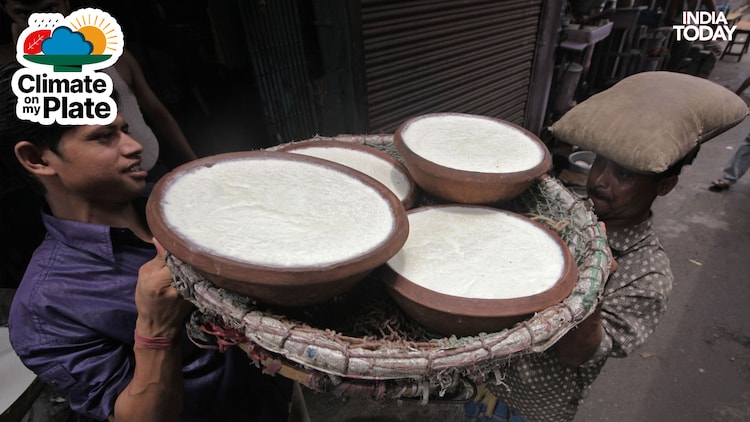
NO FODDER NO MILK
Heat does not just stress the animal, it destroys its food, too.
India’s dairy sector depends on monsoon rains for fodder cultivation, and climate variability is making that supply unpredictable.
Fodder prices have nearly tripled in some regions, forcing smallholder farmers to either sell their cattle at low prices or reduce herd sizes, both of which constrain future milk supply.
Feed costs already account for 60–70% of total milk production expenses, meaning that any climate-driven spike in fodder prices cuts directly into farmer margins and pushes milk prices higher for consumers.
With a super El Nino forecast later this year, farmers are expected to be in the line of fire yet again, and the ripple effects will show in the price you pay for the weekly groceries.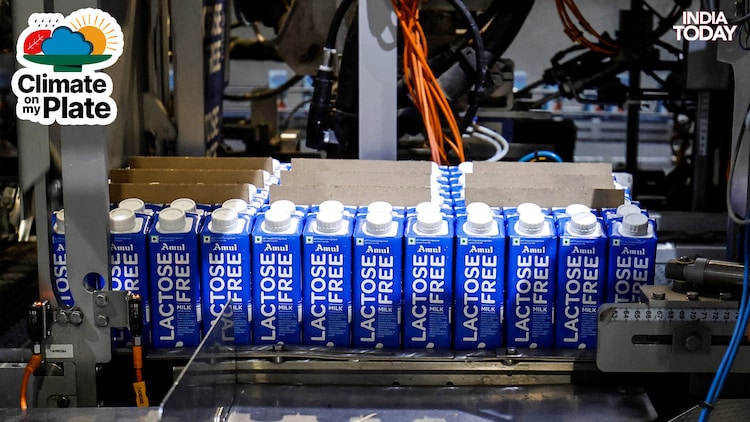
Beyond economics, the human cost is significant.
Over 450 million people from 90 million rural households, the majority of them women and marginal farmers, are associated with India’s dairy sector.
For these households, a bad summer is not just a statistic, but directly translates into lost income, cattle sold for a loss, and thinner margins on an already precarious livelihood.
NO MORE CHAI, CHEESE, AND CHOCOLATE
The downstream consequences of a tightening milk supply ripple across everything Indians eat and drink.
The plethora of milk-based sweets, popularly known as mithai, central to every festival from Diwali to Eid to weddings, is almost entirely dependent on abundant, affordable milk.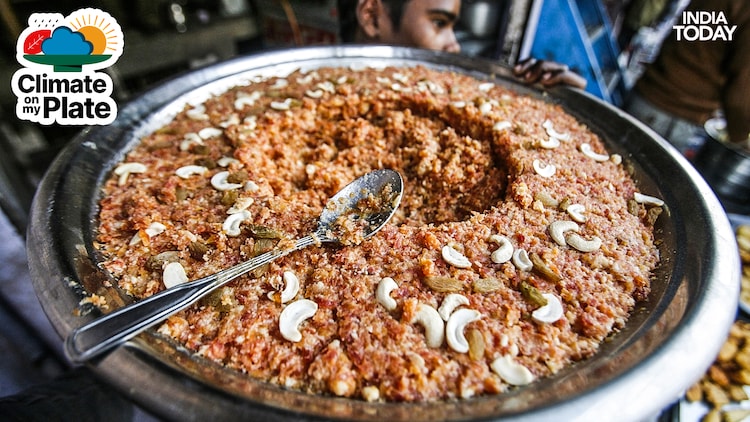
When supply tightens, mithai prices surge.
Paneer, ghee, curd, and butter, the everyday staples of Indian kitchens, face similar pressure.
India’s growing cheese and milk chocolate industry, still nascent but expanding rapidly, would be among the hardest hit.
CAN INDIA'S DAIRY BECOME CLIMATE-PROOF?
Efforts are already underway to try and insulate India's dairy sector from the compounding impacts of climate change.
The government’s Rashtriya Gokul Mission promotes indigenous cattle breeds, which are more heat-tolerant than high-yielding crossbreeds.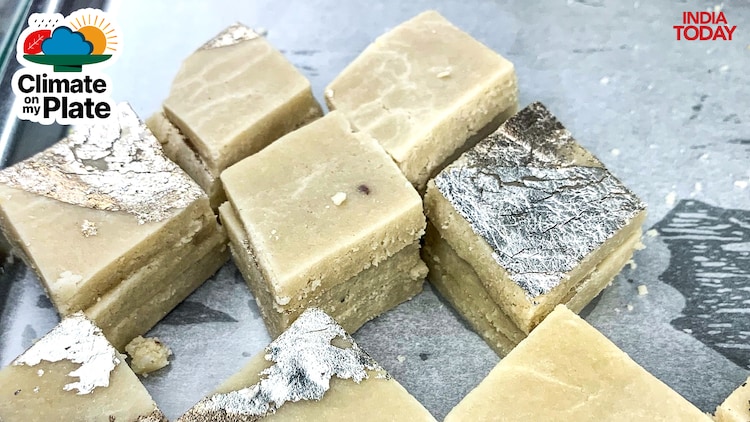
But researchers at CEEW warn that policy focus must shift toward locally responsive solutions. That includes strengthening fodder systems, diversifying non-milk income streams for farmers, and aligning breeding choices with climate resilience rather than just increasing yield.
India built its White Revolution over decades of patient, systemic effort. Protecting it in a warming world, it seems apparent, will require nothing less.
#ClimateOnMyPlate