
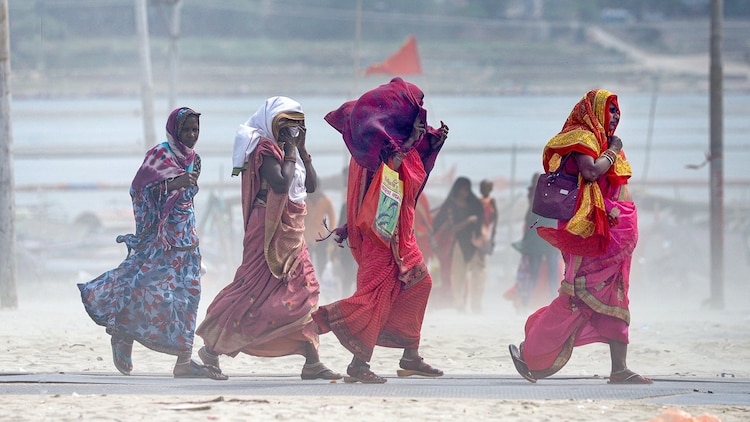
World's 50 hottest cities today are in India: Most of them are in this state
AQI.in rankings on Friday evening showed that all 50 of the world's hottest cities were in India, with more than half of them located in Uttar Pradesh.
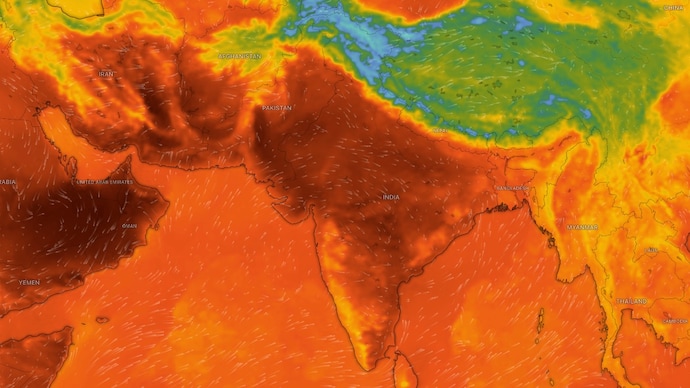
India is going through an intense heatwave grip. (Photo: Windy)

New Delhi,UPDATED: May 23, 2026 07:43 IST
As the clock struck 6:15 pm IST on Friday, India was still baking.
Fresh rankings from AQI.in showed that all 50 of the world’s hottest cities were located in India, even in the evening hours, underlining the extraordinary scale of the ongoing heatwave sweeping across north, central and eastern parts of the country.
But one state stood out above all others: Uttar Pradesh.
Out of the 50 hottest cities globally, Uttar Pradesh alone accounted for over half the list, with cities including Moradabad, Akbarpur, Siddharthnagar, Etawah, Budaun, Banda, Firozabad, Hathras, Mainpuri, Prayagraj, Sitapur, Ghazipur, Mathura, Agra, Rampur, Bareilly, Shahjahanpur, Etah, Bijnor, Auraiya, Jaunpur, Aligarh, Sambhal, Azamgarh, Varanasi, Pilibhit, Balrampur, Muzaffarnagar, Bahraich, Shamli and Amroha all recording temperatures between 43°C and 44°C.
Nagpur in Maharashtra topped the chart at 44°C, tied with Raipur, Chandrapur, Moradabad and several Uttar Pradesh cities. But the geographical spread of Uttar Pradesh across the rankings revealed the true epicentre of the heatwave.
WHY IS UP SO HOT?
Meteorologists say the state is currently trapped under a dangerous combination of atmospheric and geographical conditions.
The first reason is location. Uttar Pradesh sits directly in the heart of the Indo-Gangetic plains, a massive flat landmass that allows hot continental winds from Rajasthan and central India to travel uninterrupted across the state. With no major topographic barriers to block or weaken these winds, heat spreads rapidly over large areas.
The second factor is the missing clouds.

Normally, by late May, moisture-laden winds from the Arabian Sea and Bay of Bengal begin increasing humidity and cloud cover over eastern and northern India. But this year, dry air has continued dominating the plains even as the monsoon builds over southern India.
The result is intense solar heating during the day and very little cooling at night.
The India Meteorological Department has already issued red alerts for several districts across eastern and central Uttar Pradesh, warning of “severe to very severe” heatwave conditions.
Urbanisation is making the crisis worse.
Cities such as Agra, Prayagraj, Varanasi and Bareilly are experiencing strong urban heat island effects, where concrete, asphalt and dense infrastructure absorb heat during the day and slowly release it overnight. This prevents temperatures from falling even after sunset.
Meanwhile, large parts of Bundelkhand and eastern Uttar Pradesh are also facing dry soil conditions and declining vegetation cover, reducing natural cooling from moisture evaporation.
AQI.in’s broader heat analysis published earlier this month had already identified Uttar Pradesh as the worst-affected state in India’s growing “interior heat belt,” warning that extreme heat events are becoming more prolonged and geographically widespread.
Even more alarming is that the rankings were recorded in the evening, a time when temperatures typically begin easing.
Instead, much of north India remained locked above 43°C.
For millions across Uttar Pradesh, the wait for the monsoon is no longer about seasonal relief. It is becoming a question of survival.
- Ends