
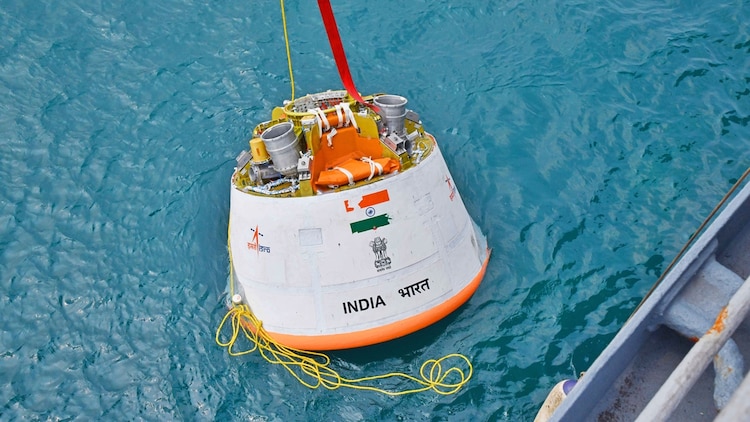
Will India's Gaganyaan launch in 2027? Isro says YES, reality suggests NO
At the heart of the concern lies a fundamental gap: India is yet to complete the two critical uncrewed test missions that must precede any human spaceflight. We look at the announced timeline and the ground reality.
Compounding the Gaganyaan delay is a broader slowdown in launch activity at Sriharikota. (Photo: Illustration by Vani Gupta/India Today)

New Delhi,UPDATED: Apr 15, 2026 08:00 IST
Four astronauts splashed down in the Pacific Ocean on April 11, 2026 completing a round trip to the Moon, marking humanity’s return to deep space exploration after more than half a century, reigniting global excitement around human spaceflight. As Nasa pushes forward with its Moon ambitions, the spotlight has inevitably turned toward India’s own human spaceflight programme, Gaganyaan.
Once projected as a defining milestone for India’s space capabilities, the mission now faces mounting delays and growing uncertainty, raising serious questions about whether the country, which once planned to launch Indian astronauts on an indigenous vehicle to space in 2022, can realistically meet its revised 2027 crewed launch target.
At the heart of the concern lies a fundamental gap: India is yet to complete the two critical uncrewed test missions that must precede any human spaceflight.
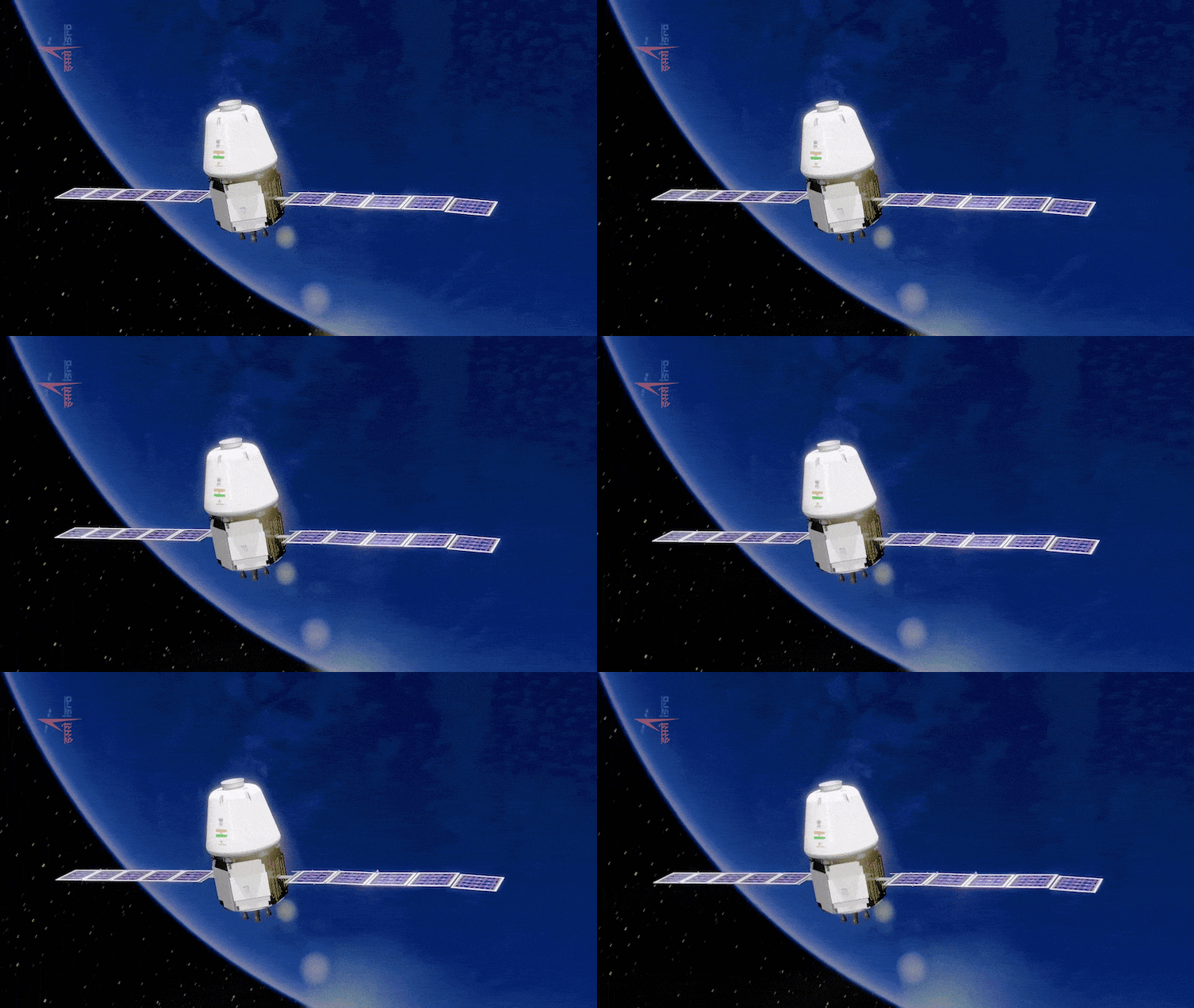
These missions are designed to validate the crew escape system, life support, avionics, safety measures, and overall mission architecture under real flight conditions. Without them, a crewed mission remains out of reach.
As of April 2026, neither of these uncrewed flights has taken place, significantly compressing an already ambitious timeline.
THE REALITY THAT GAGANYAAN FACES AND ISRO AVOIDS
Compounding the delay is a broader slowdown in launch activity at Sriharikota. The Indian Space Research Organisation (Isro), which had announced an aggressive manifest of 18 launches for 2026, has so far completed only one in the first four months of the year, and that mission ended in failure.
The setback has had a cascading effect on the entire launch ecosystem. Two recent failures involving the Polar Satellite Launch Vehicle (PSLV) have triggered an internal investigation, the findings of which remain undisclosed.
Until the root causes are fully understood and corrective measures implemented, Isro has adopted an unusually cautious approach, effectively grounding its rockets and stalling upcoming launches.
Senior officials, on condition of anonymity, told indiatoday.tech that Isro has introduced rigorous checks, re-checks and detailed investigation into every system, sub-system, and component that has gone into the vehicle to identify what's happening. An external team is auditing the systems as well.
This pause, while necessary from a safety standpoint, has deep implications for Gaganyaan. Human spaceflight demands a near-perfect record of reliability.
Any uncertainty in launch vehicle performance directly impacts timelines, especially when the same ecosystem supports multiple missions.
The lack of clarity on when normal launch operations will resume adds another layer of unpredictability.
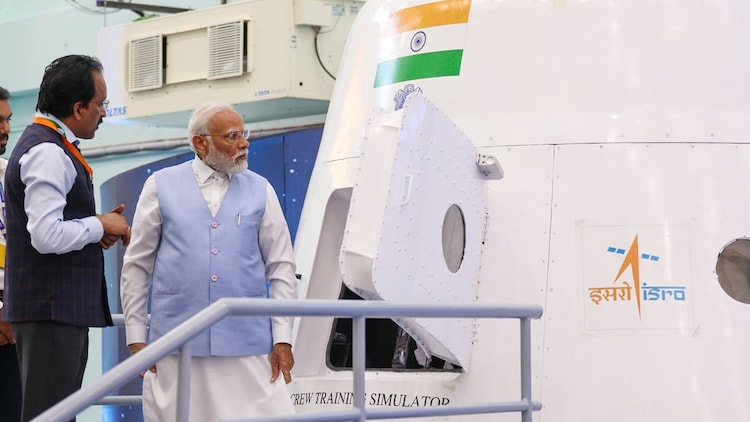
WHERE IS THE GAGANYAAN TEAM?
Beyond launch readiness, the pace of Gaganyaan’s internal development has also been slower than expected. The programme, which suffered initial setbacks during the COVID-19 pandemic in 2020, has made incremental progress since then.
However, senior officials within Isro and the HSFC, on condition of anonymity, indicated that the advancements have not been sufficient to support a crewed mission within the next year. Critical systems, including environmental control, crew safety protocols, and mission integration, are still undergoing refinement.
One of the less visible but equally crucial aspects of human spaceflight is the human infrastructure behind it. Isro is yet to finalise the ground teams, mission control personnel, and astronaut support units that will be responsible for real-time operations during the mission.
These teams are essential for ensuring astronaut safety, managing contingencies, and coordinating recovery operations.
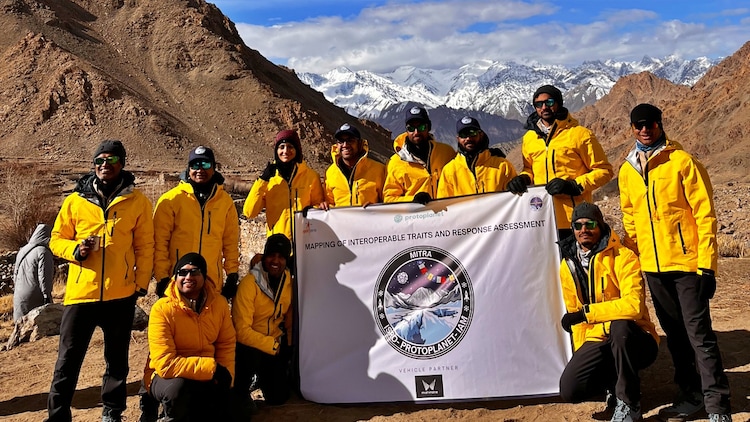
While a simulation exercise, dubbed Mission Mitra, conducted in Ladakh in April 2026 marked the beginning of this process, it was only a preliminary step aimed at establishing selection protocols.
“Human spaceflight ultimately revolves around people, and humans are the most vulnerable part of the entire system. Each individual is different, and success in space depends heavily on strong teamwork and seamless coordination. For the first time, we were testing how teams function, how they cooperate and collaborate, under both extreme environmental conditions and demanding operational scenarios," Anurag Sinha, Group Director, HSFC, told indiatoday.tech.
"The selection criteria used for astronauts may not fully apply to ground teams, but some aspects certainly do. In many ways, one of the key objectives of Mission Mitra in Ladakh was to develop these very protocols around how to identify, assess, and select the right personnel,” astronaut Shubhanshu Shukla, who was part of Mission Mitra, told indiatoday.tech after completion of the four-day mission.
Meanwhile, recently promoted Air Commodore P Balakrishnana Nair added that working as a group under stress was the biggest test for Mission Mitra. Participants came from different backgrounds and had to quickly adapt to each other while handling unfamiliar conditions and heavy workloads. Strong mission protocols and teamwork ensured success.
However, there is still no official timeline or clarity from the Indian space agency on when these teams will be fully constituted and trained, or whether the process has already been completed.
INDIA NEEDS MORE THAN FOUR ASTRONAUTS: WHERE ARE THEY?
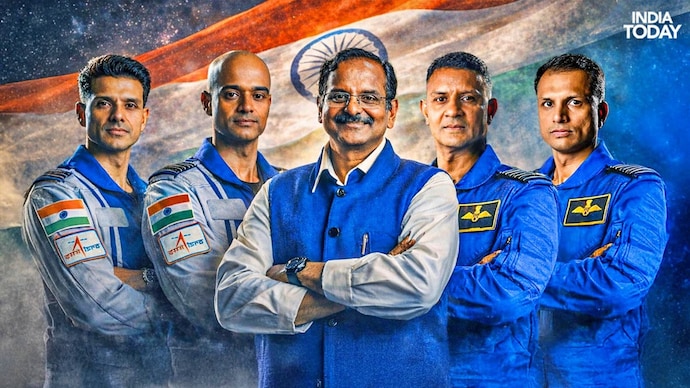
India has a tiny pool of four astronauts to choose from for the Gaganyaan mission, which will carry three of them into Low Earth Orbit as part of its maiden crewed launch.
However, India has also announced plans to launch the first module of Bharatiya Antariksh Station (BAS) by 2035, and land an Indian on the Moon by 2040. While 2040 may seem far away, in the incremental and complex world of human spaceflight, it is actually a tight timeline.
To meet this target, India will need a dedicated and larger pool of astronauts, ensuring that training continues with enough buffer to account for launch readiness and possible delays.
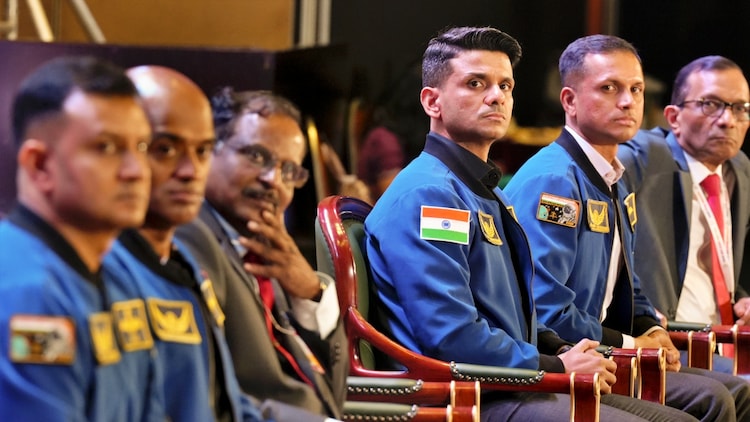
The astronaut corps has seen some progress, but gaps remain. Three of the four Indian astronauts are expected to undergo a review soon to determine whether they will continue with Isro or return to the Indian Air Force (IAF). They have already spent seven years with Isro.
This list includes recently promoted Air Commodore P Balakrishnan Nair, Group Captain Shubhanshu Shukla, and Group Captain Angad Singh. Meanwhile, Group Captain Ajit Krishnan remains in active service with the IAF.
There is also little information available from Isro regarding the selection and training of the next batch of astronauts, something that ideally should have progressed over the seven years since the Gaganyaan programme was announced.
THE CREW MODULE: A WORK IN PROGRESS
The crew module, arguably the most critical component of the mission, has been developed with inputs from experienced test pilots, including those who have trained on international platforms.
The vehicle has undergone multiple iterations based on input from Shubhanshu Shukla and Balakrishnan Nair, who trained on the SpaceX Dragon spacecraft for the Axiom-4 mission. While Shux was pilot for the Ax-4 mission that launched to the Space Station in 2025, Nair was backup crew for the highly successful mission.
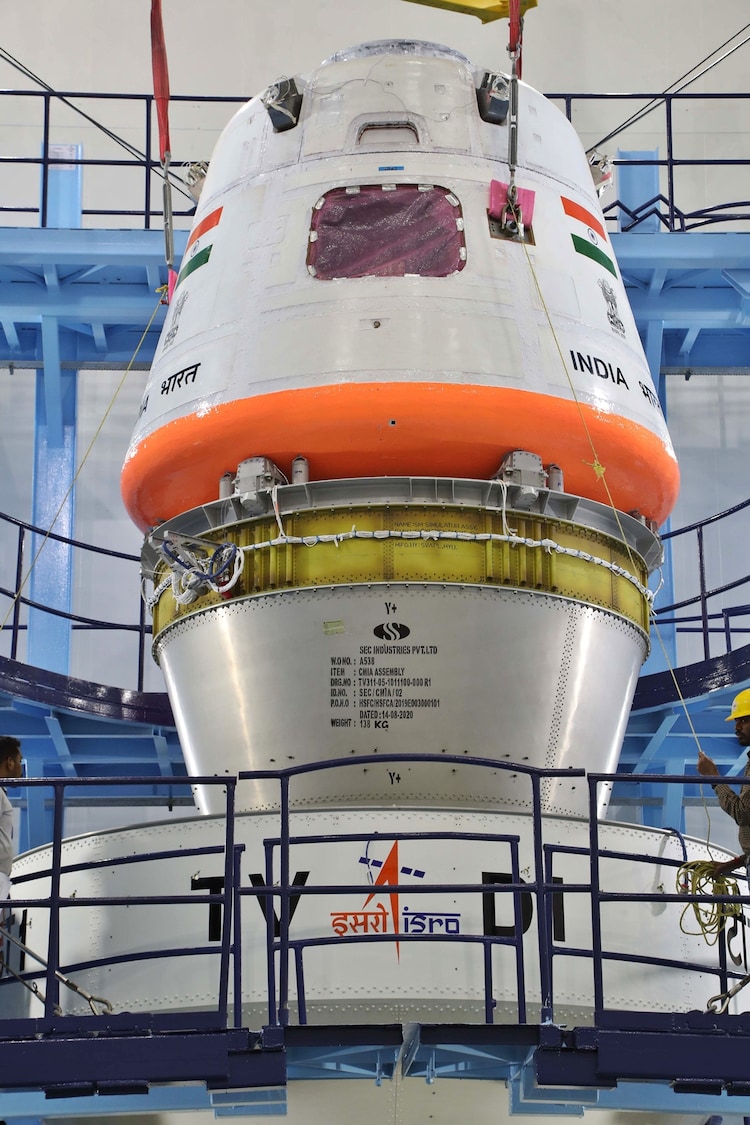
According to sources, the cockpit design has been influenced by astronaut feedback, reflecting a collaborative effort between the HSFC engineers and the crew.
While this is a positive development, the module must still undergo rigorous testing, including abort scenarios and long-duration simulations, before it can be deemed flight-ready.
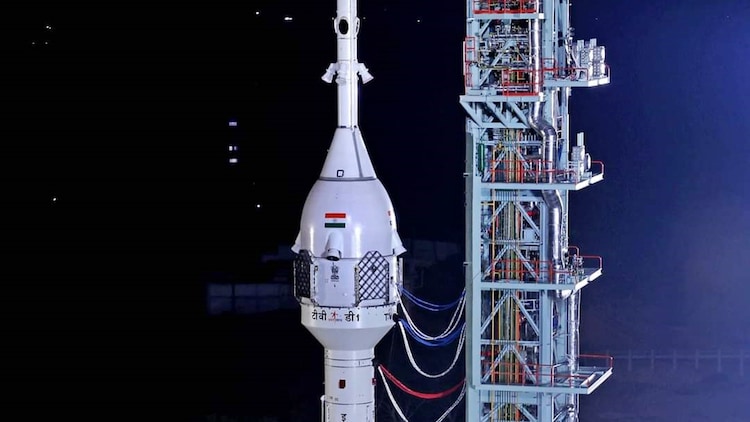
Isro conducted an air-drop test using a crew module simulant in April 2026 to validate the parachute and deceleration systems that will be critical for slowing down the vehicle after its re-entry into Earth’s atmosphere. However, the most crucial data for the mission can only be obtained during the uncrewed flight tests, which are yet to receive an official launch date.

ISRO'S CONSTANT SILENCE, GROWING OPAQUENESS
Perhaps the most concerning aspect of the current situation is the growing opacity around the Gaganyaan programme.
In its earlier phases, Gaganyaan updates were regularly shared with the public, generating enthusiasm and confidence. In recent months, however, there has been a noticeable decline in communication.
Updates on mission progress, technical milestones, and timelines have become scarce. Queries directed to Isro’s leadership have gone unanswered, and senior officials have refrained from commenting, citing the need for authorisation from the Chairman’s office.
This lack of transparency is not just a public relations issue. It has broader implications for accountability and strategic planning.
Human spaceflight programmes are inherently complex and benefit from open communication, both to manage expectations and to foster collaboration. The current silence has only fuelled speculation about the programme’s status and readiness.
Isro urgently needs to rethink its communication strategy and analyse how Nasa has been forthcoming with information around the highly successful Artemis-2 Moon mission.
The updates ranged from delays, technical glitches to mission-critical information and even about astronauts' sleep cycles, which created an environment of positivity and garnered enthusiastic support from across the board.

REALITY: 2027 DEADLINE CHALLENGING
Taken together, these factors paint a challenging picture. The absence of completed uncrewed missions, stalled launch schedules due to PSLV failures, slow-paced development, incomplete team infrastructure, and limited communication all point toward a timeline that is increasingly difficult to sustain.
Even under optimistic assumptions, conducting two uncrewed missions, analysing their results, implementing necessary changes, and then proceeding to a crewed launch within the next year would require an unprecedented acceleration in operations.

India’s ambitions in human spaceflight remain significant and well-founded. Gaganyaan represents not just a technological leap but also a statement of intent on the global stage. However, ambition must be matched with execution.
As things stand in April 2026, the gap between where the programme is and where it needs to be for a 2027 launch appears substantial.
A delay, while disappointing, may ultimately be the more prudent path. Human spaceflight leaves little room for error, and Isro’s cautious approach, especially in the wake of recent failures, reflects an understanding of the stakes involved. The success of Artemis-2 shows that such missions are built on years of rigorous testing, iteration, and resilience.
For Gaganyaan, the road ahead is open, but it surely has become longer than previously envisioned.
(A series of questions sent to Isro chairman's office for this story remains unanswered. The story will be updated when we receive the response.)
- Ends