
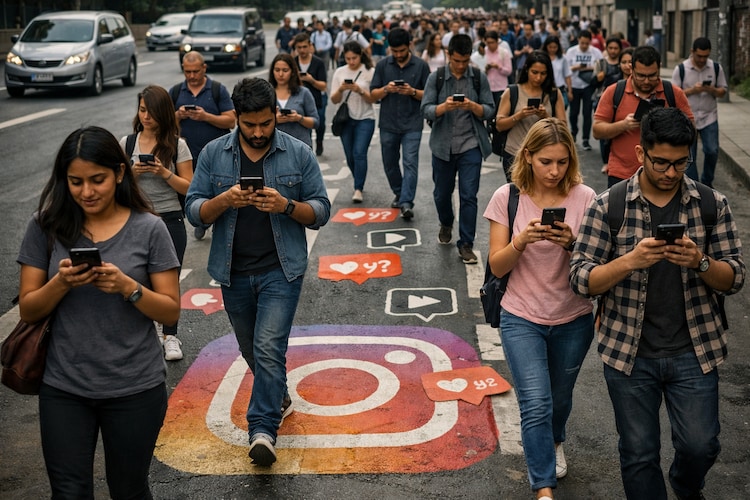
I deleted Instagram for 30 days, what happened next is shocking
I deleted Instagram for 30 days after realising reels were quietly eating away hours of my evenings. What started as a random decision ended up changing the way I spent my time. If you are a core Instagram user, this article is for you.
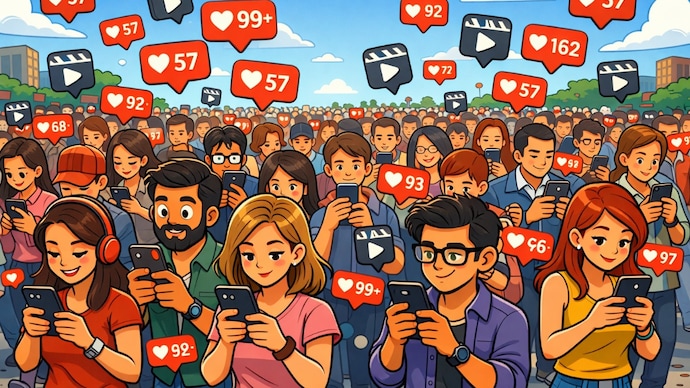
A 30-day break from Instagram exposed a lot about my life. (Image generated using AI for representational purposes)

New Delhi,UPDATED: May 22, 2026 14:55 IST
I didn't delete Instagram because I hated social media or wanted to become one of those hyper-productive people with a perfectly optimised routine. The decision happened on a random weekday evening after work when I opened the app to relax "for a few minutes" and somehow lost nearly two hours scrolling through reels I barely even remembered afterwards. That moment stayed with me because the time didn’t feel wasted while it was happening. It disappeared quietly. By the time I looked at the clock, my evening was basically over, and I couldn't explain where those hours had gone. So I deleted Instagram impulsively.
There was no plan behind it. I didn't replace it with productivity apps or create strict screen-time rules. I simply removed the app from my phone and assumed life would continue normally. Instead, the first few days felt surprisingly uncomfortable.
I realised how much of my day was built around scrolling
The strangest part wasn't missing Instagram itself. It was realising how deeply the habit had attached itself to ordinary moments throughout my day.
For nearly four days, I kept unlocking my phone automatically and looking for the app without even thinking about it. My fingers would move toward the exact spot where Instagram used to be before I remembered it was gone. Then I would lock my phone and repeat the same thing twenty minutes later. The pattern became impossible to ignore.
I also noticed how dependent I had become on scrolling during "in-between" moments. Waiting for food delivery, sitting in a cab, taking short work breaks, or even standing in line somewhere, every small pause in the day had quietly turned into scrolling time. And without Instagram, those moments suddenly felt awkwardly empty.
At one point, I caught myself opening random apps like the Gallery or Weather app simply because my brain wanted something to do. That was probably the first moment I understood the bigger issue. The habit wasn't really about Instagram itself. It was about constantly needing stimulation. I had unknowingly trained myself to avoid silence, which was not shocking because this is exactly what social media apps want us to be, obsessed to our screens.
The biggest change happened during evenings after work. Before deleting Instagram, I constantly felt like I never had enough free time. Every day followed the same cycle - finish work, eat dinner, scroll for a while, watch a few reels, reply to a couple of messages, and suddenly the night would disappear.
After deleting the app, evenings started feeling noticeably longer.
For the first time in months, I realised I had usable time left after office hours! Not ten spare minutes here and there, but proper uninterrupted time that I usually assumed didn't exist because of work. At first, I didn’t know what to do with the 'extra time'. To me, that was the most surprising part.
Once the endless scrolling had stopped, I was suddenly left alone with my own attention, and that felt unfamiliar.
The biggest difference isn't what you think
I didn't suddenly become extremely productive after deleting Instagram. I wasn’t waking up at 5 AM or reading five books a week. But I slowly started returning to things I had been postponing for months because I thought I "didn’t have time."
I picked up a book that had been sitting untouched near my desk for weeks. I started editing personal videos again, which is something I genuinely enjoy but kept delaying. Some evenings, I watched documentaries properly instead of half-watching them while simultaneously scrolling through another app. Even work felt different.
Earlier, every difficult task came with the urge to take a "quick break," which often turned into a twenty-minute scrolling session. Without Instagram on my phone, those interruptions became less frequent, and I found it easier to stay focused on one thing at a time. The change was subtle but noticeable.
The other big takeaway was how mentally quieter life felt without constant scrolling. I didn’t realise how much information Instagram was throwing at me every day until it disappeared. Travel videos, stock advice, gym transformations, luxury lifestyles, random opinions, trending audio clips — my brain was consuming hundreds of unrelated things daily without pause. Once that stopped, my attention felt less fragmented.
Another unexpected benefit was sleep. Earlier, I had a habit of opening Instagram in bed for "five minutes" before sleeping, which usually turned into hours of scrolling. Without the app, that cycle broke naturally. I started sleeping earlier without really trying to force it.
Of course, there were moments when I felt disconnected. I missed memes, trends, and random updates from friends. Sometimes during conversations, people referenced reels everyone else had already seen except me. But over time, the fear of missing out became less important than the calmness that replaced it.
Deleting Instagram for 30 days didn't completely transform my life, and I don’t think social media is inherently bad. I eventually downloaded the app again. But the experiment exposed something I hadn't fully noticed before, I already had more time than I thought.
A large part of it was simply disappearing in small invisible chunks throughout the day. And once those distractions were removed, life started feeling slower, calmer, and far more intentional than I expected.
- Ends